
6.0 Percent: The Hidden Tax on Global Opportunity Nigeria Is Trying to Eliminate
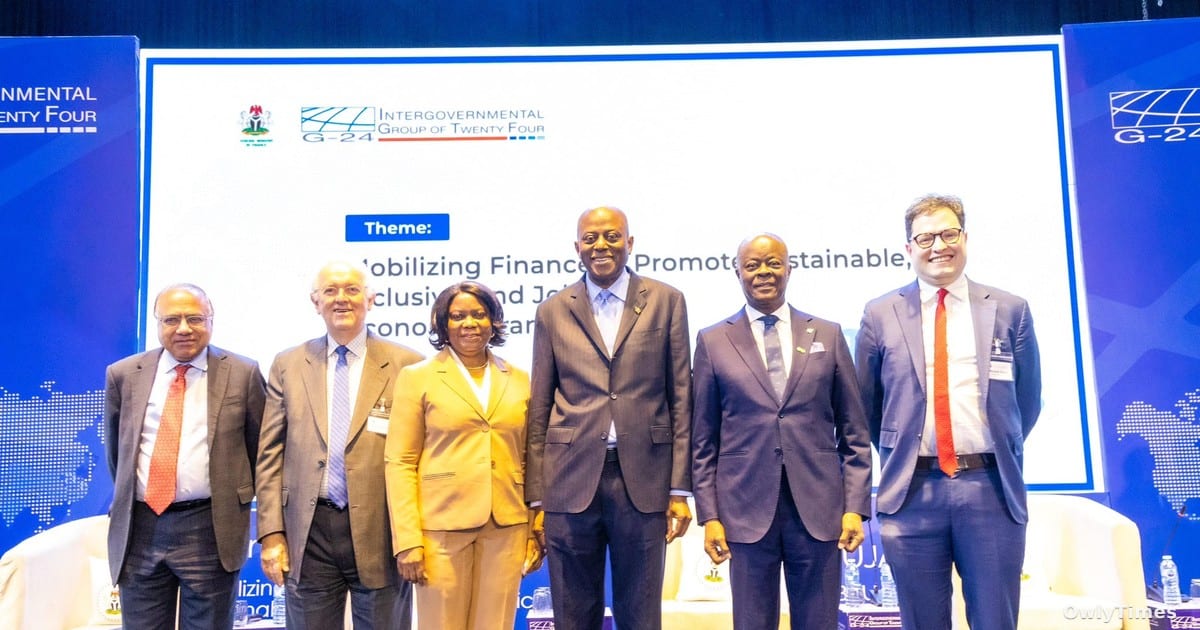
A staggering 6.0 percent – that’s the average cost of sending money home to developing countries, a figure that underscores a fundamental imbalance in the global financial system. This isn’t a minor friction cost; it’s a tax on opportunity, directly impacting millions and hindering economic growth. At the recent G-24 Technical Group Meetings in Abuja, Olayemi Cardoso, Governor of the Central Bank of Nigeria, didn’t mince words: cross-border payments are “too slow, too costly, and too fragmented,” effectively disconnecting vast populations from the global economy. This isn’t simply a Nigerian problem; it’s a systemic issue the G-24 – now encompassing 28 nations across Africa, Asia, and Latin America – has been battling for years. But Nigeria is now attempting a bold solution, leveraging digital innovation to bypass a financial plumbing system it deems actively detrimental to emerging markets.
The core issue, as Cardoso articulated, is that the existing infrastructure prioritizes the needs of developed economies, leaving smaller nations to absorb disproportionately high fees and endure lengthy settlement times. These costs aren’t abstract; they directly impact the ability of small and medium-sized enterprises (MSMEs) to participate in international trade and limit the financial lifeline of remittances. Consider this: global remittance corridors siphon off over 6.0 percent of the value sent, a rate significantly higher than domestic transaction costs. For comparison, the average cost of a domestic bank transfer in the US is under $0.30. This disparity isn’t just about money; it’s about access. Millions are effectively excluded from global opportunities due to these prohibitive costs and delays.
Nigeria’s response is a multi-pronged strategy outlined in its Payment System Vision 2028, focused on modernizing financial infrastructure and fostering innovation. The centerpiece of this effort is the 2025 launch of its National Payment Stack, built on the globally recognized ISO 20022 messaging standards. This isn’t simply an upgrade; it’s a fundamental shift towards a system capable of handling multi-currency and cross-border transactions with greater efficiency. Crucially, Nigeria is also streamlining Know Your Customer (KYC) and Anti-Money Laundering (AML) requirements for low-value transfers and creating new diaspora account structures, specifically designed to facilitate easier and cheaper remittances. This targeted approach reflects a clear understanding of the pain points for both senders and receivers.
Reporting from africa.businessinsider.com informs this analysis.
The initial results are promising. Remittance inflows have already risen to an average of $600 million per month, and the Central Bank of Nigeria is ambitiously targeting $1 billion monthly in the near term. This isn’t just about increased transaction volume; it’s about reclaiming financial sovereignty. Cardoso emphasized that digital cross-border systems have the potential to reduce reliance on reserve currencies – primarily the US dollar – and strengthen South-South trade integration. This ambition is particularly relevant given the current geopolitical landscape, where increasing fragmentation and trade restrictions threaten global growth. Wale Edun, Nigeria’s Minister of Finance and Coordinating Minister of the Economy, highlighted this risk, warning that over a quarter of emerging market and developing economies (EMDEs) have lost access to international capital markets.
However, Nigeria’s push for digital payment reform isn’t without its challenges. Cardoso himself cautioned against uncoordinated innovation, warning that fragmented digital payment systems could inadvertently reinforce existing inequalities and entrench the dominance of established currencies and platforms. The risk is real: without a unified global framework, individual national efforts could become siloed, ultimately failing to achieve the desired systemic change. This is where the G-24’s role becomes critical – advocating for a coordinated international approach that balances innovation with financial stability and inclusive growth. Iyabo Masha, Director and Head of the Secretariat for the G-24, accurately described the current situation as “measured resilience but constrained ambition,” reflecting the limited fiscal space and high debt burdens facing many developing economies.
What this means for your wallet: watch for increased competition in the remittance market. As Nigeria’s system matures and other nations follow suit, the 6.0 percent tax on sending money home could begin to shrink, putting more money directly into the hands of families and businesses in developing countries. But more importantly, monitor whether these national initiatives translate into a broader, coordinated global effort. If Nigeria’s reforms remain isolated, the fundamental power dynamics of the global financial system will likely remain unchanged. The key question is: will other nations join Nigeria in demanding a fairer, more inclusive financial architecture, or will the existing system continue to perpetuate a cycle of disadvantage?




