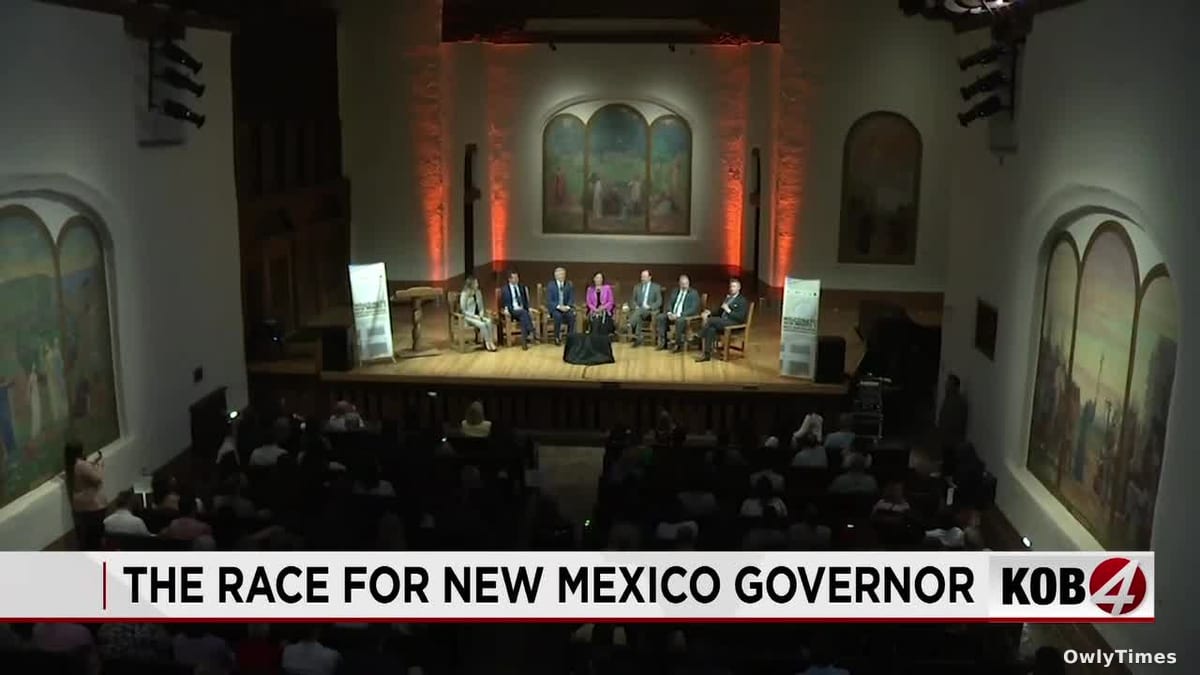

98% of the business landscape in New Mexico is comprised of small enterprises, a figure that served as the primary benchmark for the five gubernatorial candidates who gathered at the St. Francis Auditorium in Santa Fe this Wednesday. While the candidates offered diverging paths for state economic policy, the underlying tension was clear: how to transition the state from its current fiscal standing into a more competitive regional player. Follow the money, and you see two distinct philosophies emerging—one focused on aggressive tax reform and the other on long-term infrastructure investment through human capital.
The Tax Reform Pivot
Duke Rodriguez, the CEO of cannabis company Ultra Health, is centering his Republican primary bid on a radical restructuring of the state’s revenue model. By proposing the total elimination of state personal income tax and gross receipts tax on retail sales, Rodriguez aims to position New Mexico alongside the nine other states that currently forgo personal income levies. This approach assumes that the primary friction point for business expansion is the state’s current tax burden. For an economy heavily reliant on small businesses, the efficacy of this policy hinges on whether these tax savings would be reinvested into local payrolls or simply absorbed as profit margins.
The Regulatory Friction Cost
Outgoing Rio Rancho Mayor Gregg Hull introduced a more operational focus to the debate, specifically targeting the cost of bureaucracy. Hull’s argument rests on a fundamental premise of project finance: time is money. By highlighting his tenure in Rio Rancho, Hull framed "red tape" as a tangible surcharge on development. His platform suggests that the most immediate economic stimulus available to the state does not require a tax overhaul, but rather an administrative streamlining process that lowers the cost of entry for developers.
Education as Economic Infrastructure
On the Democratic side, Sam Bregman, the current Bernalillo County District Attorney, and former Secretary of the Interior Deb Haaland are framing economic growth through the lens of workforce readiness. Haaland’s proposal to integrate trades into middle school curricula and provide hands-on training in high school suggests that the state’s economic competitiveness is tethered to its ability to modernize its labor supply. Small business owner Doug Turner echoed this sentiment, albeit with a sharper critique of the status quo. Turner noted that New Mexico has maintained a 50th-place ranking in public school performance for 31 years, arguing that the state’s economic "boom" potential is currently locked behind a systemic failure in the education system.
Financial Implications for Voters
For the average New Mexico resident or business owner, the divergence between these candidates represents a choice between immediate liquidity and long-term structural improvement. Rodriguez’s tax-cutting agenda would offer immediate, measurable changes to individual and corporate take-home pay, provided the state can sustain its public services without those revenue streams. Conversely, the focus on education—while potentially transformative for the long-term workforce—remains a multi-decade project that offers little in the way of short-term economic relief.
The next reading of these platforms will occur as early voting begins on May 5, followed by the primary election on June 2. Voters should look for further details on how each candidate intends to fund their specific education or tax-cut proposals, as these fiscal mechanics will determine whether their promises translate into actual economic growth or merely shift the state’s existing debt burdens.