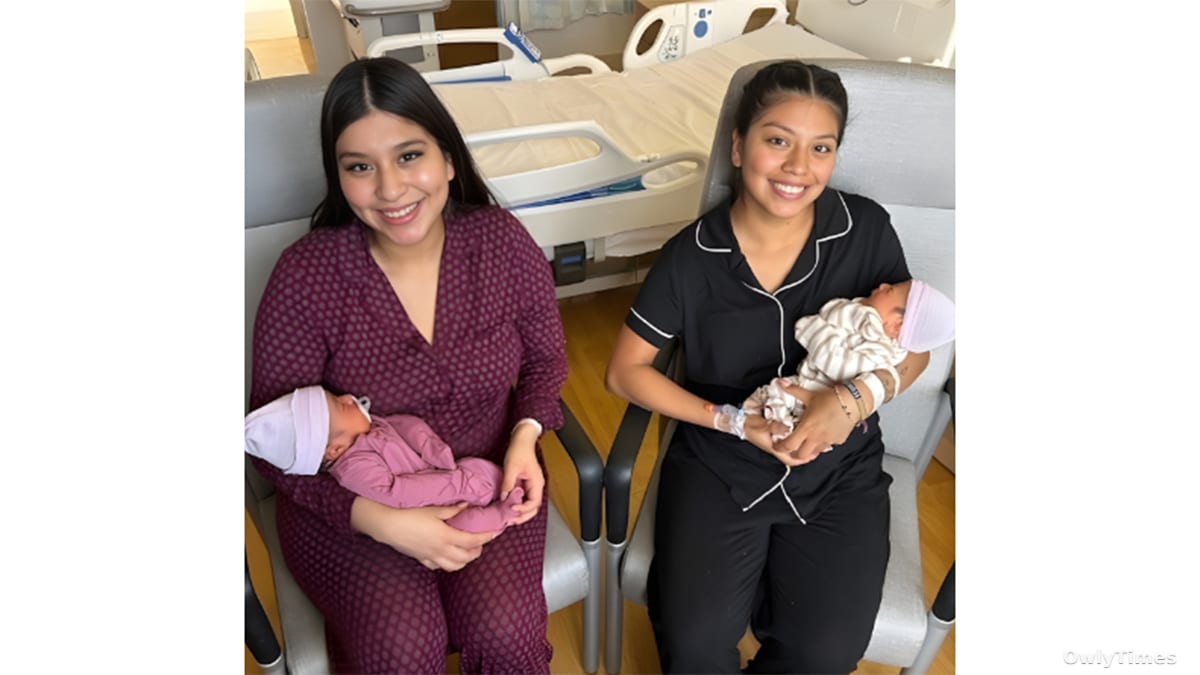

The simultaneous experience of pregnancy is often described as a bonding moment for sisters, but for Jenny Aguilar and Wendy Aguilar, that bond manifested in a statistically rare and deeply personal way: delivering babies just hours apart at the same hospital. While headlines celebrate the “miracle” of this near-simultaneous birth, the story offers a more nuanced opportunity to consider the role of community hospitals in supporting families, and the increasing complexity of understanding even seemingly straightforward events like coordinated pregnancies. The Aguilar sisters’ experience isn’t simply a heartwarming anecdote; it’s a reflection of evolving reproductive patterns and the vital, often unsung, work of institutions like NYC Health + Hospitals/North Central Bronx.
Wendy Aguilar, a barista, discovered she was pregnant only two days after sharing her positive test result with her sister Jenny. This close timing, while remarkable, isn’t necessarily indicative of a shared physiological trigger. Spontaneous, simultaneous pregnancies in sisters can occur due to shared genetic predispositions influencing ovulation, but more often, it’s simply coincidence. What’s significant is the sisters’ shared experience navigating early pregnancy symptoms and anxieties, supporting each other through doctor’s appointments and, ultimately, labor. “We would always come to each other’s houses,” Wendy recalled, “We’ll talk about our symptoms, or we’ll get each other’s cravings.” This reciprocal support system highlights the importance of social networks during a period of significant physical and emotional change.
Reporting from nychealthandhospitals.org informs this analysis.
On February 25, 2026, Jenny was first to deliver, undergoing an induction that resulted in the arrival of her daughter, Leilani Celeste, at 1:41 a.m., weighing 8 pounds, 9 ounces. Just hours later, at 8:38 a.m., Wendy welcomed her son, Nicholas Valentine, a robust 12 pounds, 13.7 ounces. The emotional weight of this timing is palpable. Jenny admitted to being “a little scary” hearing her sister in labor, but ultimately relieved to know everything was progressing well for both babies. This speaks to the vulnerability inherent in childbirth, even when shared with a loved one, and the anxieties that can accompany even planned inductions.
The rarity of this event was noted by Staff Nurse Latoya Palmer of the postpartum unit, who described it as a “rare occasion.” While the hospital doesn’t maintain specific statistics on sibling births within hours of each other, the event clearly resonated with staff, prompting them to accommodate the sisters by placing them in adjacent rooms. This seemingly small gesture underscores the hospital’s commitment to family-centered care, a principle deeply embedded in its 50-year legacy of serving the community. Dr. Neneh Kamara, Director of Nursing for Maternal Child Health Services, emphasized that “caring for our community means caring for family.” This isn’t merely rhetoric; North Central Bronx Hospital delivered 935 babies in 2025, and its dedication to infant feeding standards is evidenced by its Baby-Friendly designation, first achieved in 2016 and recently reaccredited.
However, it’s crucial to contextualize these numbers. While 935 deliveries is a significant volume, it represents a fraction of the total births occurring in New York City. The hospital’s commitment to the Baby-Friendly initiative – promoting breastfeeding and responsive parenting – is commendable, but the success of these programs is often tied to socioeconomic factors and access to resources. The Aguilar sisters’ story, while positive, doesn’t necessarily reflect the experiences of all patients at North Central Bronx, particularly those facing systemic barriers to healthcare.
Looking ahead, the focus shifts to understanding the long-term implications of this unique birth experience. Will Leilani and Nicholas share a particularly close bond, growing up with a built-in playmate and a shared birth story? The sisters themselves are already envisioning a future filled with matching outfits and joint birthday celebrations. But beyond the anecdotal, researchers could explore whether children born to mothers experiencing simultaneous pregnancies exhibit any shared developmental patterns or health outcomes. More broadly, this case highlights the need for continued investment in community hospitals like North Central Bronx, ensuring they can provide culturally sensitive and comprehensive care to families across generations. The question isn’t simply whether another set of sisters will deliver babies on the same day, but whether all families have access to the support they need for a healthy start.





