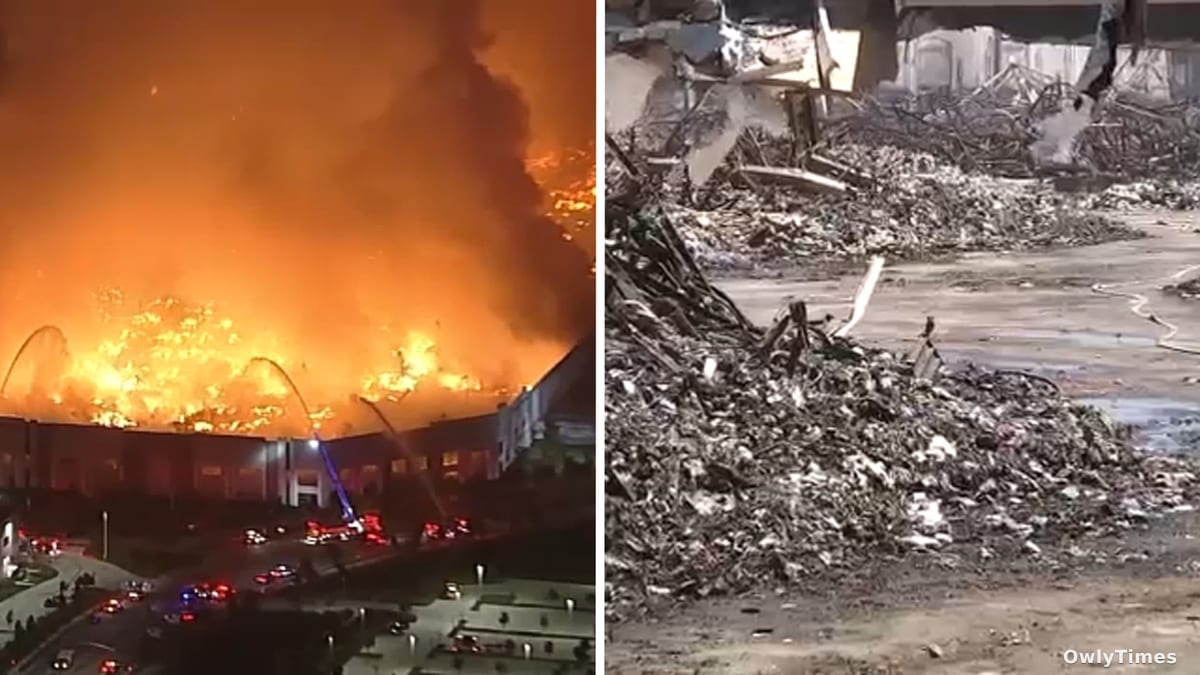

Beyond the immediate devastation of a major industrial fire, what are the lasting environmental and public health challenges posed by protracted smoldering, and how do communities navigate the uncertainty of remediation? This pressing question takes center stage in Ontario, California, where more than a month after a massive warehouse blaze, an approximately 1.2 million-square-foot facility continues to smolder, casting a persistent shadow of smoke and concern over nearby neighborhoods. The initial shock of the fire has given way to a quieter, yet arguably more insidious, struggle for residents grappling with ongoing air quality issues and a perplexing lack of clarity on cleanup.
Lingering Smoke and Resident Distress
For those living just east of the affected site, the aftermath of the fire is not a past event but a daily reality. Resident Ligia Luken articulated this frustration, stating, "The past month has just been smoldering non-stop, smoke blowing towards us." Her observations, corroborated by others, point to afternoon winds frequently drifting smoke towards homes, prompting palpable health anxieties. Luken herself experienced pneumonia last week, which she believes is in correlation with the poor air quality, while her daughter, who has asthma, struggles to play outside. This immediate, lived experience highlights the gap between the dramatic initial news of a disaster and the often-protracted, less-visible public health crisis that follows. Some neighbors, according to Luken, have even temporarily relocated, seeking refuge in hotels or short-term rentals from the pervasive fumes.
The Arson Investigation and Financial Toll
The initial headlines focused heavily on the blaze itself and the subsequent criminal investigation. Chamel Abdulkarim, a 29-year-old resident of Highland, has pleaded not guilty to charges of aggravated arson in connection to the incident. Abdulkarim, who was reportedly working at the Kimberly-Clark Distribution Center through a third-party company at the time of the fire, faces a severe penalty of 10 years to life in prison if convicted as charged. Officials have confirmed that paper products worth an astonishing $500 million were destroyed in the fire. While the legal process unfolds and the financial toll is quantified, the narrative of the initial event often overshadows the ongoing environmental burden on the community. For more details on the company and its operations, you can visit the Kimberly-Clark official website.
What the Ongoing Reality Reveals
While initial news coverage, as reported by KABC, focused on the blaze and the arrest, the enduring reality for residents is the persistent smoldering. This distinction is crucial: the fire may have been contained, but its environmental impact continues to unfold. The "air quality is just horrible," as Ligia Luken describes it, pointing to a less sensational but deeply impactful public health concern. AIR7 video from Monday showed crews appearing to prepare for demolition, yet officials have provided no firm timeline for tearing down the burned-out structure. This prolonged uncertainty about the site’s future contributes significantly to resident anxiety, as the source of the smoke remains unaddressed.
Limitations to Consider and the Call for Action
It is important to approach claims of direct health causation with scientific caution. While residents like Ligia Luken connect their illnesses to the poor air quality, establishing a definitive causal link for individual cases without comprehensive air quality monitoring data and epidemiological studies is challenging. However, the presence of persistent smoke and particulate matter is an undeniable environmental stressor known to exacerbate respiratory conditions like asthma and can contribute to general malaise. This situation underscores a critical limitation in post-disaster response: the lack of immediate, transparent, and consistent information regarding environmental hazards and cleanup protocols. Residents have launched a petition, urging city leaders not to rebuild the warehouse in the same location, emphasizing the need for both immediate cleanup and enhanced safety measures to prevent future occurrences. Luken highlighted the bureaucratic impasse, noting, "We did speak to a fire chief, who said that it's a lot of back and forth, pointing fingers. They don't know who is going to do the cleanup, so we're just, here we are, stuck with this air."
The next steps in Ontario are critical, both for the immediate relief of its residents and for informing future disaster responses. Researchers and public health officials will be watching for the implementation of comprehensive, transparent air quality monitoring to quantify the exact pollutants residents are exposed to. Beyond that, the pending demolition and subsequent cleanup efforts will be a key indicator of how quickly and effectively such protracted environmental hazards can be mitigated. Establishing clear lines of responsibility for post-industrial fire remediation is essential to prevent communities from being "stuck with this air" and enduring prolonged health risks. The timeline for demolition and any subsequent plans for the site will serve as a measurable signal of progress and accountability.





