
Is civility dead? Because watching the news these days feels less like informed debate and more like a demolition derby of outrage. The constant churn of conflict – from potential wars with Iran to partisan squabbles over government shutdowns – is exhausting, and frankly, distracting. The real story here isn't the escalating tensions themselves—it's the increasingly performative nature of political disagreement, and how that performance is being packaged and sold to us through the very platforms designed to connect us.
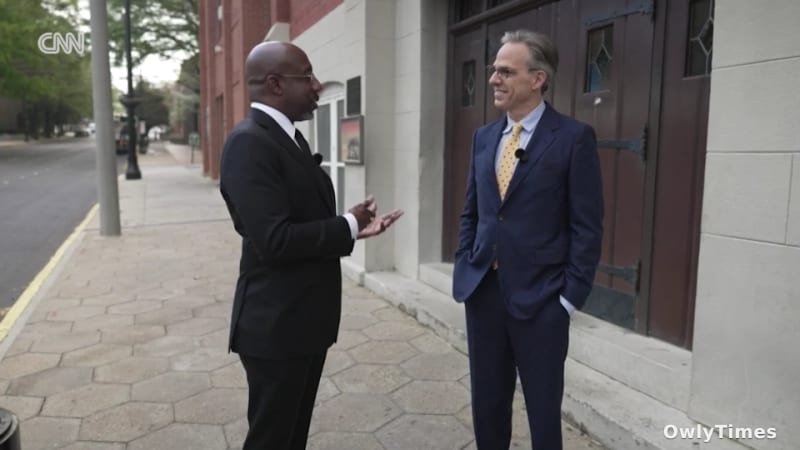
Senator Warnock’s Easter message, previewed on CNN alongside Jake Tapper at Ebenezer Baptist Church, offers a stark contrast to the prevailing mood. The Senator, also senior pastor of the historic church once led by Martin Luther King, Jr., spoke of a “new chapter for human possibility,” even while acknowledging the need to pray for President Trump, despite their disagreements. This isn’t some naive call for kumbaya; it’s a calculated appeal to a moral framework that feels increasingly absent from public discourse. It’s a reminder that even in the face of profound political division, basic human decency – and, crucially, the belief in the possibility of redemption – can still exist.
This piece references the CNN report.
But let’s be clear: this isn’t about genuine attempts at bridging divides. The clip of Warnock praying for Trump is strategically released amidst a barrage of other, far more incendiary content. Scrolling through the CNN feed alongside this story reveals a dizzying array of threats – escalating rhetoric towards Iran, accusations of toxicity in Washington, and partisan battles over political appointments like the firing of Pam Bondi. The sheer volume of conflict is overwhelming, and it’s designed to be. The algorithm doesn’t reward nuance; it rewards engagement, and outrage is a powerful engagement driver.
Consider the context. CNN, like all major news outlets, is a business. Their revenue is tied to viewership, and viewership is driven by compelling narratives. A story about a Senator offering a prayer for his political opponent is…nice. But it doesn’t generate the same clicks as a story about a potential war, or a scandal, or a deeply partisan attack. The network isn’t actively creating the conflict, but it’s undeniably incentivized to amplify it. This isn’t a conspiracy; it’s basic economics. The problem is that this amplification warps our perception of reality, making it seem as though the country is on the brink of collapse when, for most people, life continues largely unchanged.
The other stories flashing across the screen – NASA’s search for alien life, debates over the shutdown, polls showing Democratic gains – are all vying for our attention in this same chaotic ecosystem. The search for extraterrestrial life, for example, is fascinating, but it’s also a convenient distraction. It allows us to contemplate grand, existential questions while ignoring the very real, and very pressing, problems facing us here on Earth. The CNN poll showing Democrats ahead is equally telling. While it’s important to track political trends, focusing solely on the “horse race” aspect of politics – who’s winning, who’s losing – obscures the underlying issues at stake. The average voter isn’t concerned with “blue waves” or “red walls”; they’re concerned with healthcare, education, and economic security.
Even the outrage itself is becoming predictable. Lieutenant General Russel Honoré’s condemnation of Brian Hegseth’s rhetoric, warning it could lead to “torture or death” for U.S. troops, is a prime example. It’s a strong statement, and potentially justified, but it’s also a familiar pattern: a provocative statement followed by an equally provocative response. The cycle repeats endlessly, generating clicks and shares but rarely leading to meaningful change. The fact that Trump gave an Oval Office address on the war with Iran, and that Time Magazine reported a top aide warning him of a “rose-colored” view of the conflict, further illustrates this point. The spectacle of power, the threat of violence, the internal dissent – it’s all content, and it’s all being consumed at an alarming rate.
So, what happens next? I predict we’ll see a further fragmentation of the media landscape. As trust in traditional news sources continues to erode, more and more people will retreat into echo chambers, consuming only information that confirms their existing beliefs. The performative outrage will intensify, and the space for genuine dialogue will shrink. The question isn’t whether we’ll avoid conflict—it’s whether we’ll even be able to see each other across the divide, or if we’ll simply become avatars in a never-ending digital war. Watch for the rise of hyper-local news sources, and a growing demand for media literacy education. Because if we can’t distinguish between genuine information and manufactured outrage, we’re all in trouble.





