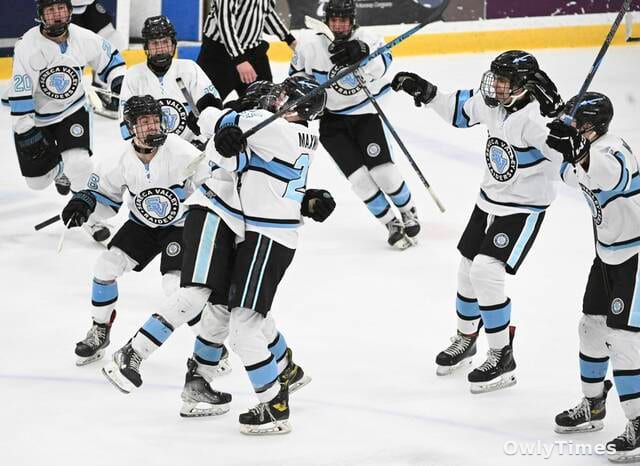

The air in the Baierl Ice Complex hung thick with anticipation, a familiar chill beyond the rink’s temperature. It wasn’t just the start of another PIHL Penguins Cup Playoffs; it was a reckoning. Last year, Tyler Maxwell and Carter Hoehn of Seneca Valley were mid-celebration, frozen in a photograph of pure elation after Hoehn’s overtime goal against Upper St. Clair – a goal that propelled them toward a grueling, triple-overtime championship run. Now, a year later, that same opponent stood across the ice, a stark reminder that in high school hockey, dominance isn’t guaranteed, it’s earned. The 2026 playoffs aren’t just about crowning a champion; they’re a test of whether last year’s Cinderella story can become a dynasty, and a window into the evolving landscape of youth hockey in Western Pennsylvania.
Seneca Valley enters the Class 3A quarterfinals as the clear favorite, boasting an impressive 18-1-1 regular season record. But the numbers, while impressive, only tell part of the story. Their 2025 championship wasn’t built on effortless wins; it was forged in the crucible of overtime battles, a testament to a team that refused to break. That resilience is crucial because, beyond the statistics, the Raiders are facing a league increasingly defined by parity. Upper St. Clair, despite a 5-9-3-3 record, finished just seven points out of ninth place, and closed the season with a four-game winning streak. This isn’t the same underdog the Raiders dispatched last year.
Original reporting: tribhssn.triblive.com.
The Panthers’ late-season surge speaks to a broader trend within the PIHL: the shrinking gap between contenders. While Seneca Valley consistently sits atop the standings, the league is becoming less predictable. This isn’t necessarily a bad thing. It forces teams to adapt, to innovate, and to rely on more than just raw talent. It’s a shift away from the era of dominant programs and towards a more competitive, balanced environment. The fact that Upper St. Clair even made the playoffs, edging out Franklin Regional, underscores this point. It’s a league where a single hot streak, a timely defensive adjustment, can be the difference between a playoff berth and an early exit.
This dynamic is mirrored in Class 2A, where defending champion Cathedral Prep – a team that stumbled through the regular season with a 4-13-1-2 record – faces top-seeded Hempfield. The Ramblers’ improbable playoff run, secured by a last-minute shutout of Penn-Trafford, is a classic example of the “anything can happen” spirit of the postseason. Hempfield, despite a strong regular season, can’t afford to underestimate a team that knows how to win when it matters most. The Spartans’ dominant regular season victories over Cathedral Prep – 10-2 and 6-0 – are rendered almost meaningless in the high-stakes environment of the playoffs. The pressure shifts, the intensity rises, and the underdog suddenly has a fighting chance.
Beyond the ice, these playoffs are a crucial test for the PIHL’s broadcasting strategy. TribHSSN’s commitment to streaming multiple games – including Central Catholic vs. Thomas Jefferson and Trinity vs. Neshannock – is a smart move, recognizing the growing demand for accessible high school sports coverage. The “Rebel Yell” podcast recap of the WPIAL basketball championships further demonstrates a willingness to expand its reach and engage a wider audience. This investment in digital media isn’t just about viewership numbers; it’s about building a community around these athletes and showcasing their talent to a broader audience, potentially attracting sponsorships and increasing the league’s overall profile.
What happens in these next few weeks will reveal more than just who hoists the Penguins Cup. It will demonstrate whether the league can maintain its competitive balance, whether underdogs can truly challenge the established powers, and whether its investment in digital media will translate into sustained growth. The question isn’t just who will win, but how they will win, and what that victory will signify for the future of high school hockey in Western Pennsylvania. Will we see a repeat champion cementing a dynasty, or a new contender rising to the challenge, signaling a shift in the league’s power structure? That’s the story worth watching unfold.