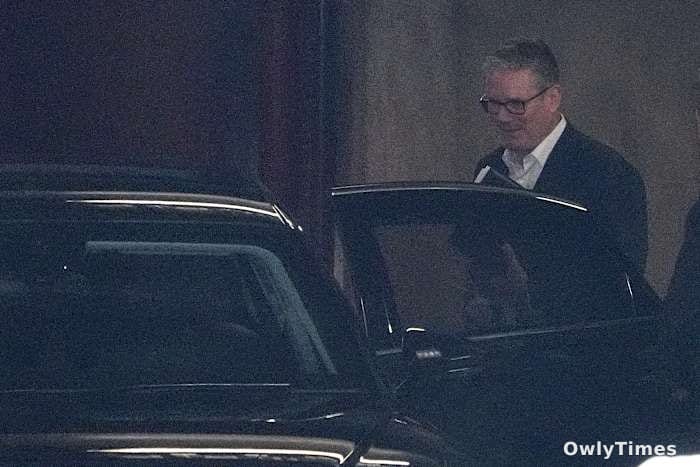

The political future of Keir Starmer, Britain's Prime Minister, hangs in a precarious balance following a disastrous showing for his Labour Party in last week's local elections. Starmer's current strategic calculus is to stand firm against mounting calls for his resignation, opting to weather the storm rather than concede to internal party pressure. This defiance, observed through his public statements and actions following a Cabinet meeting on Tuesday, May 12, 2026, represents a high-stakes gamble: he aims to project steadfast leadership in a moment of crisis, hoping to consolidate support among loyalists while forcing dissenters to formally challenge his authority. The alternative — a swift resignation — would signal weakness and potentially plunge the party into a protracted and divisive leadership contest on his own terms.
The Fallout from Local Election Losses
The immediate catalyst for this leadership crisis was the poor performance of the Labour Party in recent local elections, which the Associated Press reported has spurred "dozens of Labour lawmakers" to demand Starmer step down. This electoral setback has exposed deep fissures within the party, illuminating a classic political scenario where accountability for failure falls squarely on the leader. For those calling for his departure, primarily from the disaffected wings of the party, Starmer's continued leadership represents an obstacle to regaining public trust and electoral momentum. They believe a change at the top is necessary to reset the party's direction and appeal to voters ahead of the next national election, which is not constitutionally required until 2029.
The framework of who benefits and who loses in this unfolding drama is stark. Keir Starmer himself stands to lose his premiership if the internal rebellion gains critical mass, but by refusing to resign, he forces his opponents to initiate the formal challenge process, buying himself time and potentially exposing their lack of unified support. Those within his Cabinet who publicly offered support, such as Business Secretary Peter Kyle and Secretary of Science, Innovation and Technology Liz Kendall, benefit by demonstrating loyalty, potentially solidifying their positions within a Starmer-led government or positioning themselves favorably should a leadership contest eventually materialize. Kyle specifically praised Starmer's "really steadfast leadership" while Kendall affirmed, "The prime minister has my full support in this." Conversely, a junior minister, Miatta Fahnbulleh, became the first member of his government to quit on Tuesday, urging Starmer "to do the right thing for the country" and set a timetable to step aside. Her resignation signals a tangible loss of confidence from within Starmer's own government, providing a visible crack in his united front.
Cabinet Divisions and Loyalty Tests
The Cabinet meeting on Tuesday, May 12, 2026, served as a crucial proving ground for Starmer’s authority. While some ministers, like Kyle and Kendall, vocally backed the Prime Minister, others, including Health Secretary Wes Streeting and Deputy Prime Minister David Lammy, dodged questions from reporters, maintaining a public silence that speaks volumes about the internal tensions. Streeting, long speculated to be a potential leadership challenger, notably "didn’t comment as he left the Cabinet meeting," according to a report by ClickOnDetroit. This silence, while not an explicit challenge, indicates a cautious positioning, suggesting that potential successors are measuring the political winds before making their move.
A notable absence from a scheduled public appearance was Treasury chief Rachel Reeves, who pulled out of a London risk summit after attending the Cabinet meeting, with her place taken by Treasury minister Lucy Rigby. While no official reason was given for her withdrawal, the timing amidst the political turmoil is significant. Such an abrupt change in a high-profile engagement for a senior minister can be interpreted as a strategic move to avoid public scrutiny or to engage in more urgent, behind-the-scenes party deliberations. Housing Secretary Steve Reed, meanwhile, used social media platform X to explicitly rally support for Starmer, stating, "This is not a game... We must unite behind the Prime Minister." Such public appeals highlight the deep divisions and the active lobbying underway within the party ranks. This internal struggle is reminiscent of past periods of instability within UK political parties, where a leader’s grip on power is tested after electoral setbacks, forcing an intense period of internal negotiation and positioning among potential successors.
The Mechanics of a Leadership Challenge
Starmer’s vow to "fight on" is a direct acknowledgment of the formal process required to remove a Labour leader. As the Prime Minister himself stated, "There’s a process to oust a leader and that hadn’t been triggered." This process allows for a leadership challenge from one or more Labour lawmakers if Starmer does not resign voluntarily. By forcing a formal challenge, Starmer compels his detractors to coalesce around a candidate and demonstrate sufficient support, a potentially difficult task if the opposition is fragmented. This move also highlights the resilience often seen in leaders who, despite poor electoral results, believe they possess the mandate and vision to continue governing, even if that vision is contested within their own party. For more on the Labour Party's structure, one can refer to its official site at labour.org.uk.
The critical political chess move to watch next centers on whether Starmer's Cabinet members will collectively inform him that he has lost too much support, potentially triggering a resignation announcement. If not, the focus will shift to whether a Labour lawmaker or group of lawmakers formally initiates a leadership challenge. The actions and public statements of key figures like Wes Streeting in the coming days will be a crucial signal of the momentum behind any potential challenge to Prime Minister Keir Starmer's leadership.





