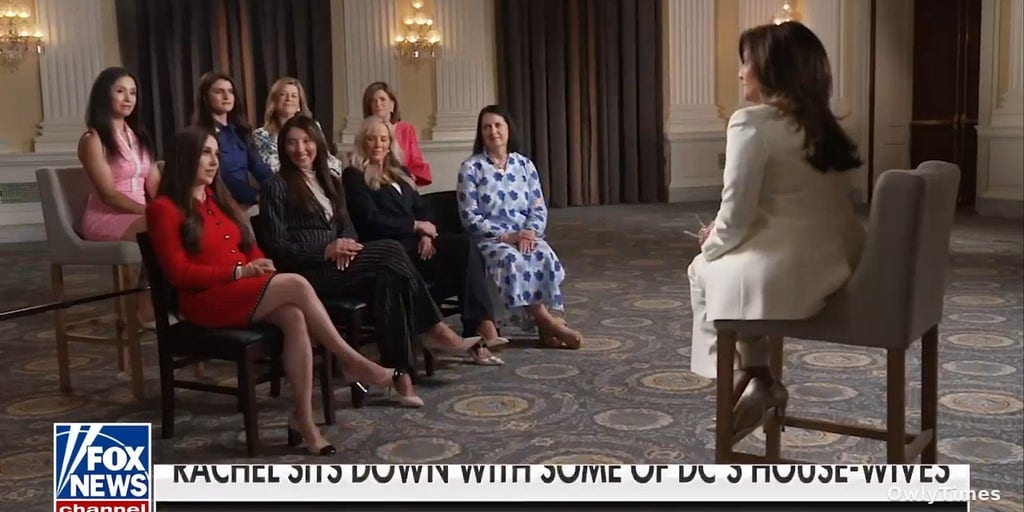

The strategic calculus behind the recent visibility of congressional spouses in the media landscape is a calculated attempt to humanize the often-sterile image of Washington power brokers. By pivoting from policy debates to the domestic realities of political families, institutional stakeholders are attempting to soften the sharp edges of partisan polarization. This move recognizes that in an era of intense public scrutiny, the "family brand" has become a vital asset for maintaining electoral viability and personal narrative control.
The Domestic Front as a Political Buffer
On April 25, 2026, Fox & Friends Weekend co-host Rachel Campos-Duffy moderated a discussion featuring the wives of congressional lawmakers. The dialogue centered on the logistical and emotional challenges of raising children within the high-pressure environment of the nation’s capital. For the lawmakers involved, this serves as a strategic maneuver to frame their public service not as a pursuit of abstract power, but as a commitment to family-centric values.
Who benefits from this repositioning? Primarily, the individual lawmakers who find their legislative records subject to increasing skepticism by voters. By centering the conversation on the preservation of marriages and the shielding of children from public vitriol, they effectively create a defensive perimeter around their personal lives. The primary losers in this dynamic are the political opponents who thrive on painting these figures as disconnected or purely adversarial; it is difficult to maintain a caricature of a ruthless operative when that same person is being discussed through the lens of parental responsibility.
Historical Parallels to the Public-Private Divide
This emphasis on the domestic sphere echoes the mid-20th-century political strategy of the "family photo op," a tradition that surged during the rise of television as a dominant political medium. Just as the COVID-19 pandemic forced a sudden, involuntary merger of the professional and private realms for the general public, today’s political figures are leveraging that shared experience to bridge the widening gap between the electorate and the legislative class.
The underlying tension here is clear: the political environment demands total commitment, yet the public demands relatability. Lawmakers who successfully integrate their family life into their political narrative are often able to insulate themselves from the volatility of single-issue political scandals. However, this strategy carries the inherent risk of overexposure, where the boundaries between authentic private experience and performative domesticity become indistinguishable.
Managing the Optics of Public Scrutiny
The focus on "managing public scrutiny" highlights a growing anxiety among the political elite regarding the intersection of social media exposure and traditional legislative work. When lawmakers invite their families into the spotlight, they are essentially attempting to curate the public's perception of their character before their detractors can define it for them. This is not merely a lifestyle segment; it is a defensive information operation designed to build reservoir of goodwill.
The effectiveness of this approach hinges on the perceived authenticity of these accounts. As viewers continue to navigate a landscape saturated with political messaging, the next reading of public trust metrics in institutions like Congress will indicate whether this humanization effort effectively mitigates the current levels of voter disillusionment. If the public continues to view these segments as a genuine window into the human cost of governance, expect to see an increase in family-focused media appearances as a staple of incumbent defense strategies throughout the remainder of the 2026 cycle.





