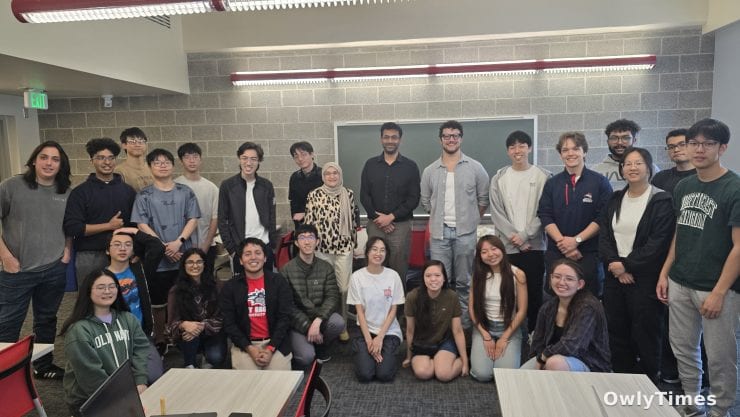

Beyond Coding: Stony Brook’s Project Quack Addresses a Hidden Curriculum in Computer Science
The persistent question echoing among incoming computer science students – “How do I start building something real?” – isn’t about syntax or algorithms. It’s a question about translation: translating theoretical knowledge into tangible creation, and translating into a community. This is the core problem Stony Brook University’s Project Quack, a mentorship program run by the Stony Brook Computing Society (SBCS), is uniquely positioned to address. While universities excel at delivering technical instruction, the crucial step of applying that instruction, and the social infrastructure to support that application, often remains implicit. Project Quack isn’t just teaching students to code; it’s teaching them how to learn, how to collaborate, and how to become active contributors to a field that demands constant innovation.
This article draws on reporting from news.stonybrook.edu.
The program’s structure, pairing less experienced “mentees” with more seasoned students, is deceptively simple. It’s a response, as explained by Eduardo Lozano, vice president of SBCS, to a dual need: the desire among new students to build practical projects and the desire for a stronger sense of community within the undergraduate CS program. Lozano’s observation – “A lot of people want to make stuff, but they don’t know where to start” – highlights a critical gap. Many students arrive at Stony Brook with a strong academic foundation, but lack the initial momentum or network to translate that foundation into a working project. Project Quack provides that “jumpstart,” but crucially, it’s designed to be self-sustaining.
What distinguishes Project Quack from a typical tutoring program is its emphasis on reciprocal learning. Mentees aren’t simply receiving instruction; they’re actively involved in building alongside their mentors, bouncing ideas off one another, and ultimately, preparing to become mentors themselves. This cyclical model, shifting the SBCS from a space of individual learning to one of shared knowledge, is a significant organizational evolution. It acknowledges that mastery isn’t a solitary pursuit, but a process of continuous teaching and refinement. The program’s success isn’t measured solely by the number of projects completed, but by the expansion of this collaborative network.
The implications extend beyond individual student success. The computer science field is facing a well-documented skills gap, and a persistent challenge in retaining diverse talent. Programs like Project Quack, which prioritize community and accessible mentorship, can play a vital role in addressing both issues. By lowering the barrier to entry for practical project work, and by fostering a supportive environment, Project Quack can empower students who might otherwise feel isolated or overwhelmed. This is particularly important given that many students may not immediately engage in formal research opportunities, leaving them without structured guidance. The program effectively creates an alternative pathway to hands-on experience.
However, it’s important to consider the limitations. Project Quack’s reach is currently limited to students actively participating in the SBCS. While the program aims to strengthen the broader undergraduate CS community, it doesn’t automatically include students who aren’t already involved in the organization. Furthermore, the program’s effectiveness relies heavily on the quality and commitment of the student mentors. Ensuring consistent mentor training and support will be crucial for long-term sustainability. The annual Project Quack symposium provides a valuable showcase for student work, but a more systematic evaluation of project outcomes and participant feedback would provide valuable data for program improvement. Looking ahead, it will be important to observe whether Project Quack’s model can be scaled to accommodate a larger number of students, and whether its emphasis on reciprocal learning can be integrated into the core CS curriculum. Will Stony Brook see a measurable increase in undergraduate research participation among Project Quack alumni, or a shift in the overall campus climate towards greater collaborative project work? That’s the key question to watch in the coming years.





