
The strategic calculus driving the May 5 primaries in Ohio and Indiana is not merely about candidate selection; it is a stress test for the absolute authority of the Trump administration within the Republican Party. By forcing loyalists into races and targeting those who defied his redistricting mandates, the president is attempting to convert the GOP from a coalition of regional interests into a centralized machine subservient to his executive agenda. This maneuver mirrors the historic consolidation of power seen in past eras where party leadership sought to purge dissenters to ensure legislative compliance, yet the friction in these Midwestern contests suggests that local institutional resistance remains a potent, if waning, force.
The Ramaswamy Factor and the Limits of Bravado
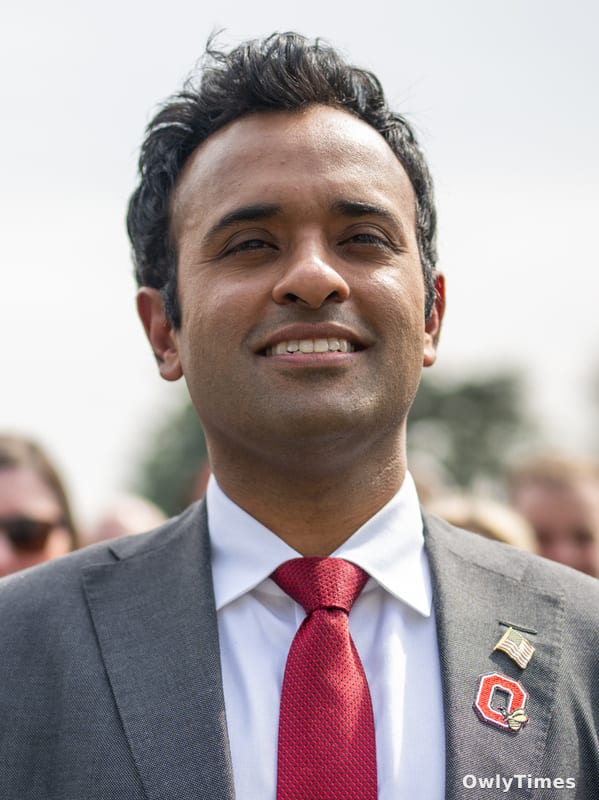
The gubernatorial race in Ohio serves as the primary’s most prominent laboratory for this power dynamic. Vivek Ramaswamy, the 40-year-old biotech mogul, has effectively cleared the field of traditional Republican rivals, backed by the president’s endorsement and a personal expenditure of $25 million. Yet, despite this overwhelming resource advantage in a state where Donald Trump won by 12 percentage points in 2024, the contest against Democrat Amy Acton has tightened significantly.
The tension here is clear: Ramaswamy’s brand of entrepreneurial bravado—manifested in proposals like raising the voting age to 25—has created a "likability problem," according to Jessica Taylor of the nonpartisan Cook Political Report. Who benefits from this volatility? Acton, who leverages bipartisan credibility from her tenure as public health director under retiring incumbent Mike DeWine, stands to gain if moderate Republicans, alienated by Ramaswamy’s rhetoric, choose to stay home or cross party lines. Conversely, Ramaswamy loses if his attempt to re-litigate the COVID-19 pandemic fails to excite a base that is currently distracted by internal party friction, including racist backlash directed at the candidate himself.
Redistricting as a Proxy for Control
While Ohio’s gubernatorial race is defined by personality, the Indiana primaries are defined by structural retribution. The administration’s campaign against state legislators who refused to support its preferred redistricting map is a calculated effort to ensure that congressional boundaries act as a firewall for future policy goals. The political machine—led by groups like Hoosier Leadership for America and American Leadership PAC—has funneled approximately $6 million into efforts to unseat incumbents like state Senate leader Rodric Bray.
This is a high-stakes gamble on the president's ability to dictate local political outcomes from the White House. The losers in this scenario are the traditional state-level power brokers who have relied on local coalitions to maintain their seats; they are now forced to combat an influx of "dark money" that ignores traditional party hierarchies. However, the contradiction lies in the grassroots response: reports indicate that redistricting, while a top priority for the administration, is not necessarily driving the primary electorate in rural areas. If these challengers fail to gain traction, it would signal that the president’s "redistricting war" may have overreached the actual interests of the conservative base.
The Congressional Landscape
The fight for control in Washington is equally visible in Ohio’s 9th Congressional District. Legislators have redrawn the district to be more favorable to Republicans, hoping to unseat the longest-serving woman in Congress, Democrat Marcy Kaptur. The potential for a "blue wave" remains a threat, particularly as public sentiment shifts; a Bowling Green State University survey recently found that 52% of Ohio voters disapprove of the president’s job performance.
The outcome of this primary will be measured by the margin of victory for the eventual Republican nominee, particularly if that nominee is Madison Sheahan. As a former top official for Immigration and Customs Enforcement, Sheahan’s candidacy represents a specific, aggressive vision of governance. Whether that vision is a winning ticket in a district that remains a toss-up according to the Cook Political Report will be determined by the next reading of election polling in the region.





