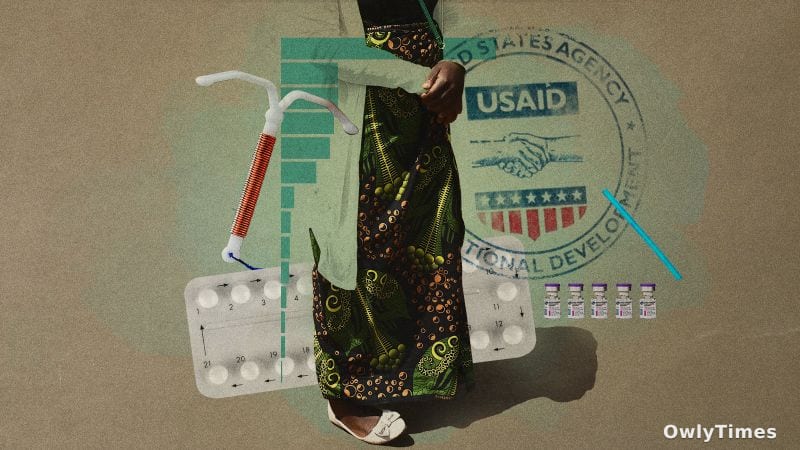

When we examine the global landscape of reproductive health, the question is no longer just about the availability of medical supplies; it is about the systemic collapse of a safety net that once spanned entire continents. In Kilifi County, Kenya, nurse Kephine Ojung’a has spent nearly three decades navigating the complexities of reproductive care. Today, she faces a reality that was once unthinkable: empty pharmacy shelves and a rising tide of preventable medical crises. Her experience, shared by providers from Nigeria to Zambia, marks a stark transition from a system of supported access to one of acute, localized scarcity.
The current situation is frequently framed by political headlines as a battle over ideological spending, yet the clinical reality on the ground reflects a different, more urgent story. While the Trump administration and various donor nations emphasize a shift in spending priorities—specifically citing a desire to move away from what they term "unfettered access to birth control"—the actual consequence for providers like the Reproductive Health Network Kenya is a direct loss of life-saving infrastructure. According to the International Planned Parenthood Federation, funding cuts have forced the closure of nearly 1,400 medical clinics globally, stripping 9 million people of essential sexual and reproductive health services in 2025 alone.
It is essential to distinguish between the administration’s stated policy goals and the measurable public health outcomes now emerging. A US State Department spokesperson recently defended these cuts by stating that tax dollars should not fund "wasteful overseas bureaucracies," asserting that the administration remains focused on HIV/AIDS, tuberculosis, and malaria. However, health professionals note that reproductive services are rarely siloed. In Tanzania, for instance, MSI Reproductive Choices reports a funding gap of approximately $18.3 million for contraceptives. Their analysis suggests that these specific commodities, if available, would have prevented 1,600 maternal deaths in that country this year alone. By decoupling family planning from broader maternal health, the current policy effectively undermines the very "life-saving care" the State Department claims to prioritize.
There are significant limitations to consider when analyzing these trends. While the correlation between aid withdrawal and rising maternal mortality is clear, the data is often collected in environments where record-keeping is increasingly difficult due to the very clinic closures described. Furthermore, the 2024 Guttmacher Institute analysis—which credits US funding with preventing 17.1 million unintended pregnancies and 34,000 maternal deaths—relies on projections that may not account for the rapid, shifting nature of the current supply chain crisis. The human impact, however, is not theoretical. In Mozambique, the Mozambican Association for Family Development (AMODEFA) reported a 7% increase in recorded teen pregnancies in regions where US-funded services were withdrawn, a metric that serves as a grim early indicator of the long-term socioeconomic fallout.
The path forward remains volatile. Although Congress passed funding for global health in fiscal year 2026, experts caution that a yearlong lag in implementation persists, and the funds remain vulnerable to the same rescissions that saw $500 million clawed back in July. The US State Department is currently evaluating how to allocate these resources, leaving the future of programs in 41 countries in a state of suspended animation. Whether the current trajectory of maternal health outcomes reverses or stabilizes will depend on the next reading of the 2026 financial year budget implementation reports, which will signal whether these essential services are finally restored or permanently dismantled.





