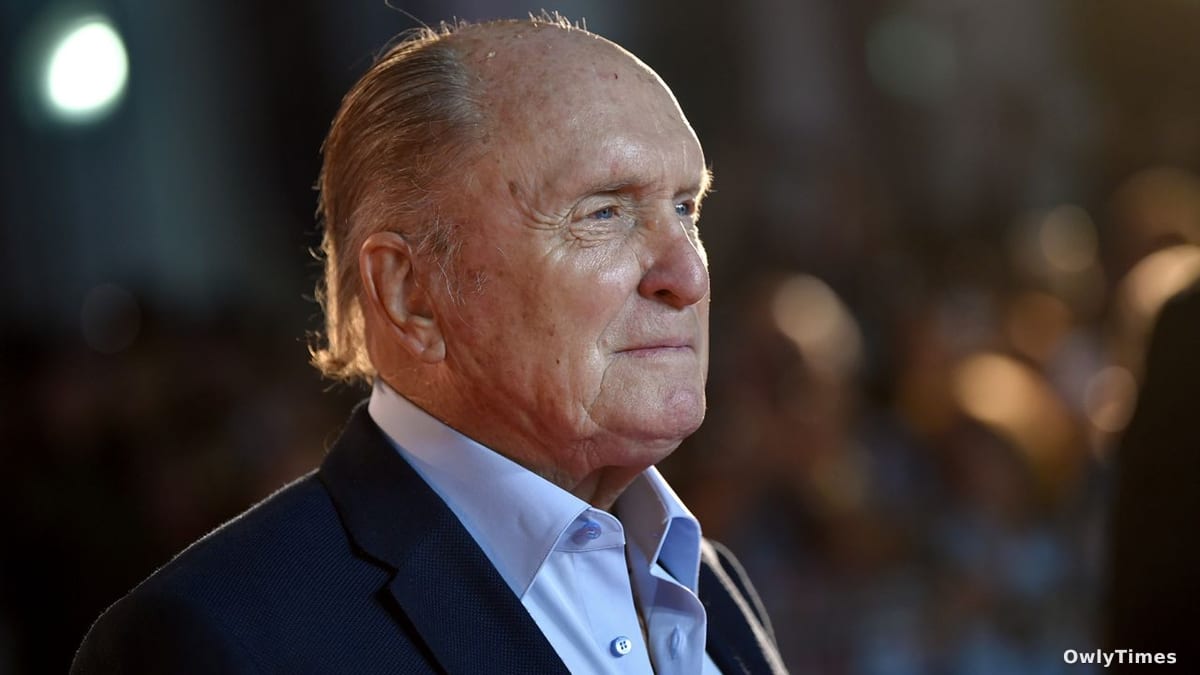

The scent of napalm. Even now, decades later, the phrase conjures the unsettling calm of Robert Duvall’s Lieutenant Colonel Bill Kilgore in Apocalypse Now, casually surfing towards the chaos of the Vietnam War. News of Duvall’s death at 95, announced Monday by his wife Luciana Duvall, doesn’t arrive as a sudden shock – he lived a full life, a remarkably long life for an industry that often chews up and spits out its talent. But it feels like a quiet extinguishing of a flame that illuminated the edges of American cinema for over six decades, a flame that burned brightest not in the spotlight, but in the shadows, lending depth and authenticity to the stories we tell ourselves about who we are. This isn’t simply the loss of an actor; it’s a reckoning with the changing landscape of character work, and what gets valued – or undervalued – in a Hollywood increasingly obsessed with brands over nuance.
Duvall wasn’t a matinee idol. He didn’t possess the conventionally handsome features of a Brad Pitt or a Leonardo DiCaprio. His power lay in his ability to become someone else, to inhabit the quiet spaces between lines, to convey volumes with a glance. From his chillingly understated portrayal of Tom Hagen in The Godfather – a role David Thomson famously described as “perfectly designed for its actor” – to his Oscar-winning performance as the broken country singer Mac Sledge in Tender Mercies, Duvall consistently delivered performances that felt less like acting and more like witnessing. He was the supporting player who elevated every film he touched, the reliable presence who could ground even the most outlandish narratives. In an era where supporting roles are often relegated to comic relief or plot devices, Duvall proved their potential for profound emotional weight.
The story of his career, however, is also a story of industry friction. A well-documented dispute over salary led him to famously decline a return for The Godfather Part III, a decision widely lamented by fans and colleagues. This wasn’t simply about ego or money; it was about a fundamental disagreement over value. Duvall felt he deserved equal compensation to his co-stars, a recognition of his crucial contribution to the saga. The fact that this disagreement became public, and that he continued to voice his frustrations, speaks to a larger issue within Hollywood: the persistent undervaluing of character actors, particularly those who don’t fit the traditional leading-man mold. While A-list stars command multi-million dollar salaries, the actors who provide the texture and authenticity often remain in the shadows, financially and critically. In 2024, with the ongoing SAG-AFTRA strikes focused on fair compensation in the streaming era, Duvall’s story feels particularly resonant.
This article draws on reporting from spectrumnews1.com.
Beyond the headlines about his iconic roles and Oscar win, Duvall’s dedication to his craft was almost obsessive. Michael Caine, a fellow veteran of the screen, recalled Duvall’s intense focus before scenes, a silence so complete it bordered on forbidding. This wasn’t aloofness; it was a deep immersion in the character, a commitment to finding the truth within the role. He wasn’t just reciting lines; he was living them. This level of preparation extended to his directorial efforts, like The Apostle, a passion project he wrote, directed, starred in, produced, and largely financed himself, spending twelve years perfecting the script and securing funding. This willingness to take risks, to invest his own resources in a story he believed in, is a testament to his artistic integrity. The film, a deeply personal exploration of faith and redemption, earned him another Oscar nomination and cemented his reputation as a true auteur.
Robert Duvall’s passing isn’t just the end of a remarkable career; it’s a challenge to the current state of Hollywood. Will the industry continue to prioritize spectacle and star power over the nuanced performances that truly resonate with audiences? Will character actors be given the recognition – and the compensation – they deserve? Or will we continue to see a homogenization of talent, a narrowing of the range of stories being told? The scent of napalm may fade with time, but the legacy of Robert Duvall – a master of subtlety, a champion of authenticity, and a reminder of the power of quiet brilliance – should serve as a potent warning: losing these voices diminishes us all. What will it take for Hollywood to remember that the soul of a film often resides not in the leading role, but in the carefully crafted details brought to life by those who dare to inhabit the shadows?