
The Olympic Balancing Act: Russia’s Potential Return and the Price of Neutrality
The International Olympic Committee (IOC) is signaling a willingness to lift suspensions on Russia and Belarus, potentially opening the door for their athletes to compete again as early as the 2028 Los Angeles Olympics. This move, however, isn’t occurring in a vacuum. It’s colliding head-on with sustained international solidarity for Ukraine, vividly demonstrated by the recent disqualification of Ukrainian skeleton slider Vladyslav Heraskevych for wearing a helmet adorned with the faces of Ukrainian soldiers and athletes killed in the ongoing war. The IOC’s attempt to navigate this fraught landscape reveals a fundamental tension: can sport truly remain “neutral” in the face of blatant geopolitical conflict, and at what cost?
Background & Context: From Outcry to Quiet Re-engagement
The initial, widespread bans on Russian and Belarusian athletes followed Russia’s full-scale invasion of Ukraine in February 2022. This response wasn’t simply about sporting principles; it was a direct consequence of immense international pressure. The war, now entering its fifth year – a conflict estimated to have caused over 1.8 million casualties according to the Center for Strategic and International Studies, making it the most devastating European conflict since World War II – demanded a clear moral stance. The IOC initially responded decisively, but has since begun to subtly shift its approach.
Original reporting: the Los Angeles Times.
Last December, the IOC advocated for allowing Russian and Belarusian youth athletes to compete under their national flags at the Youth Olympic Games in Senegal this summer. This represents a clear departure from the blanket bans and signals a testing of the waters, as noted by Jules Boykoff, a professor at Pacific University, who described the IOC’s actions as a “trial balloon.” This incremental re-engagement builds on a history of the IOC prioritizing its own operational continuity, even amidst geopolitical turmoil – a pattern critics argue often overshadows its stated commitment to ethical principles. The initial ban in 2017 due to state-sponsored doping also demonstrates the IOC’s willingness to reinstate nations once conditions appear to be met, regardless of lingering concerns.
The Heraskevych Case: A Symbolic Flashpoint
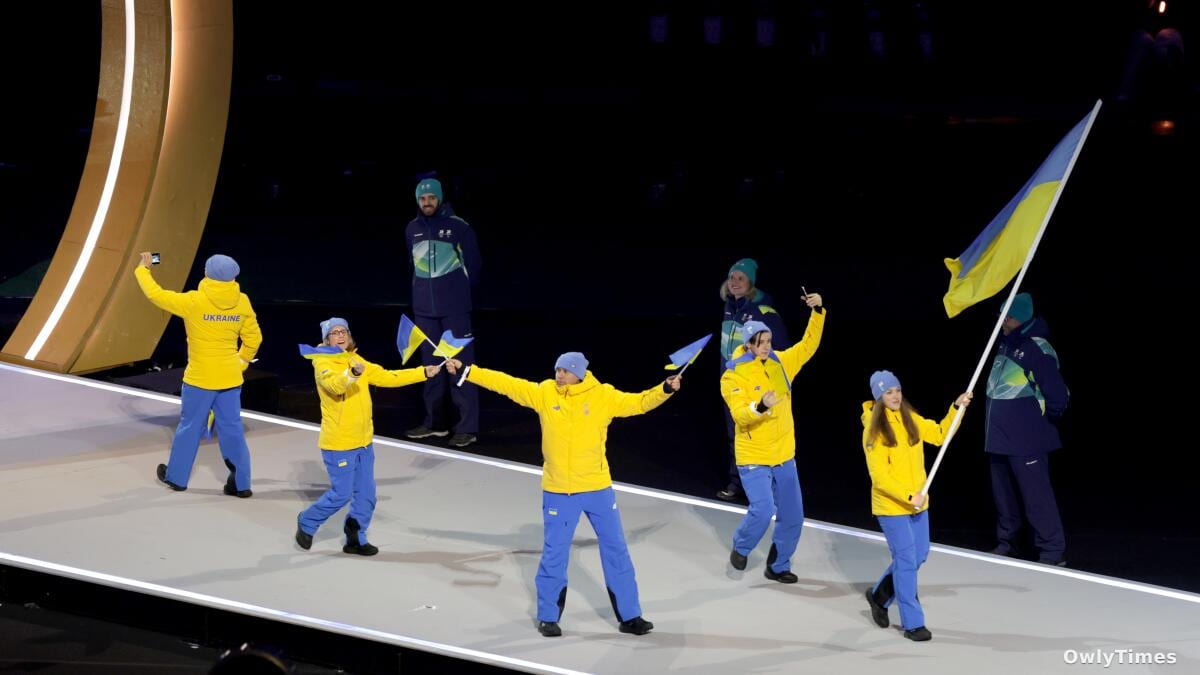
The disqualification of Vladyslav Heraskevych isn’t merely a dispute over Olympic rules; it’s a potent symbol of the moral dilemma facing the IOC. His helmet, a deeply personal and poignant tribute to fallen Ukrainians, directly challenged the IOC’s insistence on “neutrality.” The subsequent outpouring of support for Heraskevych – including tributes from Ukrainian and Latvian bobsled teams – underscores the strength of international sentiment supporting Ukraine and the widespread rejection of Russia’s actions.
The IOC’s attempt at compromise – allowing the helmet in training and offering a black armband – felt inadequate and tone-deaf to many. The enforcement of Rule 50.2, prohibiting political statements, appears particularly jarring given the inherently nationalistic nature of the Olympics, where athletes compete for their countries and national anthems are played upon victory. This contradiction highlights the selective application of the rule and raises questions about whose “politics” are deemed acceptable within the Olympic framework. The Court of Arbitration for Sport’s upholding of the disqualification further solidified the IOC’s position, but arguably at the cost of public perception.
What This Means: Stakeholders and Shifting Power Dynamics
The IOC’s potential shift towards reintegrating Russia and Belarus has significant implications for multiple stakeholders. For Ukraine, it’s a deeply painful prospect, potentially undermining the international solidarity it desperately needs. For the broader international community, it risks normalizing relations with an aggressor state while a brutal war continues. For the IOC itself, it’s a gamble with its own credibility and moral authority.
The individual sport federations now face a complex decision. While the IOC can lift suspensions of national Olympic committees, the federations control participation in individual sports. A fractured Olympics, with some sports welcoming Russian and Belarusian athletes while others maintain bans, is a very real possibility. This could lead to diminished viewership and sponsorship, impacting the IOC’s financial stability. Andrew Bertoli, an assistant professor at IE University, rightly points out that international public opinion remains strongly opposed to Russia’s participation, a factor the IOC cannot ignore. The IOC’s attempt to balance its stated principles with geopolitical realities is a precarious act, and one that could ultimately damage its reputation.
Looking Ahead: A Contentious Road to Los Angeles
The path to the 2028 Los Angeles Olympics is fraught with uncertainty. While the IOC has “no timeline” for Russia’s return, as stated by Kirsty Coventry, the organization appears determined to find a way forward. Expect continued pressure from Ukraine and its allies to maintain the bans. The key question is whether the IOC will prioritize its own institutional interests – including the desire for a fully populated and financially successful Games – over the moral imperative to stand with Ukraine.
The situation in Ukraine itself will be a critical factor. If the war continues, or even escalates, the prospect of Russia competing in Los Angeles becomes increasingly untenable. However, even a ceasefire might not be enough to quell international opposition. The IOC will likely attempt to establish strict criteria for Russian and Belarusian athletes to compete – perhaps as individual neutral athletes, with stringent vetting processes to ensure no ties to the military or government. But even these measures are likely to be met with resistance. The coming months will be a crucial test of the IOC’s resolve and its ability to navigate a deeply complex and politically charged landscape. The 2028 Games may well become a defining moment for the future of the Olympic movement.