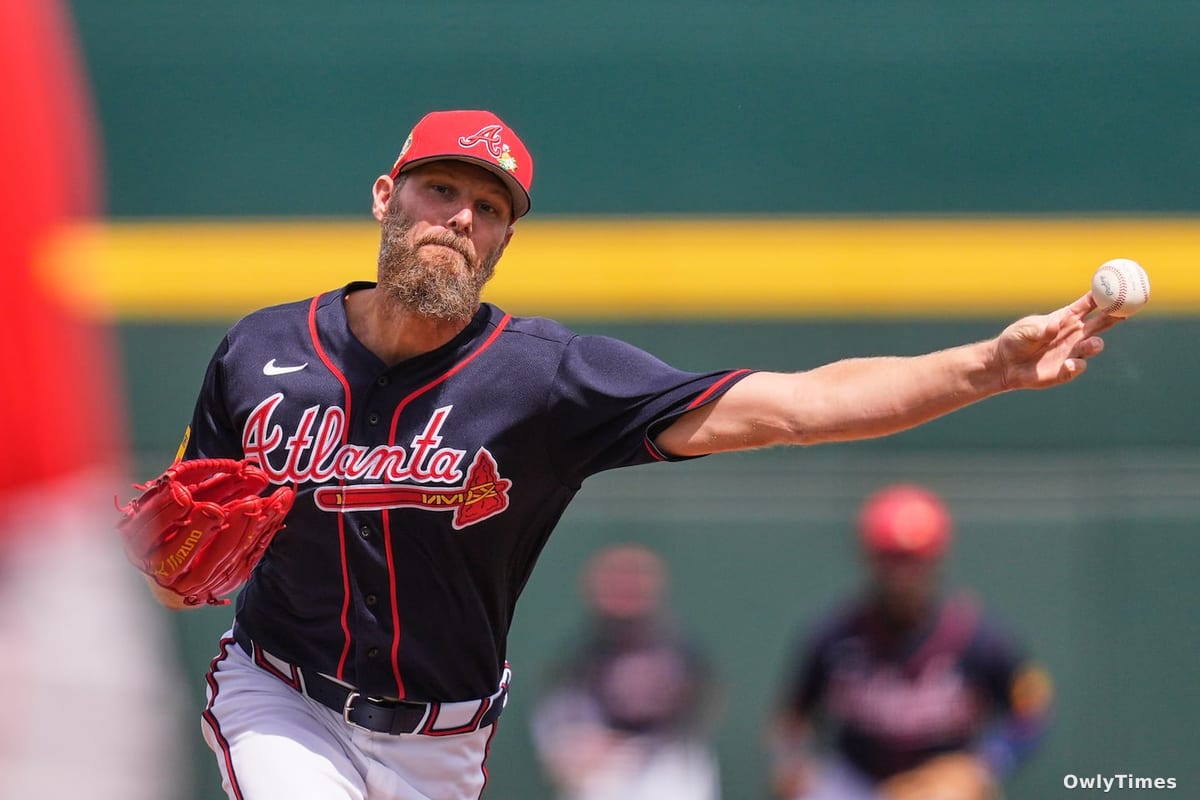

The crack of the bat echoed across the Florida spring training field, but for Jarren Duran, it carried a bittersweet note. He’d just homered off Chris Sale, his former teammate, but the joy was tempered by a familiar, unsettling feeling. “Scary,” Duran admitted, watching Sale unleash 97-mile-per-hour fastballs for the Atlanta Braves. It wasn’t the fear of facing a tough pitcher, but the jarring reality of witnessing a talent seemingly resurrected, a career many had written off now blazing with renewed life. This isn’t just a baseball story; it’s a stark commentary on how we define success, failure, and second chances in a culture obsessed with immediate results.
For Red Sox fans, and frankly, much of baseball, watching Sale’s resurgence feels like observing a ghost return to dominance. From 2017 to 2018, he was a force, racking up top-five Cy Young finishes and etching his name into postseason lore with a devastating slider in Game 5 of the 2018 World Series. But then came the injuries – a dizzying cascade that saw him average fewer than eight starts and 40 innings a year between 2020 and 2023. The whispers started: was this the end? Had the power, the precision, simply vanished? The narrative had solidified – Chris Sale was a cautionary tale, a reminder of baseball’s brutal toll on the human body. Yet, narratives, as Sale himself points out, are fluid. “Things change. No one has a crystal ball. This is a weird game,” he said after his spring training outing.
Drawn from bostonglobe.com.
The “weirdness” lies in the fact that Sale isn’t just back; he’s arguably better than ever. Since being traded to Atlanta in what now appears to be a spectacularly lopsided deal for the Red Sox (involving Vaughn Grissom, who is now with the Angels), Sale has posted a 25-8 record with a 2.46 ERA over 303⅓ innings – numbers that place him among the league’s elite, trailing only Paul Skenes and Tarik Skubal in ERA among starters and second only to Garrett Crochet in strikeout rate. This isn’t a veteran clinging to the past; it’s a pitcher in his prime, rewarded with a $27 million extension that could take him through his age-39 season. The extension itself is a statement. In an era where teams increasingly prioritize youth and analytics, Atlanta is betting big on a pitcher nearing 40, a testament to Sale’s unique talent and the team’s willingness to buck conventional wisdom.
But beyond the statistics and contract details, there’s a human story here. Sale acknowledges the support he received, even when others doubted him. “I think of all the people that helped me and the relationships I was able to build, the people that just really stayed behind me,” he said, highlighting the importance of a support system in navigating career-threatening setbacks. The Red Sox, while acknowledging his success, are left to grapple with the consequences of the trade, a deal that now ranks among the most lopsided in franchise history. Manager Alex Cora, however, refuses to dwell on the past. “We don’t need to go there,” he stated, emphasizing the team’s focus on its current trajectory. This isn’t about regret; it’s about recognizing that sometimes, even the best organizations make mistakes, and that players, like people, deserve the opportunity to redefine their narratives.
The Chris Sale story isn’t just about a pitcher’s comeback; it’s a challenge to our obsession with timelines and predictions. It’s a reminder that careers aren’t linear, that setbacks don’t necessarily equate to failure, and that sometimes, a change of scenery is all it takes to unlock untapped potential. As Sale continues to defy expectations, the question isn’t whether he can maintain this level of performance, but whether other teams will learn from Atlanta’s gamble – will they be more willing to invest in veterans with a history of injury, recognizing that experience and resilience can be just as valuable as raw talent? The future of pitching, and perhaps the future of valuing experience in professional sports, may well hinge on the answer.

