
$3.6 Million Revenue Loss Highlights VTA’s Land Grab Strategy
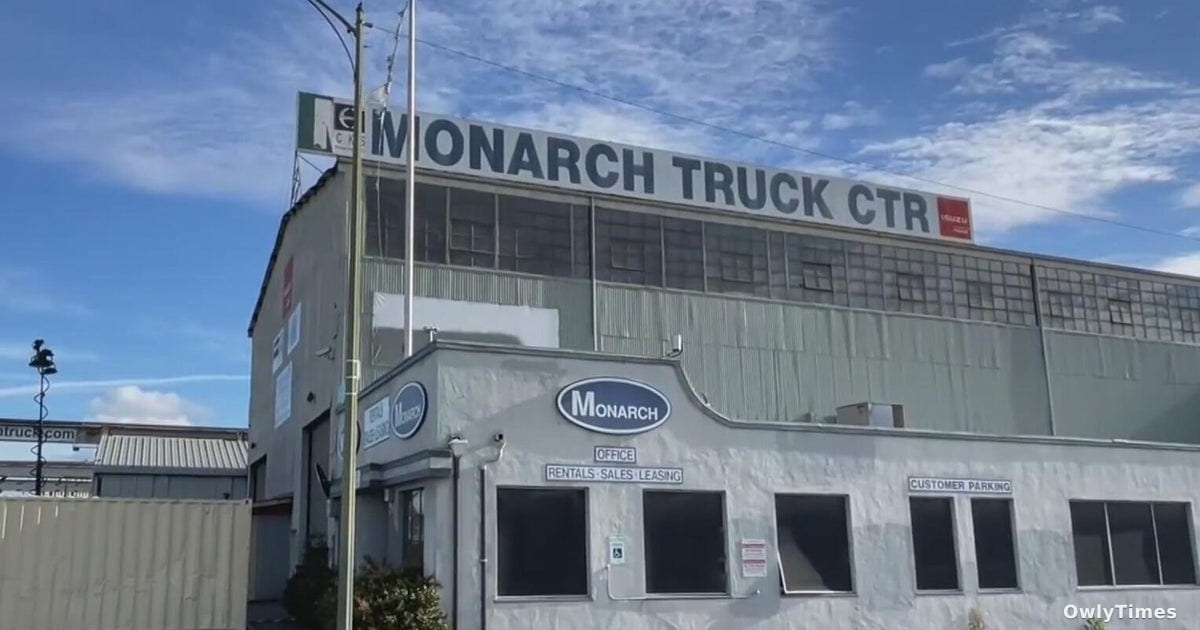
A 60% revenue decline at Monarch Truck Center in San Jose isn’t simply a business struggling with market headwinds – it’s a direct consequence of the Valley Transportation Authority’s (VTA) aggressive use of eminent domain, and a potential harbinger of similar conflicts to come. The case, unfolding as a lawsuit scheduled for trial on March 9th, reveals a pattern where infrastructure projects are being leveraged to unlock lucrative real estate development opportunities, prioritizing revenue generation over mitigating the economic fallout for established businesses. Nicole Guetersloh, owner of Monarch, alleges the VTA intentionally expedited her displacement to clear the way for a future housing project, disguised as necessary preparation for the Little Portugal BART station.
This piece references the CBS News report.
Follow the money, and the picture becomes clear. While the VTA publicly frames the land acquisition as essential for public transit, their refusal to settle with Guetersloh – and declining to comment on the litigation – suggests a calculated risk assessment. The agency appears willing to absorb the legal costs and potential damages awarded by a jury, betting that the long-term profits from high-density housing development will outweigh the immediate financial burden. This calculation is supported by Guetersloh’s assertion that the BART station itself isn’t the primary driver, stating, “It’s not really about the train station. VTA has found a nice way to make money: building high-density housing.” San Jose’s median home price currently sits at $1.4 million, according to Zillow data – a figure that incentivizes maximizing developable land, even through contentious eminent domain proceedings.
The situation at Monarch isn’t isolated. The neighboring Silicon Valley Granite company faced a similar 72-hour eviction notice in May, leaving behind abandoned inventory. This parallel displacement suggests a coordinated effort to clear a larger parcel for development, rather than a series of independent decisions driven solely by BART’s footprint. The VTA’s strategy contrasts sharply with the stated purpose of eminent domain – to serve a clear public benefit. While transportation infrastructure undeniably provides a public good, the simultaneous pursuit of high-profit housing projects raises questions about whether the “public benefit” justification is being stretched to serve private financial interests. The legal threshold for “just compensation” under eminent domain law is meant to cover business losses, yet Guetersloh reports receiving no offer from the VTA, despite her leaseholder status entitling her to compensation.
The implications extend beyond Monarch and Silicon Valley Granite. San Jose, like many Bay Area cities, is grappling with a severe housing shortage, creating intense pressure to develop every available parcel. The VTA’s actions establish a precedent that could embolden other public agencies to utilize eminent domain not for essential infrastructure, but as a tool for land speculation. This is particularly concerning for small and medium-sized businesses, which often lack the resources to mount protracted legal battles against well-funded government entities. Guetersloh’s decision to fight, and her warning to other businesses – “You have rights! Make sure you get attorneys” – underscores the power imbalance at play.
What this means for your wallet: Watch for increased scrutiny of public infrastructure projects in San Jose and across the Bay Area. If the VTA is perceived as prioritizing housing revenue over legitimate public transit needs, it could trigger broader legal challenges and community opposition, potentially delaying projects and increasing costs. More importantly, consumers should anticipate that the escalating cost of land acquisition – whether through market forces or eminent domain – will ultimately be passed on to them in the form of higher housing prices and potentially increased transit fares. The question now is whether the courts will uphold the spirit of eminent domain law, or allow it to become a tool for opportunistic real estate development.