
$31 Billion in Lending Now Contingent on Citizenship: A Shift in the SBA’s Core Mission
A single policy change announced by Kelly Loeffler, the current administrator of the Small Business Administration (SBA), has effectively redrawn the lines of access to $31 billion in small business loans – restricting eligibility to US citizens only. This isn’t a gradual recalibration of lending criteria; it’s a hard stop for legally-resident immigrants with green cards, a demographic previously eligible for SBA support. Follow the money, and the immediate impact is clear: a significant segment of entrepreneurial activity, representing a growing portion of the US economy, is now facing a newly erected barrier to capital.
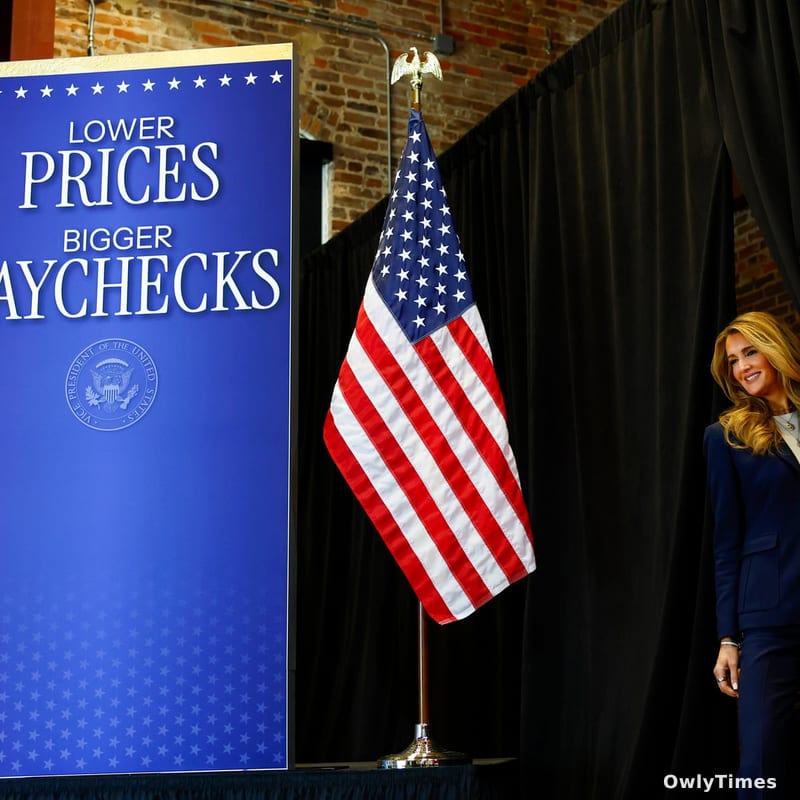
Drawn from The Guardian.
The move represents a stark departure from the SBA’s historical function. Established in 1953 under Dwight Eisenhower, and elevated to a cabinet-level position by Barack Obama in 2012 to underscore the importance of small businesses, the agency has traditionally aimed to foster economic growth across all legally operating businesses. The current restriction isn’t simply about enforcing immigration law; it’s about actively excluding legally-resident entrepreneurs from participating in the American economic system. This is particularly jarring when considering that SBA loan volume reached $30.9 billion in fiscal year 2023, a figure that demonstrates the agency’s substantial influence on small business formation and expansion.
The timing and framing of this policy shift are undeniably political. The source notes a reaction against the previous administration’s emphasis on diversity in SBA marketing materials. While Pew Research data confirms that 85% of US small business owners are white and 76% are men, the Biden administration prioritized visually representing the evolving demographics of entrepreneurship. This focus, however, was largely cosmetic. The underlying reality – and the SBA’s lending patterns – didn’t fundamentally shift to reflect that diversity. Loeffler’s move, conversely, isn’t about accurately reflecting the current landscape of small business ownership; it’s about signaling alignment with the Trump administration’s broader political agenda. The tension here is palpable: an agency designed to be a neutral economic engine is now demonstrably serving a partisan purpose.
This isn’t merely a symbolic gesture. The SBA’s lending programs are critical for businesses unable to secure funding from traditional banks. Restricting access based on citizenship status will disproportionately impact immigrant-owned businesses, which contribute significantly to job creation and economic innovation. Consider this: immigrant entrepreneurs are more likely to start businesses than native-born citizens, and those businesses often exhibit higher growth rates. By cutting off this pipeline of capital, the SBA is potentially stifling economic activity and hindering the very growth it’s mandated to promote. The agency’s actions also contradict the bipartisan support historically demonstrated by the House and Senate small business committees, which typically prioritize policies benefiting all small business owners.
The core problem, as articulated by the source, isn’t simply the policy itself, but the SBA’s increasing vulnerability to political interference. The suggestion to spin off the SBA into a public-private entity – modeled after organizations like the Manufacturing Extension Partnership or the Fraunhofer Society – offers a compelling solution. This structure, funded by both government and private industry and overseen by a consortium of stakeholders, would insulate the agency from the whims of individual administrations. Accountability would be ensured through mandatory reporting to Congress and public disclosure of goals and results. This model acknowledges the SBA’s vital role while mitigating the risk of it becoming a mere political tool.
What this means for your wallet: watch for a potential slowdown in small business growth, particularly in sectors heavily reliant on immigrant entrepreneurship. More specifically, monitor the SBA’s loan approval rates for legally-resident immigrants in the coming quarters. A significant drop will be a clear indicator that this policy change isn’t just about messaging – it’s actively reshaping the landscape of small business finance, and potentially, the American economy. The question now is whether the long-term economic costs of this politically-motivated decision will outweigh any perceived short-term gains.





