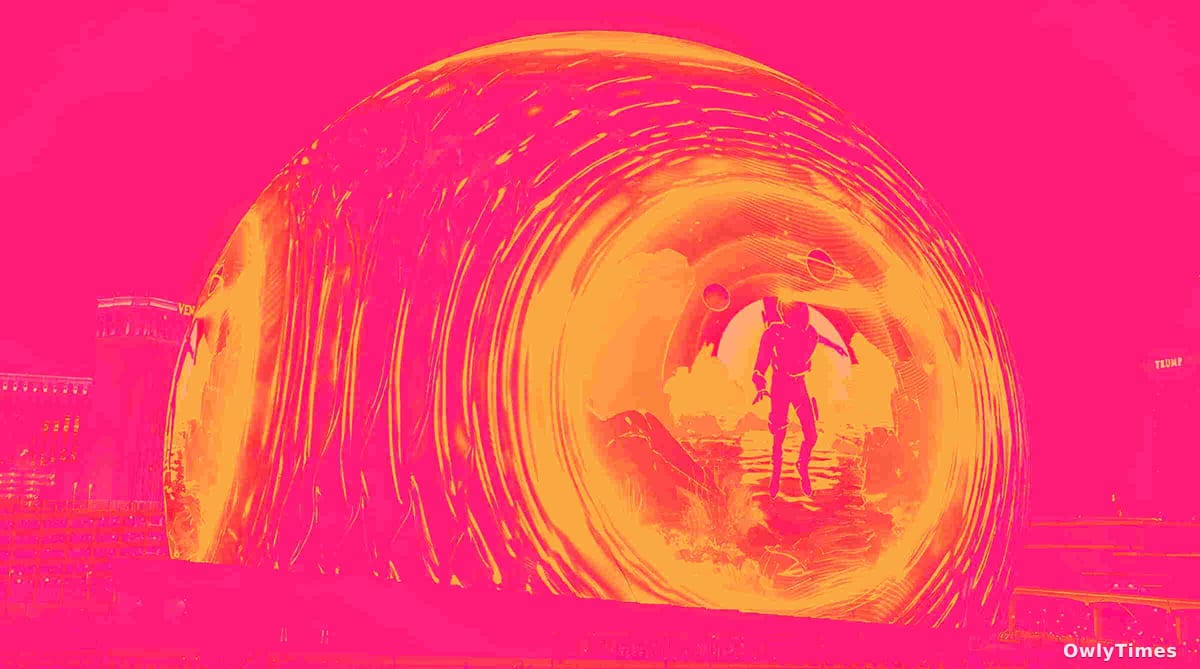

A $19 Million Boost Signals Sphere’s Staying Power, But Volatility Remains
A $19 million revision to first-quarter revenue estimates – specifically, Guggenheim’s upward adjustment for Sphere Entertainment (NYSE:SPHR) – is the clearest signal yet that the Las Vegas venue is exceeding initial expectations, even as broader economic anxieties linger. The firm’s increased price target, now $160 per share from $150, triggered a 4.2% jump in SPHR’s afternoon trading, but to frame this as simple optimism would be a misreading of the market’s complex signals. Follow the money: this isn’t just about “Wizard of Oz” selling tickets; it’s about proving a fundamentally new entertainment model can thrive in a discretionary spending environment.
The core of Guggenheim’s revised outlook rests on the performance of the “Wizard of Oz” experience, which is now projected to contribute $255 million in revenue for the quarter, up from a previous estimate of $246 million. This translates to a $7 million increase in projected revenue, and a $7 million bump in adjusted operating income, now forecast at $60 million. While seemingly incremental, these figures are critical because they demonstrate resilience against a backdrop of cautious consumer behavior in Las Vegas. The city’s tourism sector, while recovering, hasn’t fully returned to pre-pandemic levels, making Sphere’s success all the more noteworthy. Year-over-year, this represents a significant validation of the Sphere’s concept, moving beyond initial hype to demonstrable financial performance.
However, the market’s reaction – a 4.2% jump – is notably restrained considering the revised projections. This is because Sphere Entertainment’s stock has been on a rollercoaster over the past year, experiencing 29 moves exceeding 5% in either direction. Just two days prior, the stock gained 3.4% on news of potential de-escalation in the Iran conflict and reassuring statements from the Federal Reserve regarding interest rates. This pattern reveals a market highly sensitive to both company-specific news and macro-level events. Treasury Secretary Scott Bessent’s comments regarding the Strait of Hormuz and Jerome Powell’s assessment of controlled inflation provided a temporary tailwind, but the underlying volatility suggests investors remain skeptical about sustained growth. The market is pricing in success, but not necessarily guaranteeing it.
Original reporting: stockstory.org.
This sensitivity is further underscored by the broader economic context. The simultaneous relief from geopolitical tensions and monetary policy concerns fueled a recent rally, but those concerns are demonstrably fragile. A flare-up in the Middle East, or a shift in the Fed’s stance on inflation, could quickly erase recent gains. Sphere’s reliance on high-ticket entertainment also makes it vulnerable to economic downturns; discretionary spending is the first to be cut when household budgets tighten. Despite these risks, Sphere Entertainment is up 34.2% since the beginning of the year, reaching a new 52-week high of $126.56 per share. An investor who committed $1,000 to the stock five years ago would now see that investment valued at $1,479, demonstrating long-term potential, but also highlighting the inherent risk.
What this means for your wallet: the current situation presents a classic risk-reward scenario. Guggenheim’s bullish outlook suggests a potential upside, but the stock’s volatility demands caution. The key question for investors isn’t simply if Sphere can continue to deliver strong performance with “Wizard of Oz,” but what the next act will be. Will subsequent productions maintain the same level of demand? Can Sphere diversify its revenue streams beyond live experiences? Watch closely for attendance figures beyond the initial buzz, and pay attention to any announcements regarding new content partnerships – those will be the true indicators of Sphere’s long-term viability.