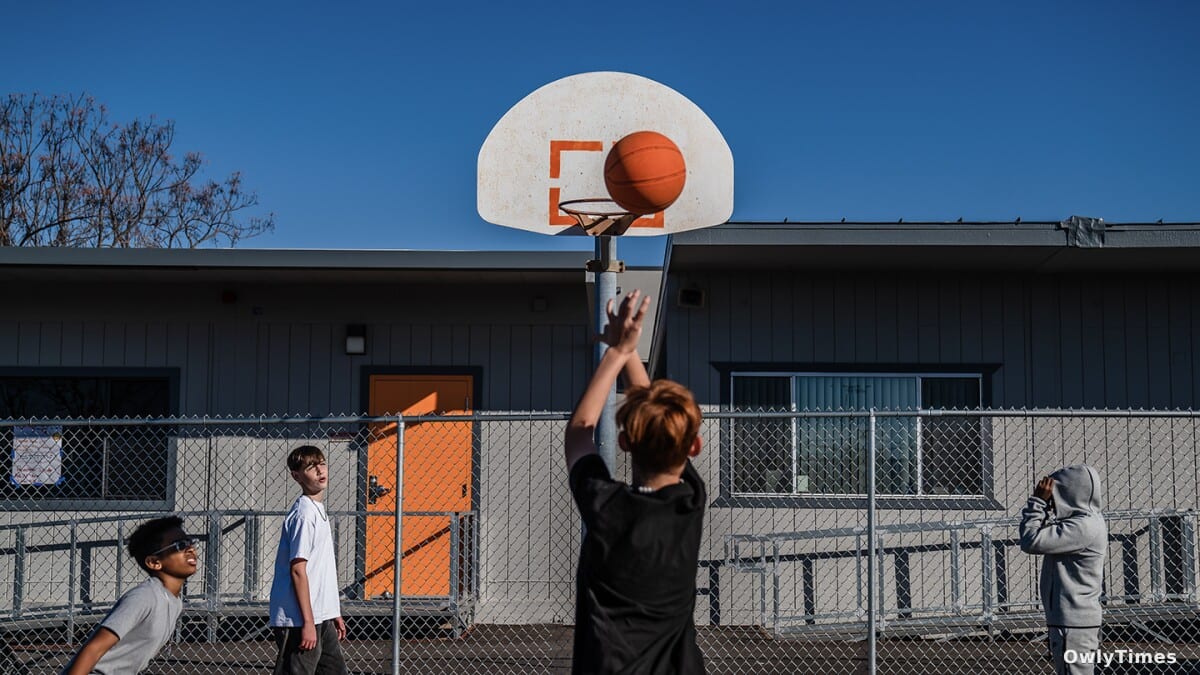

The gymnasium smelled of old rubber and hesitant energy. It wasn’t the roar of a Friday night game, but the quiet shuffle of middle schoolers practicing drills, punctuated by the deliberate cadence of a social worker guiding a discussion on handling defeat. This wasn’t just basketball practice at La Mesa-Spring Valley School District in California; it was a carefully constructed experiment in rebuilding connection, a response to a generation perceived as increasingly emotionally fragile. While headlines scream about learning loss post-pandemic, a quieter revolution is taking place on playing fields and in school gyms across the country, one that asks: what if winning isn’t the point?
The Shifting Landscape of Youth Development
For years, educators have voiced concerns about a rising tide of emotional dysregulation among students. Teachers report students struggle more with managing emotions and navigating face-to-face interactions than previous generations. This isn’t simply anecdotal; it reflects a broader cultural shift. A 2023 study by the American Psychological Association found that Gen Z reports higher levels of stress and anxiety than any previous generation, fueled by social media, economic uncertainty, and now, the lingering effects of pandemic isolation. Schools are responding with social-emotional learning (SEL) programs, but implementation is fraught with challenges – funding cuts, staffing shortages, and, increasingly, political backlash against the very idea of teaching emotional intelligence. SEL has become a battleground in the culture wars, with some framing it as indoctrination rather than essential skill-building.
Based on the original edweek.org report.
Beyond the Scoreboard: Why Sports Are Uniquely Positioned
Amidst this turbulence, sports are emerging as an unlikely, yet powerful, vehicle for SEL. It’s a counterintuitive idea, given the traditional emphasis on competition and winning. But Megan Bartlett, founder of the Center for Healing and Justice Through Sport, argues that sports are “uniquely suited” to fostering social-emotional growth. She points to a potent combination: a safe environment built around peer and adult relationships, the physical benefits of movement on emotional regulation, and the inherent challenges that demand resilience and problem-solving. “It’s not just about performance,” Bartlett explained during a recent Education Week forum. “It’s about mastery, seeing improvement, and building positive interactions.” This reframing – shifting the focus from outcome to process – is crucial. Youth sports, when “intentionally designed to facilitate positive youth development,” can demonstrably improve skills like goal-setting, empathy, self-control, and socialization.
La Mesa-Spring Valley: A Model for Integration
The La Mesa-Spring Valley School District, serving approximately 11,000 K-8 students, offers a concrete example of this approach. Born out of the need to re-engage students after pandemic closures, the district created a sports league that explicitly integrates SEL into its curriculum. Jennifer Montez, Heather Spruell, and Trinell Lewis, district staff members involved in extended student services, described a program where practices aren’t just about drills, but include weekly 30-minute SEL lessons co-facilitated by a social worker and the coach. These lessons tackle crucial skills like emotional regulation, team building, and navigating both victory and defeat. The impact, according to Spruell, has been transformative. She recounts observing students initially unable to cope with losses, resorting to blame and outbursts, gradually learning to handle setbacks with grace and support their teammates.
The Coach as Facilitator: A Necessary Shift
But simply adding SEL lessons to practice isn’t enough. The panelists emphasized the critical need for coach training. Bartlett highlighted a fundamental truth: “We coach the way we were coached.” Many coaches, steeped in a win-at-all-costs mentality, need to actively “undo” ingrained habits and embrace a more holistic approach. This requires investment in professional development, equipping coaches with the skills to facilitate difficult conversations, model emotional regulation, and prioritize character development alongside athletic skill. Montez stressed the importance of building relationships with students first and foremost, arguing that SEL is most effective when rooted in genuine connection. Getting buy-in from principals and school social workers is also vital, ensuring that SEL-focused efforts are seen as worthwhile and integrated into the broader school culture.
This isn’t just about improving sports programs; it’s about redefining what success looks like for a generation grappling with unprecedented challenges. The La Mesa-Spring Valley model, and others like it, suggest that the future of youth development may lie not in isolating SEL as a separate subject, but in weaving it into the fabric of everyday experiences – even, and perhaps especially, on the playing field. The question now is whether other districts will embrace this shift, and whether they can overcome the political and logistical hurdles to prioritize emotional well-being alongside academic achievement. Will we see a widespread re-evaluation of the role of athletics in education, or will the pressure to win continue to overshadow the potential for genuine growth?