
The Psychology of Financial Renewal: Why Spring Cleaning Extends Beyond the Home
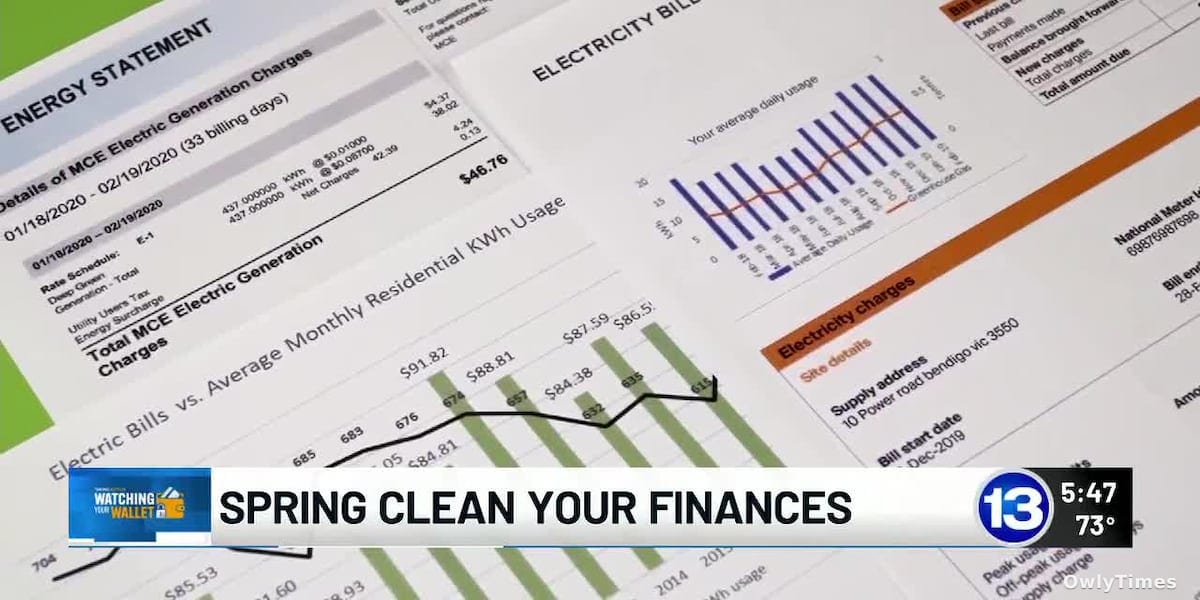
The urge to declutter and refresh isn’t simply aesthetic; it’s a deeply ingrained psychological response to the changing seasons. As daylight lengthens and temperatures rise, our brains seem to crave order and new beginnings, a phenomenon often referred to as “spring fever.” But this impulse, as WTVG in Toledo, Ohio, recently highlighted, extends beyond physical spaces and into our financial lives. The station’s “Watching Your Wallet” segment, published April 3, 2026, isn’t reporting a new economic trend, but rather tapping into a pre-existing human tendency: the desire for a fresh start, and the surprisingly effective link between mental wellbeing and financial health. What’s notable isn’t that people should review their budgets in spring, but why this timing feels natural, and how leveraging that feeling can lead to more effective financial planning.
Beyond Budgeting: The Cognitive Benefits of Financial Organization
The WTVG report frames the advice as “easy ways to spring clean your finances,” suggesting practical steps like reviewing expenses and identifying areas for savings. However, the underlying principle is more profound. Research in behavioral economics demonstrates a strong correlation between perceived control and reduced stress. A disorganized financial life – scattered bills, unknown subscriptions, a lack of clear savings goals – creates a sense of uncertainty and anxiety. Conversely, actively organizing finances, even in small ways, restores a feeling of agency. This isn’t about achieving a perfect budget overnight; it’s about the cognitive benefit of taking deliberate action. The act of reviewing accounts, categorizing spending, and setting realistic goals provides a sense of mastery, which in turn can improve overall mental wellbeing. The timing, coinciding with the natural impulse for renewal, amplifies this effect.
This article draws on reporting from 13abc.com.
Headlines vs. Reality: What the Report Actually Showed (and Didn’t)
It’s crucial to understand what the WTVG segment did and didn’t demonstrate. The report itself is descriptive – it presents advice, not data. Headlines might suggest a novel discovery about the best time to manage finances, but the core message aligns with established financial planning principles. The station didn’t conduct a study proving spring is the most effective time for financial review; it simply observed and reported on a common behavioral pattern. This is a common challenge in public health communication: the simplification of complex ideas for broader accessibility. While the segment’s intent is positive – encouraging financial responsibility – it’s important to avoid interpreting it as a scientifically validated “best practice” based on new research. The value lies in recognizing and utilizing a natural inclination, not in a revolutionary financial strategy.
Limitations to Consider: Socioeconomic Factors and Access
The advice to “spring clean your finances” carries inherent limitations. The segment, while broadly applicable, doesn’t address the significant socioeconomic factors that influence financial stability. For individuals facing precarious employment, stagnant wages, or systemic barriers to financial access, simply “reviewing the budget” may feel inadequate or even demoralizing. The ability to proactively manage finances requires a degree of financial cushion and stability that isn’t universally available. Furthermore, access to financial literacy resources and tools isn’t equitable. While WTVG provides a starting point, it’s essential to acknowledge that systemic issues require systemic solutions, and individual financial planning, while helpful, cannot overcome deeply rooted economic inequalities.
The Future of Behavioral Finance: Personalized Timing and Prompts
The WTVG report, in its simplicity, points to a promising avenue for future research in behavioral finance. Instead of focusing solely on what financial advice to give, researchers could investigate when individuals are most receptive to it. Could personalized financial prompts, timed to coincide with individual patterns of renewal – not just seasonal, but also related to personal milestones or achievements – be more effective than generic reminders? The next step isn’t simply to encourage everyone to budget in the spring, but to understand the underlying psychological mechanisms at play and tailor financial interventions accordingly. What if banking apps, for example, incorporated a “renewal” feature, prompting users to review their finances during periods when they’ve demonstrated positive behavioral changes, like consistently saving for a specific goal? This shift from generalized advice to personalized timing could unlock a new level of financial engagement and wellbeing.