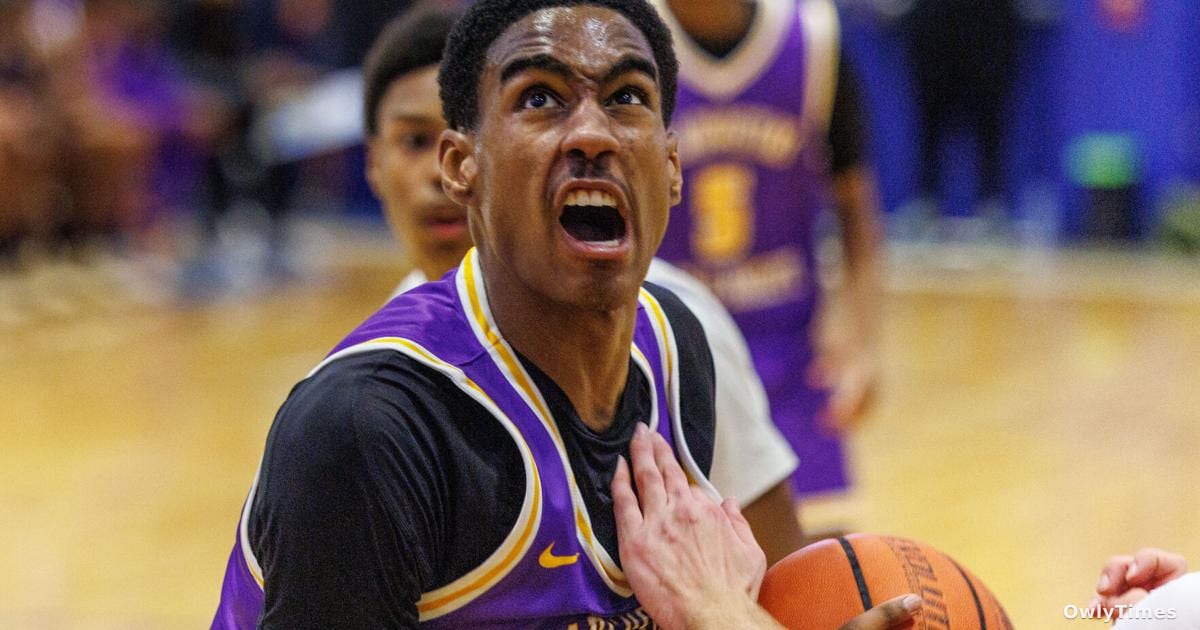

The flash of the camera, once a symbol of exclusion, now follows Ja’Vardes Brazile everywhere. Not as a spectator documenting his teammates, but as the subject, the star ascending within the fiercely competitive world of Louisiana high school basketball. A photograph captured by Enan Chediak of The Times-Picayune shows Brazile, a 6-foot-6 senior at St. Augustine, mid-air, a purple blur against the backdrop of Jesuit High School. But the image isn’t just about athletic prowess; it’s a testament to resilience, a visual echo of a year spent on the sidelines, a year defined by a painful eligibility ruling that threatened to extinguish a budding passion. This isn’t simply a sports story; it’s a portrait of delayed gratification in an era where instant access and immediate impact are prized above all else.
From Sidelines to Spotlight: A Year Lost, A Future Found
Two years ago, Brazile wasn’t soaring for dunks, he was snapping pictures of them. After transferring from Chalmette High School, he was deemed ineligible to play, relegated to the role of team photographer. “I just cried,” he recalled, a raw emotion that speaks to the universal heartbreak of a dream deferred. The story resonates beyond the basketball court because it taps into a growing anxiety among young athletes – the fear of being sidelined, not by lack of talent, but by bureaucratic hurdles or unforeseen circumstances. In a landscape increasingly dominated by travel teams and early specialization, the Brazile story is a reminder that sometimes, the most significant growth happens outside the game itself. His initial reaction—to document the team rather than disappear—demonstrates a maturity beyond his years, a willingness to stay connected to the sport even when it felt determined to exclude him.
See the original NOLA.com story for the full account.
The Calculus of Confidence: Building a Game from the Ground Up
When Wade Mason, the coach at St. Augustine, finally got Brazile on the court, the transition wasn’t seamless. The speed of the varsity game overwhelmed him. “At first when I started playing, I couldn’t even think,” Brazile admitted. This isn’t a narrative of instant stardom, but of deliberate, painstaking development. Mason, a former college assistant, recognized the potential but also the need for patience. He pulled Brazile from a game against Jesuit after just two minutes, not as a reprimand, but as a realistic assessment of where he was. This moment, often glossed over in highlight reels, is crucial. It illustrates a coach willing to prioritize long-term growth over short-term wins, a rarity in the pressure-cooker environment of competitive high school athletics. The contrast between his struggles against Jesuit last season and his dominant performance – 11 points and 10 rebounds – in this year’s rematch is a quantifiable measure of his progress, a testament to focused effort and a coach’s unwavering belief.
Beyond the Box Score: The Ripple Effect of a Second Chance
Brazile’s statistics – averaging 10.7 points, nine rebounds, and two blocked shots – are impressive, earning him all-district honors. But the numbers only tell part of the story. His impact extends beyond the box score, manifesting in a newfound confidence that permeates the team. Mason notes that Brazile now attacks practice with a “game-like intensity,” challenging even the all-state point guard, Aaron Miles. This competitive fire, honed through adversity, is arguably his most valuable asset. The coach’s lament – “The thing that bothers me is I’m not going to have another year with him” – isn’t just about losing a talented player; it’s about witnessing unrealized potential. Mason’s comparison to a redshirt year at Tulane highlights a broader issue: the pressure on young athletes to perform now, often at the expense of long-term development.
The Future of the Game: What Brazile’s Journey Reveals
Jessica Brown, Brazile’s mother, observes a transformation beyond the court, noting her son’s blossoming energy and newfound exuberance. This speaks to the power of sport to not only develop athletic skills but also to foster personal growth and self-discovery. The story of Ja’Vardes Brazile isn’t just about a basketball player overcoming adversity; it’s about the systemic challenges facing young athletes, the importance of patient coaching, and the enduring power of a second chance. As Brazile continues his ascent, the question isn’t just whether he’ll reach the next level, but whether the lessons learned from his journey – resilience, dedication, and the value of delayed gratification – will become the new standard for aspiring athletes. Will colleges and coaches begin to prioritize long-term development over immediate impact, recognizing that sometimes, the greatest potential lies in those who have already overcome the greatest obstacles? That’s the game changer we should all be watching for.

