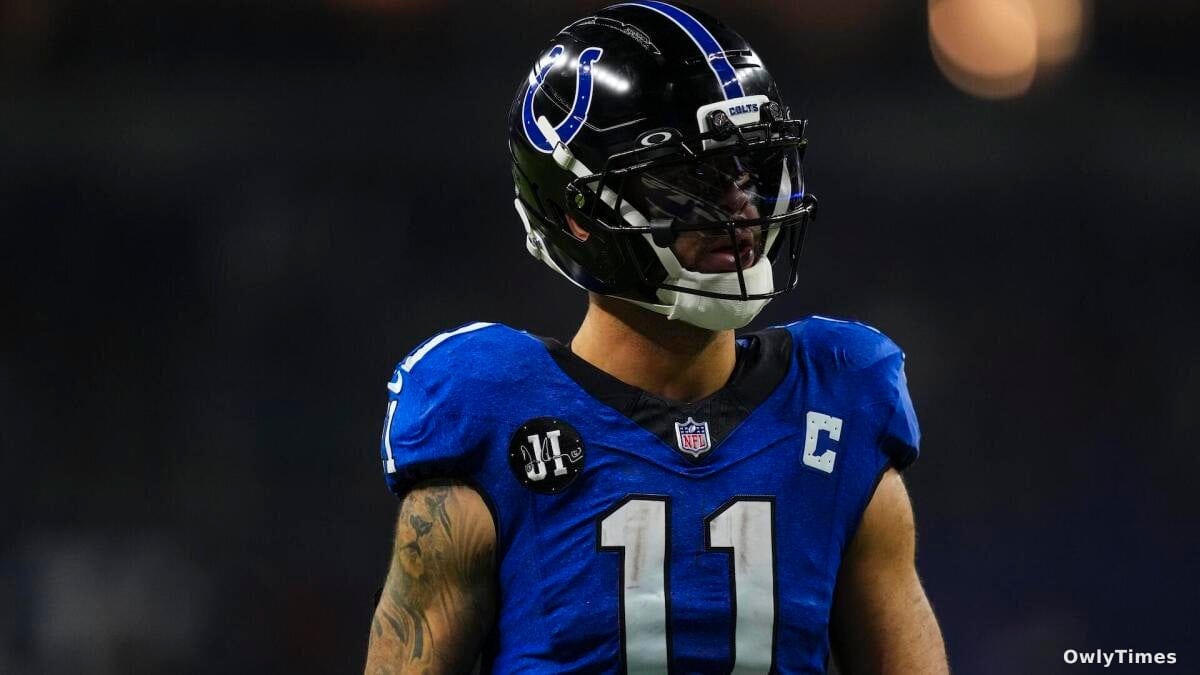

$116 million. That’s the figure reshaping the wide receiver market and, unexpectedly, driving a trade that sends Michael Pittman Jr. from the Indianapolis Colts to the Pittsburgh Steelers. While the Colts’ massive investment in Alec Pierce initially appeared to be a simple case of retaining a top free agent, a closer look reveals a calculated financial maneuver that ultimately made their former WR1 expendable – and created an opportunity for the Steelers to address a critical offensive weakness with a relatively minimal cost. This isn’t just about filling a roster spot; it’s about the ripple effects of escalating receiver contracts and the strategic choices teams are making to navigate them.
The Colts’ Calculated Risk: Prioritizing Pierce and Managing the Cap
The Colts’ decision to award Alec Pierce a four-year, $116 million contract – establishing a new high-water mark for wide receiver free agency deals – wasn’t solely about Pierce’s on-field performance. While his 21.3 yards per reception in 2023, the highest for any receiver with over 1,000 yards since 2010, is undeniably impressive, the move also served to create cap space and signal a shift in priorities. The Colts, facing potential contract extensions for quarterback Daniel Jones (transition tagged and seeking a multi-year deal) and other key players, effectively chose to allocate a significant portion of their resources to Pierce, making Pittman Jr., with one year remaining on his $71.5 million contract, a logical trade candidate. The late-round pick swap received in return for Pittman is, frankly, a low return, but the Colts’ primary objective wasn’t maximizing draft capital; it was managing a complex financial equation.
This article draws on reporting from CBS Sports.
Pittsburgh’s Offensive Overhaul: A $59 Million Solution
For the Steelers, the acquisition of Michael Pittman Jr. represents a more straightforward upgrade. Following a 2025 season where no receiver other than DK Metcalf (850 yards) made a significant impact, the Steelers desperately needed a consistent target. Pittman Jr., despite a relatively quiet 2023 with 784 yards, has proven capable of 1,000-yard seasons, recording two such campaigns in his six-year career, including a 1,152-yard performance in 2023. The three-year, $59 million extension positions him as the 25th highest-paid wide receiver in the NFL, a price point the Steelers clearly deemed acceptable for a player who immediately elevates their passing attack. This move is particularly crucial given the uncertainty surrounding the Steelers’ quarterback situation, with potential candidates including Aaron Rodgers, Will Howard, Kyler Murray, and Ty Simpson all in the mix. Two large-bodied receivers in Pittman Jr. and DK Metcalf provide a baseline of reliability regardless of who takes the snaps.
Beyond the Trade: A League-Wide Trend of Receiver Inflation
This trade isn’t an isolated incident; it’s a symptom of a broader trend of escalating wide receiver contracts. The Colts’ deal with Alec Pierce is the most glaring example, but the $20 million annual salary of Jakobi Meyers (Jacksonville Jaguars) and the $17.5 million earned by Jerry Jeudy (Cleveland Browns) demonstrate the rising cost of securing top-tier receiving talent. This inflation is driven by the increasing importance of passing offenses in the modern NFL and the premium placed on players who can consistently create separation and generate yards after the catch. Teams are now forced to make difficult choices: pay a premium for established receivers, invest in developing young talent, or strategically trade for players like Pittman Jr. who offer immediate impact at a manageable cost. The Steelers, in this instance, opted for the latter, capitalizing on the Colts’ cap constraints.
What this means for your wallet: The trickle-down effect of NFL spending
The escalating costs of NFL player contracts don’t directly impact your grocery bill, but they contribute to the rising price of attending games and subscribing to NFL-related media. Increased player salaries translate to higher ticket prices, more expensive merchandise, and ultimately, more costly streaming packages. More importantly, the Colts’ and Steelers’ moves highlight a fundamental tension in the NFL: balancing competitive success with financial sustainability. Will other teams follow suit, prioritizing cap management over retaining key players? And, for Steelers fans, the more pressing question is whether the addition of Michael Pittman Jr. will be enough to revitalize the offense, regardless of who ultimately lines up at quarterback. The success of this trade hinges not just on Pittman Jr.’s performance, but on the Steelers’ ability to solve their most critical roster question.

