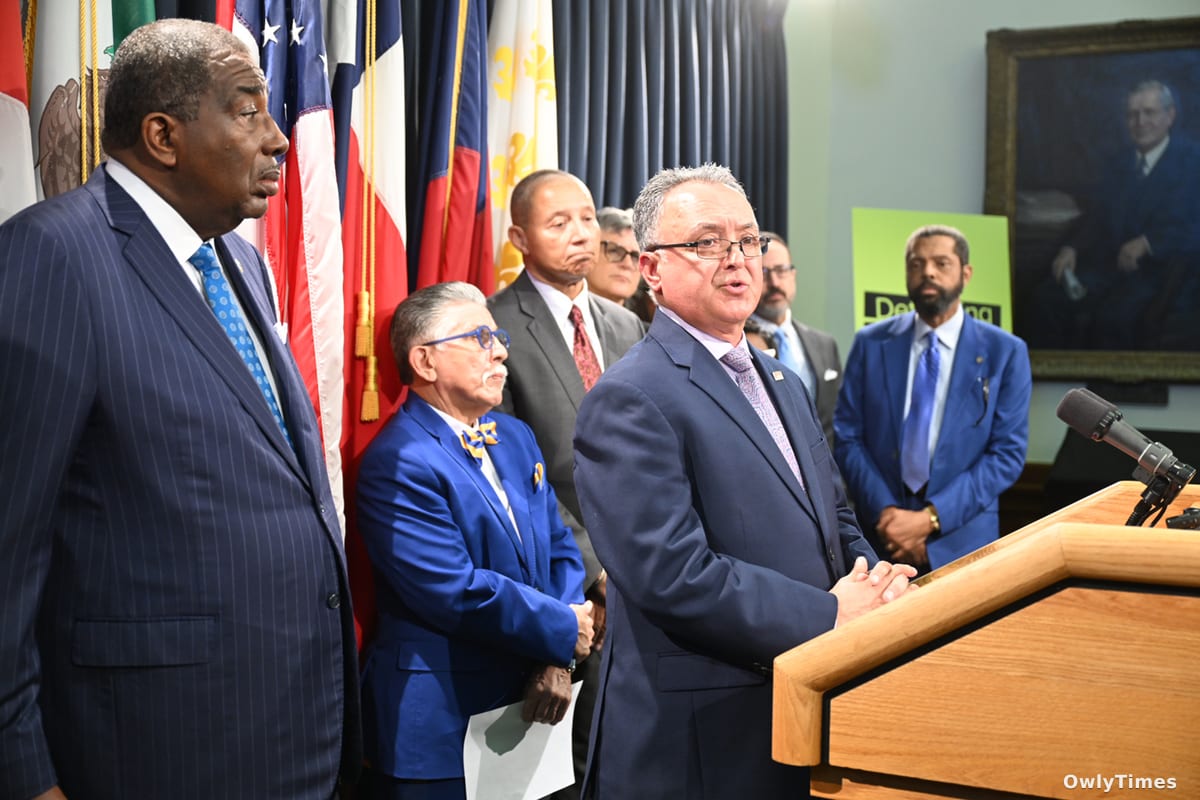

$4 Billion at Stake: A lawsuit filed Monday in Travis County District Court signals a fundamental challenge to the authority of the Texas Comptroller’s office and throws the future of the state’s Historically Underutilized Business (HUB) program into uncertainty. Four Texas businesses and the Greater Houston chapter of the National Association of Minority Contractors are suing acting Comptroller Kelly Hancock, alleging he illegally rewrote state law when he drastically altered HUB program eligibility in December. This isn’t simply a dispute over contracts; it’s a direct confrontation over the separation of powers within the Texas government, with potentially significant economic consequences.
The Rapid Contraction of Opportunity
The scale of the HUB program’s impact is substantial. In 2024 alone, HUB-certified businesses secured 3,634 contracts worth over $4 billion, according to the Comptroller’s Office. However, Hancock’s December restructuring – enacted through what he termed “emergency rules” – effectively gutted the program, reducing participation from over 15,000 businesses to fewer than 500, limiting eligibility solely to service-disabled veteran-owned businesses. This 97% contraction represents a massive shift in access to state contracting opportunities, and the lawsuit argues this shift was executed without legislative approval or due process. The timing is particularly noteworthy, coming after failed legislative attempts by Republicans to dismantle the program entirely during the 2023 session.
Source material: texastribune.org.
A Legal Battle Over Executive Authority
The core of the plaintiffs’ argument, articulated by Alphonso David, president & CEO of the Global Black Economic Forum and lead counsel, centers on the principle of legislative supremacy. “Acting Comptroller Hancock took a program created by statute and rewrote it without any legal authority,” David stated. This isn’t a disagreement over policy; it’s a claim that Hancock exceeded his constitutional authority. The lawsuit names not only Hancock but also the heads of key state agencies – the Texas Department of Transportation (Marc Williams), the Health and Human Services Commission (Stephanie Muth), and the Texas Facilities Commission (Will McKerall) – for implementing the changes. This broad naming of defendants underscores the lawsuit’s intent to halt the program’s restructuring across the entire state government apparatus. The plaintiffs are seeking a temporary injunction to reinstate their HUB certifications and restore the program to its previous form while the case proceeds.
Lost Contracts and Disrupted Business Plans
The immediate impact of Hancock’s changes is already being felt. Ruben Mercado Jr., founder of Ipsum General Contractors, reported losing a potential $1 million contract after his HUB certification was revoked. Wendell Stamley, president of the National Association of Minority Contractors, detailed instances of canceled contracts and re-bid projects, disrupting the business plans of its 155 member companies. These aren’t abstract concerns; they represent real financial losses for Texas businesses, particularly those reliant on state contracts. The lawsuit highlights a critical tension: Hancock frames the changes as eliminating “race or sex quotas,” while plaintiffs argue they are dismantling a program designed to address historical economic disparities and promote equitable access to opportunity. This framing is further complicated by Hancock’s concurrent campaign for a full term as Comptroller, raising questions about the political motivations behind the restructuring.
What This Means for Your Wallet
The outcome of this lawsuit will have ripple effects beyond the immediate plaintiffs. If Hancock’s actions are deemed unlawful, it will reaffirm the principle of legislative authority and potentially open the door for legal challenges to other executive overreaches. Conversely, a ruling in favor of the Comptroller would significantly expand the scope of executive power, allowing future administrations to unilaterally alter established programs. For Texas taxpayers, the implications are twofold: a restored HUB program could lead to increased competition for state contracts, potentially driving down costs. However, a prolonged legal battle will consume state resources and create further uncertainty for businesses relying on government contracts. Investors and consumers should watch closely for the court’s decision on the temporary injunction – a swift ruling will provide clarity on whether the current disruption to state contracting is temporary or a permanent shift in policy. The key question is whether the court will prioritize the Comptroller’s stated goal of “best value” or the plaintiffs’ claim to equitable access and adherence to the rule of law.





