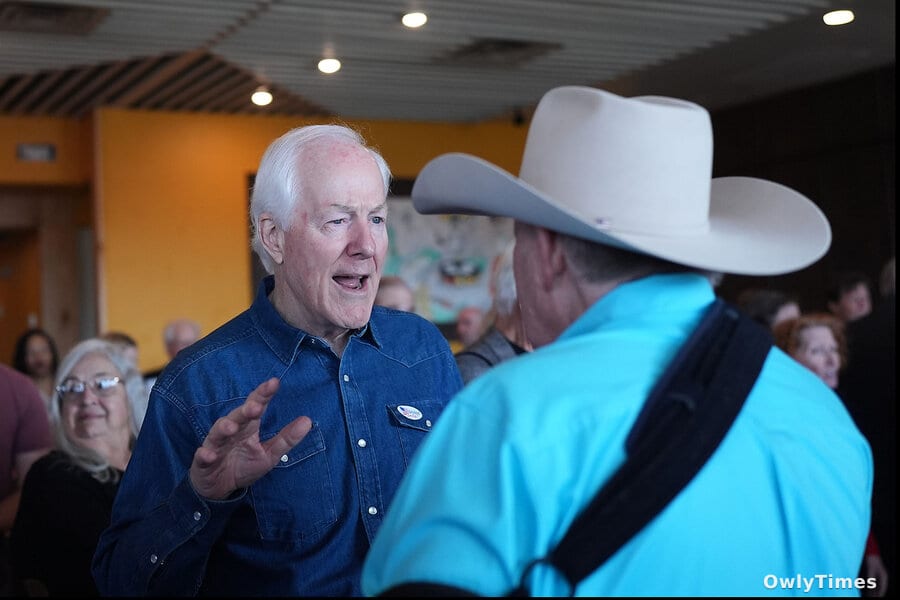

The escalating battle for the Republican Senate nomination in Texas isn’t simply a primary; it’s a calculated power play revealing the fracturing within the party and a strategic reassessment of electability in the age of Trump. The initial salvo, fired via X by Ken Paxton two years ago, wasn’t a spontaneous outburst but a preemptive strike aimed at undermining John Cornyn’s position as the presumptive nominee and signaling a challenge to the established order. This wasn’t about policy disagreements – it was about control of the narrative and a deliberate attempt to define Cornyn as out of touch with the base.
The immediate exchange – Paxton’s accusation of being “anti-Trump, anti-gun” met with Cornyn’s pointed retort about running from prison – laid bare the core tension: a clash between the populist, grievance-fueled wing of the party and the more traditional, pragmatic conservatives. Who benefits and who loses hinges on whether Texas Republicans prioritize ideological purity or the pragmatic concerns of holding a reliably red seat. The National Republican Senatorial Committee’s (NRSC) vocal support for Cornyn, coupled with warnings about Paxton’s potential to jeopardize decades of GOP dominance in Texas, underscores the stakes. The NRSC isn’t motivated by affection for Cornyn, but by a cold calculation of general election viability.
Reporting from csmonitor.com informs this analysis.
This dynamic echoes historical shifts within parties facing realignment. Consider the Democratic Party in the 1960s, grappling with the rise of the New Left and the backlash against the Civil Rights Movement. Established leaders like Lyndon B. Johnson found themselves increasingly vulnerable to challenges from the left, mirroring Cornyn’s current predicament. The difference, of course, is the speed and intensity of the current upheaval, fueled by social media and the polarizing influence of Donald Trump. The fact that Trump himself has remained publicly neutral – stating he “likes all the candidates” – is a strategic ambiguity, keeping his options open and avoiding alienating any faction of his base. This is a marked departure from his usual pattern of decisive endorsements.
The financial disparity between the campaigns is also revealing. While Cornyn ended 2025 with roughly $6 million cash on hand, Paxton lagged behind with half that amount. This isn’t necessarily a death knell for Paxton, however. His consistent lead in polls, despite the scandals that have dogged him – from securities fraud allegations to impeachment proceedings and a very public divorce – demonstrates the strength of his connection with the conservative grassroots. This loyalty isn’t based on policy expertise or scandal-free conduct, but on a perception of unwavering defiance against the “establishment” and a willingness to fight cultural battles. Wesley Hunt’s presence in the race further complicates matters, increasing the likelihood of a runoff and prolonging the internal party conflict.
The willingness of Paxton supporters to dismiss the scandals as “petty” or “political opportunism” speaks to a broader trend: a diminishing emphasis on traditional standards of character and conduct in favor of ideological alignment. This is a phenomenon observed across the political spectrum, but particularly pronounced on the right. James Henson, director of the Texas Politics Project at the University of Texas at Austin, notes a lack of “party spirit” among Texas Republicans, suggesting a deeper malaise than simply a competitive primary. This fracturing isn’t merely about personalities; it’s about a fundamental disagreement over the direction of the party and the definition of conservative principles.
The fact that Paxton sued the Biden administration 106 times while Cornyn occasionally sought bipartisan compromise highlights the divergent approaches. This isn’t simply a matter of political strategy; it’s a reflection of fundamentally different worldviews. The Cornyn campaign’s attempt to highlight Paxton’s scandals with a parody dating website is a desperate attempt to appeal to moderate Republicans and independents, but it risks further alienating the base. The question now isn’t just who will win the primary, but whether the Republican Party can heal the wounds inflicted by this brutal and expensive fight.
The political chess move to watch next isn’t Trump’s eventual endorsement, but rather the behavior of the losing candidates. Will they unite behind the nominee, or will they continue to fuel the flames of division? The answer to that question will determine not only the outcome of the Senate race in November, but also the future trajectory of the Republican Party in Texas – and potentially, the nation.





