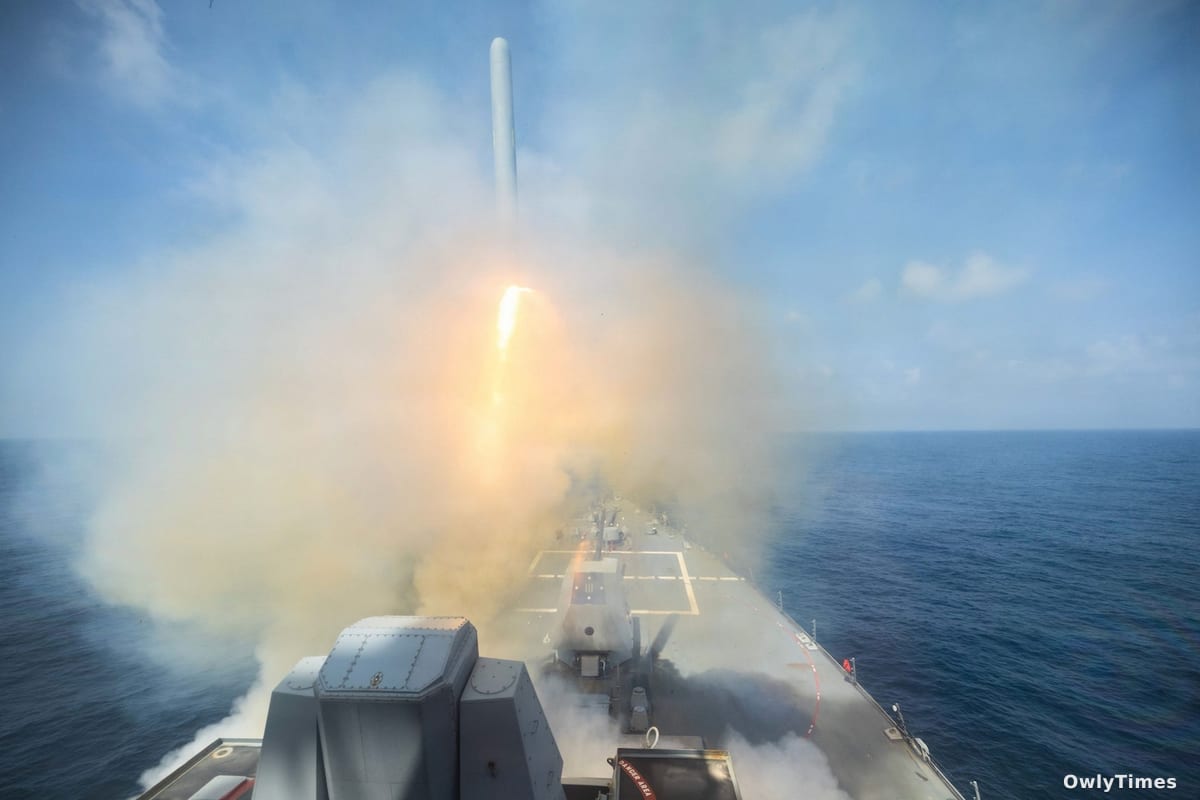

Is the future of warfare simply a matter of who can burn through the most expensive toys first? That’s the unsettling question emerging from the conflict with Iran, where the U.S. military has, in just four weeks, launched over 850 Tomahawk cruise missiles. We’re not talking about a gradual escalation here; that’s nearly a quarter of the estimated 3,000 Tomahawks in the U.S. arsenal, vaporized in under a month. The real story here isn't the tactical effectiveness of these missiles – it’s the glaring vulnerability this reveals in a military strategy increasingly reliant on precision strikes and a shockingly fragile supply chain.
A Stockpile Vanishing Faster Than Expected
The numbers are stark. As of March 27, 2026, over 850 Tomahawks are gone. To put that in perspective, consider that the entire Iraq War (2003-2011) saw roughly 650 Tomahawks deployed. We’ve matched that in less than a month against Iran. Pentagon officials, speaking on background to The Washington Post, are reportedly “alarmed” – a carefully chosen word that translates to “we have a serious problem.” This isn’t a question of whether the Tomahawk is effective; it’s a question of whether we can keep making them fast enough to sustain a prolonged conflict. The initial volley, launched on February 28th as the war began, from ships like the USS Spruance, signaled a commitment to minimizing civilian casualties through precision. But precision comes at a price, and that price is rapidly becoming unsustainable.
Reporting from The Washington Post informs this analysis.
Beyond the Blast Radius: The Manufacturing Bottleneck
The immediate concern isn’t just the dwindling stockpile, but the complexity of replenishing it. Tomahawks aren’t assembled in a single factory; they’re the product of a sprawling network of subcontractors, each responsible for a specific component. According to sources within the defense industry, the production of key guidance systems relies heavily on rare earth minerals sourced from – you guessed it – China. This isn’t a new problem; the U.S. military has long been aware of its dependence on foreign supply chains. But the speed at which these missiles are being consumed is exposing the fragility of that system in a way that war games never could. It’s a chilling reminder that modern warfare isn’t just about battlefield tactics; it’s about logistics, resource control, and the ability to maintain a constant flow of incredibly complex weaponry.
What This Means for the Average Taxpayer
Forget the geopolitical implications for a moment. What does a rapidly depleting Tomahawk stockpile mean for the average American? It means higher defense spending, inevitably. The Pentagon is already scrambling to increase production, which will require massive investment in manufacturing facilities and securing alternative sources for critical materials. This isn’t a cost that will be absorbed by the defense industry; it will be passed on to taxpayers. More subtly, it means a potential shift in military strategy. If precision strikes become prohibitively expensive, the U.S. may be forced to rely more on less accurate, but cheaper, alternatives – potentially increasing the risk of civilian casualties and prolonging conflicts. The promise of “surgical” warfare, sold to the public as a way to minimize collateral damage, is looking increasingly like a luxury we can no longer afford.
The Illusion of Limitless Firepower
The initial phase of the conflict with Iran was characterized by a sense of American technological superiority. The Tomahawk, with its pinpoint accuracy and long range, seemed to offer a decisive advantage. But that advantage was predicated on the assumption of a readily available supply. The reality is far more sobering. The U.S. military has been operating under the illusion of limitless firepower for decades, fueled by a steady stream of funding and a belief in the power of technological innovation. This conflict is shattering that illusion, forcing a painful reckoning with the limitations of our manufacturing capacity and the vulnerabilities of our supply chains.
Here’s what to watch for: over the next six months, expect to see a surge in government contracts awarded to companies involved in the production of Tomahawk components. But pay closer attention to where those contracts go. If a significant portion of the funding ends up flowing to companies based in or reliant on China, it will be a clear signal that the U.S. is still trapped in a dangerous cycle of dependence, and that the “solution” to the Tomahawk shortage is simply kicking the can down the road.