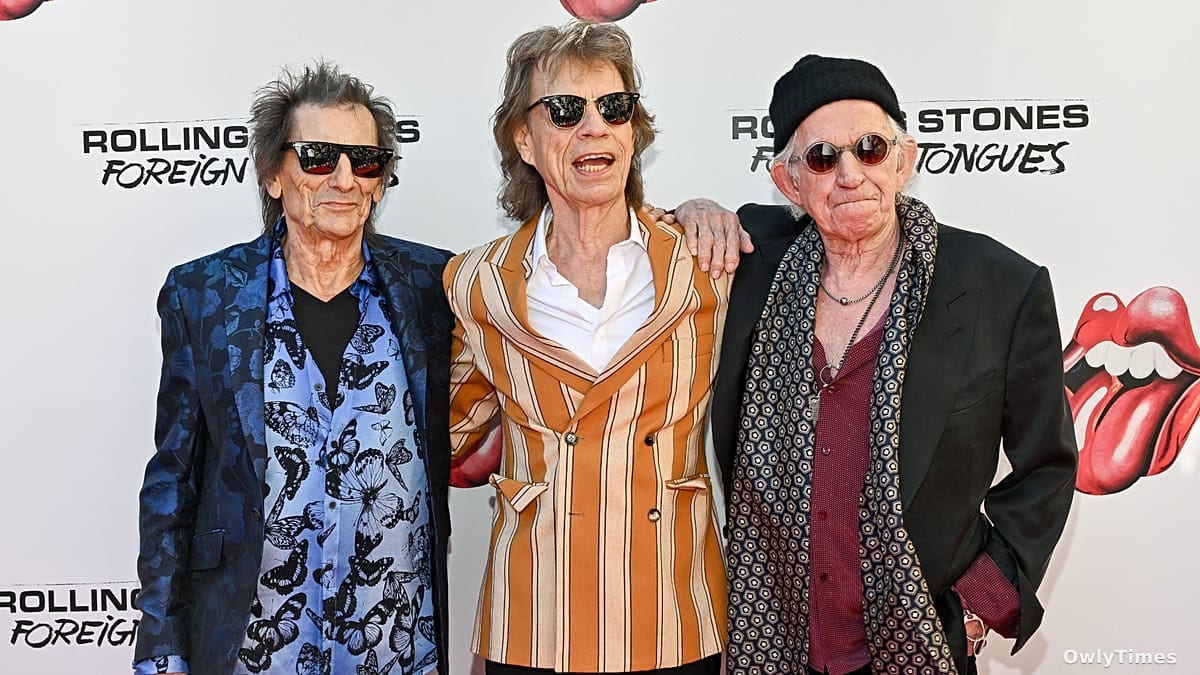

The stage lights at the Strahov Stadium in 1990 didn't just illuminate a band; they signaled the dawn of a new era for a nation emerging from decades of authoritarian rule. As filmmaker Tomáš Hodan prepares to bring the miracle of that Rolling Stones concert to the screen in his upcoming period comedy, The Stones Are Rolling to Prague, the band itself is navigating a very different, more cynical landscape. While the film captures a moment when the world felt open and full of possibility, the legendary rockers are currently preoccupied with the friction of the modern American experience.
Beyond the headlines of their upcoming 25th studio album, Foreign Tongues—slated for release this Friday, June 10—the band has been vocal about their disillusionment with the current state of the United States. According to Euronews, guitarist Keith Richards explicitly labeled the country “a bit of a disappointment at the moment,” citing the crushing weight of financial strain on everyday citizens. Richards, who has resided in Connecticut since 1985, noted that the rising cost of gas has become a primary source of anxiety for those around him.
This sense of unease permeates the band’s creative output, specifically the track "Ringing Hollow." Frontman Mick Jagger clarified to Euronews that while the song isn't solely about the political climate, it touches on the broader decline of the "American Empire" and the complexities of the nation's lobbying system. The band’s long-standing tension with political figures remains a constant undercurrent; they have historically fought the unauthorized use of their music at campaign rallies, including documented legal threats involving Broadcast Music, Inc. in 2020.
While Jagger and Richards reflect on the fraying edges of the American dream, a new generation of creators is looking back at the band’s role as a symbol of freedom. Hodan’s project, pitched at the Karlovy Vary International Film Festival, chronicles the desperate, true-life efforts of four friends attempting to organize the historic 1990 concert in Czechoslovakia, as reported by The Hollywood Reporter. The film, which features actors Petr Uhlík, Jan Nedbal, Josef Trojan, and Matyáš Řezníček, highlights the sheer absurdity of the era, where organizers had to scrape together $1 million while lacking basic tools like fax machines.
The cultural obsession with the Stones persists across media formats, from the big screen to the digital airwaves. The band has launched an official podcast, Speaking in Tongues, hosted by Norah Jones, which tracks the making of Foreign Tongues and serves as a reflective space for the band following the 2021 death of drummer Charlie Watt, according to The Guardian. This blend of nostalgia and contemporary critique underscores a vital industry truth: the power of legacy acts to serve as a mirror for shifting societal values.
Whether they are battling over environmental policy—a subject Jagger has criticized since his appearance at the 2019 Venice Film Festival—or inspiring "loser comedies" about the collapse of Communism, the Rolling Stones remain a barometer for global sentiment. As the industry grapples with changing distribution models, highlighted by producer Juan de Dios Larraín at the same Karlovy Vary forum where the Stones film was pitched, the band’s ability to remain relevant via both their new music and their history proves that the appetite for their narrative is as insatiable as ever. The industry now looks toward the July 9 conclusion of the Karlovy Vary industry forum to see which of these new cinematic ventures will secure the distribution necessary to reach an audience.