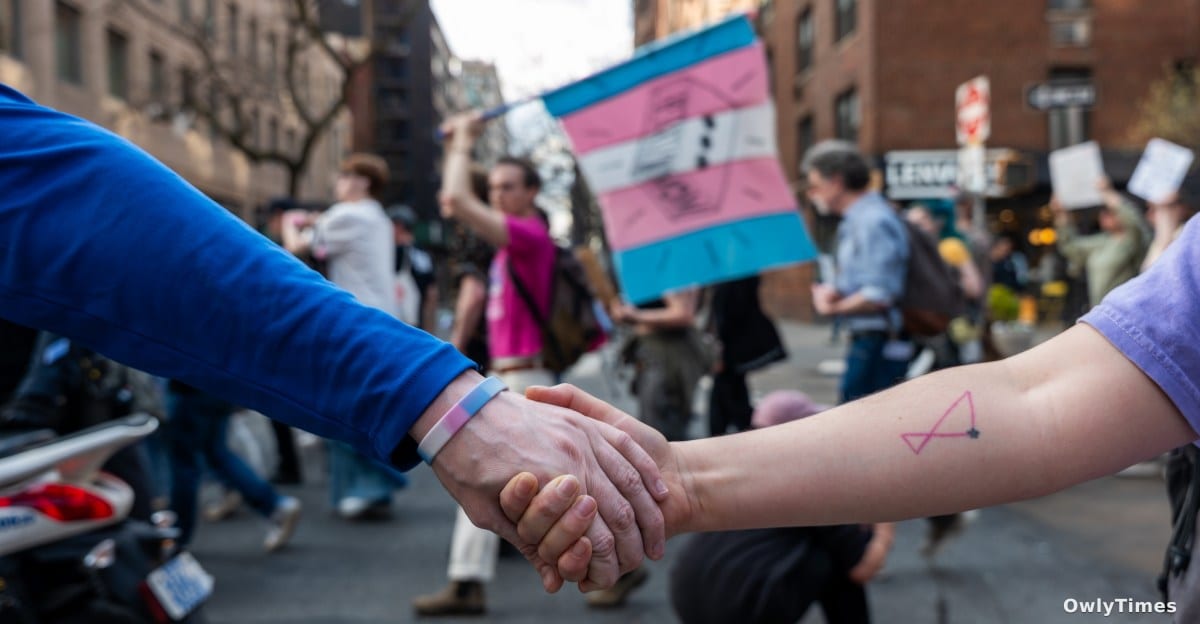

The escalating legal and political battles surrounding transgender rights in America aren’t simply about sports or medical care anymore; they represent a fundamental reshaping of how the government defines and regulates sex, with potentially far-reaching consequences for all citizens. While much of the recent coverage focuses on individual state-level restrictions – bathroom bans, limitations on medical access, and now, unprecedented retroactive invalidation of driver’s licenses – the core issue is a broader, more insidious attempt to legally narrow the definition of sex itself. This isn’t a gradual evolution of policy, but a rapid and coordinated effort that’s outpacing both legal scholarship and the Democratic Party’s ability to formulate a cohesive response.
In the past two months, Kansas became the first state to retroactively invalidate the driver’s licenses of approximately 1,700 transgender residents, a move that immediately disrupted lives and raised serious questions about state power. This action, alongside legislation in states like Iowa, West Virginia, Wyoming, Arkansas, and Texas, isn’t isolated. These measures – including laws requiring gender reassignment on official documents to align with “biological sex at birth” and dictating restroom access based on assigned sex – are part of a larger strategy to redefine legal definitions of “male” and “female,” potentially impacting everything from employment discrimination cases to access to healthcare beyond gender-affirming care. The Supreme Court’s recent rulings, including effectively mandating parental notification of student gender transitions in California schools and upholding Tennessee’s ban on youth gender medicine, further underscore the aggressive trajectory of this legal shift. As Ian Milhiser of Slate aptly described the California ruling, it’s “one of the most consequential constitutional decisions the Roberts Court has ever handed down.”
The current wave of legislation builds on a strategy that began after the legalization of same-sex marriage. Organizations like the Alliance Defending Freedom, a conservative Christian legal organization, identified trans rights as a new focal point, framing restrictions on trans athletes as a “parents’ rights” issue – a uniquely effective wedge in the culture war. This playbook has expanded, and the speed of implementation is alarming. Roughly 1 percent of Americans identify as transgender, yet the legal tools being deployed could ultimately affect a much wider population by reshaping how the government draws lines based on sex for everyone. The Trump administration’s 2025 restriction on updating the sex on passports, upheld by the Supreme Court, signaled a federal commitment to this narrower definition, and the recent actions at the state level demonstrate a coordinated push to solidify it.
A central tension within the Democratic Party revolves around how to respond. Two distinct theories of the case dominate the internal debate. One perspective argues that the party’s reluctance to take firm stances on issues like trans athletes and youth gender medicine from roughly 2021 onward created a vacuum that allowed conservatives to frame the narrative and push through restrictive legislation. John Neffinger, a Democratic strategist, observes that Republicans successfully exploited this hesitancy, repeatedly forcing Democrats to answer difficult questions and appearing evasive. Lanae Erickson, senior vice president for social policy at Third Way, bluntly states, “The silence killed us.” This camp believes a clearer, more proactive stance, even if it involved acknowledging some concerns about competitive fairness in sports, could have prevented the current escalation.
Based on the original vox.com report.
However, another perspective, championed by progressive Democrats and civil rights organizations, argues that any concession on these issues is a losing proposition. Gillian Branstetter, a communications strategist at the American Civil Liberties Union, contends that these issues are legally and politically interconnected, and attempting to “compromise” simply provides grounds for further restrictions. She argues that the ultimate goal of groups like the Alliance Defending Freedom is to weaken the legal standard for sex discrimination, and that treating trans rights as a separate issue misses the broader threat to individual autonomy. Branstetter, who is transgender, emphasizes the importance of defending rights across the board, rather than sacrificing them in an attempt to appease opponents. This debate isn’t merely academic; it directly impacts the legal and political landscape for transgender Americans for generations to come.
The legal trajectory isn’t predetermined, but the current environment is concerning. While the Supreme Court has been moving aggressively, legal scholars like Jessica Clarke at USC point out that the Court still has choices in how it interprets past decisions. A narrowly tailored ruling on sports, for example, might avoid broader implications for other areas of law. However, the lack of political backlash against increasingly restrictive state laws signals to the judiciary that there is public appetite for further restrictions. The passage of ballot initiatives restricting trans rights in blue states would lend conservative activists bipartisan legitimacy, and the continued Democratic silence could be interpreted as tacit agreement. Public opinion, too, has shifted, with over 60 percent of voters now supporting restrictions on trans athletes, a significant reversal from just a few years ago.
Recent developments suggest a potential shift within the Democratic Party. Abigail Spanberger’s successful 2025 gubernatorial campaign in Virginia, where she proactively addressed attacks on trans issues, is being held up as a model for other candidates. Organizations like the Human Rights Campaign are releasing messaging playbooks based on her approach. However, these responses are largely reactive to earlier battles, while the legal, political, and even scientific ground continues to shift. The American Society of Plastic Surgeons and the American Medical Association’s recent advisories against gender-related surgeries for minors, while debated within the medical community, further complicate the landscape.
Looking ahead, the key question is whether the Democratic Party can articulate a clear and consistent defense of transgender rights before the legal and political lines are further entrenched. Will the party learn from the perceived failures of the past five years and proactively engage in the debate, or will it continue to avoid the issue, allowing conservatives to define the terms of the conversation? The outcome of the upcoming ballot initiatives, particularly in Washington, Maine, Colorado, and Nevada, will be a crucial indicator of public sentiment and the potential for further restrictions. More importantly, we must watch whether the courts continue to interpret rulings narrowly, preserving some legal protections, or whether they embrace a broader redefinition of sex that could impact far more than just the transgender community. The next few years will determine whether the current wave of restrictions is a temporary setback or a permanent reshaping of fundamental rights in America.





