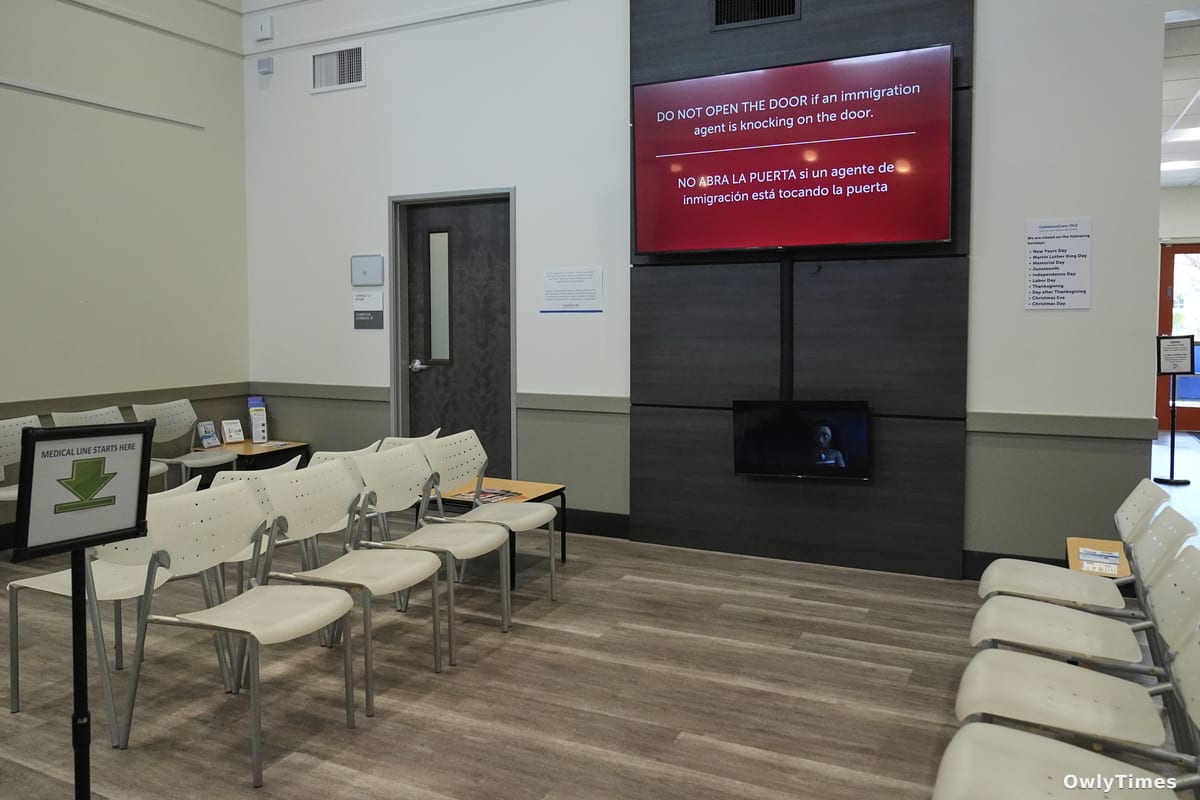

The quiet is what Sahida Martinez remembers most. Not the usual hum of Little Village, a vibrant Mexican-American neighborhood in Chicago, but a chilling silence that descended last fall as Immigration and Customs Enforcement (ICE) activity surged. It wasn’t the absence of sound, exactly, but the absence of life – the missing clatter of street vendor carts, the muted music, the easy flow of conversation. This silence, she told me, felt like a warning, a deliberate attempt to instill fear. This isn’t simply a story about immigration policy; it’s a story about a fracturing of trust in the healthcare system, a system already strained, and the ripple effects of federal enforcement actions on both the patients who need care and the workers who provide it. The current climate isn’t just discouraging immigrants from seeking medical attention – it’s reshaping the very landscape of healthcare access and delivery in communities across the country.
President Donald Trump’s administration has prioritized increased immigration enforcement, enacting over 500 actions in the first year of his second term, ranging from mass deportations to travel bans and the revocation of legal status. While headlines often focus on border security and deportation numbers, a less visible consequence is the growing anxiety within immigrant communities, and among the foreign-born healthcare workers who comprise an estimated 20% of the nation’s healthcare workforce. A recent New York Times/KFF survey reveals a stark reality: nearly half of undocumented adults have postponed medical care since January 2025 due to immigration concerns, and 14% of immigrants with legal status are doing the same. Four in ten immigrants overall – including naturalized U.S. citizens – report that this fear is negatively impacting their health. This isn’t simply a matter of inconvenience; it’s a potential public health crisis unfolding in slow motion.
Original reporting: tradeoffs.org.
The fear isn’t unfounded. The rescission of a federal rule prohibiting ICE enforcement in sensitive locations like hospitals and clinics has fundamentally altered the perceived safety of healthcare settings. Steph Willding, CEO of CommunityHealth in Chicago, described a situation where her clinic had to lock down multiple times in October due to ICE activity nearby. “It’s not just in rural America,” notes Laura Messineo, chief nursing officer for Worldwide Health Staff Solutions, emphasizing the nationwide scope of the problem. This isn’t about isolated incidents; it’s a systemic shift where seeking medical attention can be perceived as a risk, potentially exposing individuals and their families to deportation. The survey data confirms this: patients are cancelling appointments, opting for telehealth when possible, and, tragically, foregoing necessary care altogether. The 17% increase in no-show appointments at CommunityHealth, representing hundreds of individuals, is a concrete measure of this growing reluctance.
However, the impact extends beyond patients. Foreign-born healthcare workers are living in a state of constant anxiety, fearing for their own safety and the well-being of their patients. Hannah Janeway, an emergency room physician in Los Angeles, recounted instances of facing down ICE agents in exam rooms, advocating for patient privacy and access to care. The stories emerging from ten states reveal a pattern of intimidation and uncertainty. Workers are hesitant to report to work, fearing potential detention or deportation, and many are experiencing heightened stress and burnout. The situation is particularly acute for those providing care to vulnerable populations, like the promotoras – community health workers – at Enlace in Little Village, Chicago. Sahida Martinez, a supervisor at Enlace, described the paralyzing fear that gripped her team when ICE agents arrived at their clinic, prompting panic attacks and anxieties about the safety of their families.
The implications of this dual threat – patients avoiding care and healthcare workers fearing for their livelihoods – are far-reaching. Researchers like Jordan Herring at Stanford University point to parallels with the COVID-19 pandemic, where delayed care led to worsening chronic conditions and increased mortality rates. The long-term consequences of this current climate could include a surge in preventable illnesses, increased healthcare costs, and a further erosion of trust in the healthcare system, particularly within immigrant communities. The damage isn’t simply about immediate health outcomes; it’s about the lasting psychological impact of trauma and the potential for intergenerational distrust. The fact that even naturalized U.S. citizens are experiencing fear underscores the pervasive nature of this anxiety.
The current situation demands further investigation. While survey data provides valuable insights, longitudinal studies are needed to track the long-term health consequences of these policies. Researchers should also focus on quantifying the impact on the healthcare workforce, assessing the number of foreign-born workers who have left the field or reduced their hours due to fear and uncertainty. Crucially, we need to understand the specific barriers to care faced by different immigrant communities and develop targeted interventions to address their unique needs. The question now isn’t simply whether these policies are effective in achieving their stated goals, but what the long-term cost will be to the health and well-being of our communities – and whether we are prepared to pay it. Will we see a sustained decline in preventative care, leading to a surge in chronic disease? And, perhaps more importantly, will the healthcare system be able to recover the trust of those it is meant to serve?





