
The Strategic Calculus of Trump’s “War on Fraud”
The creation of a new Department of Justice division dedicated to “National Fraud Enforcement” isn’t about stemming financial crimes; it’s a calculated power play by Donald Trump to establish a direct line of influence over federal prosecution, bypassing traditional safeguards against political interference. The timing – announced immediately following a State of the Union address framing fraud as a national crisis – and the structure, with JD Vance positioned as a White House supervisor, reveal a strategy to weaponize the DOJ against perceived political enemies. This isn’t a novel tactic, but the explicit attempt to circumvent established norms is what distinguishes this move and raises fundamental questions about the independence of the justice system.
Original reporting: CNN.
The Minnesota Scandal and the Politics of Fraud
The focus on a purported $9 billion fraud scandal in Minnesota is particularly revealing. While genuine fraud investigations are vital, the administration’s emphasis on this case – and Trump’s direct attribution of blame to Democratic officials – transforms a law enforcement matter into a political cudgel. This echoes historical precedents, notably the Red Scare of the 1950s, where accusations of subversion, often lacking concrete evidence, were used to discredit political opponents. The scale of the alleged Minnesota fraud – if verified – is significant, dwarfing previous similar cases. However, the speed with which Trump has politicized the issue suggests the priority isn’t simply recovering stolen funds, but leveraging the narrative for electoral gain. Who benefits? The Trump campaign, by solidifying a “law and order” image and demonizing the opposition. Who loses? Democratic officials in Minnesota, and potentially the integrity of the DOJ itself.
McDonald’s Tightrope Walk and the Limits of Independence
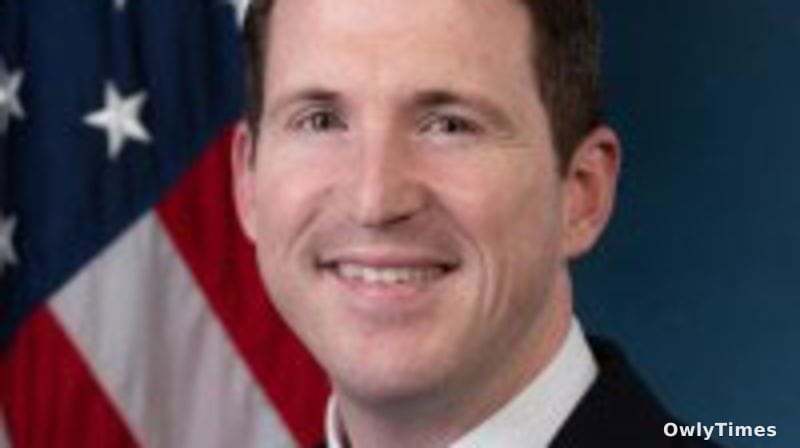
Colin McDonald’s Senate Judiciary Committee hearing was less an assessment of his qualifications and more a test of his willingness to submit to political pressure. His repeated assurances of adhering to the “facts” and “law” – standard rhetoric for any career prosecutor – were met with skepticism by Democrats like Mazie Hirono, who directly questioned his ability to remain independent within a division explicitly designed to pursue the president’s agenda. McDonald’s prior role co-chairing the “Weaponization Working Group” further fuels these concerns, suggesting a pre-existing willingness to engage in politically sensitive investigations. The fact that he reports directly to Pam Bondi and Todd Blanche – both staunch Trump allies – underscores the limited scope of his autonomy. The core tension here is whether a career prosecutor can genuinely operate independently when placed in a structure designed for political control.
The Vance Factor: A Shadow DOJ?
JD Vance’s assertion that the new division will function “like a special counsel, but run out of the White House” is the most alarming aspect of this entire endeavor. Special counsels are appointed precisely to insulate investigations from political interference, reporting to the Attorney General, not directly to the President. Positioning Vance as a supervisor effectively creates a shadow DOJ, accountable to the executive branch rather than the rule of law. This directly contradicts decades of established practice, dating back to the post-Watergate reforms designed to protect the DOJ’s independence. The claim of a “whole government approach” – involving the Treasury Department and others – further blurs the lines of accountability and raises the specter of investigations driven by political objectives rather than evidence.
The Next Move: Will McDonald Blink?
The immediate question isn’t whether the new division will uncover fraud – it almost certainly will. The critical chess move to watch is whether Colin McDonald will demonstrate genuine independence when – not if – he is presented with a politically sensitive case, potentially involving a direct order from Trump or Vance to target a political opponent. Will he adhere to his stated commitment to “follow the facts,” or will he succumb to the pressure and become another instrument in the administration’s political arsenal? The answer to that question will define the fate of this new division, and potentially, the future of the Department of Justice.





