
The Strategic Silence on Political Incivility
The timing is deliberate. As millions across faiths engage in periods of introspection – Lent, Ramadan, and the approaching Yom Kippur – David Dulio’s observation about the nation’s inability to apply that same self-assessment to its political discourse isn’t a coincidence. It’s a strategic positioning, leveraging a cultural moment of inward focus to highlight a glaring deficit in our public life. The core calculation is simple: shame is a powerful motivator, and framing political incivility as a failure of personal reflection bypasses the usual partisan defenses.
The data, as highlighted by Dulio and sourced from Gallup, confirms the depth of the problem. Nearly 70% of Americans believe the GOP has gone too far with inflammatory language, while 60% say the same of Democrats – figures representing significant increases from previous surveys. The remarkable aspect isn’t the disagreement, but the agreement. Achieving 60% consensus in contemporary America is a political anomaly, suggesting a widespread, if unacknowledged, discomfort with the current tenor of debate. Who benefits and who loses from this dynamic? Primarily, those who profit from division – media outlets reliant on outrage, political consultants who weaponize negativity, and politicians who consolidate power through polarization – benefit. Those who lose are the broader public, increasingly alienated from the political process and distrustful of institutions.
This piece references the The Detroit News report.
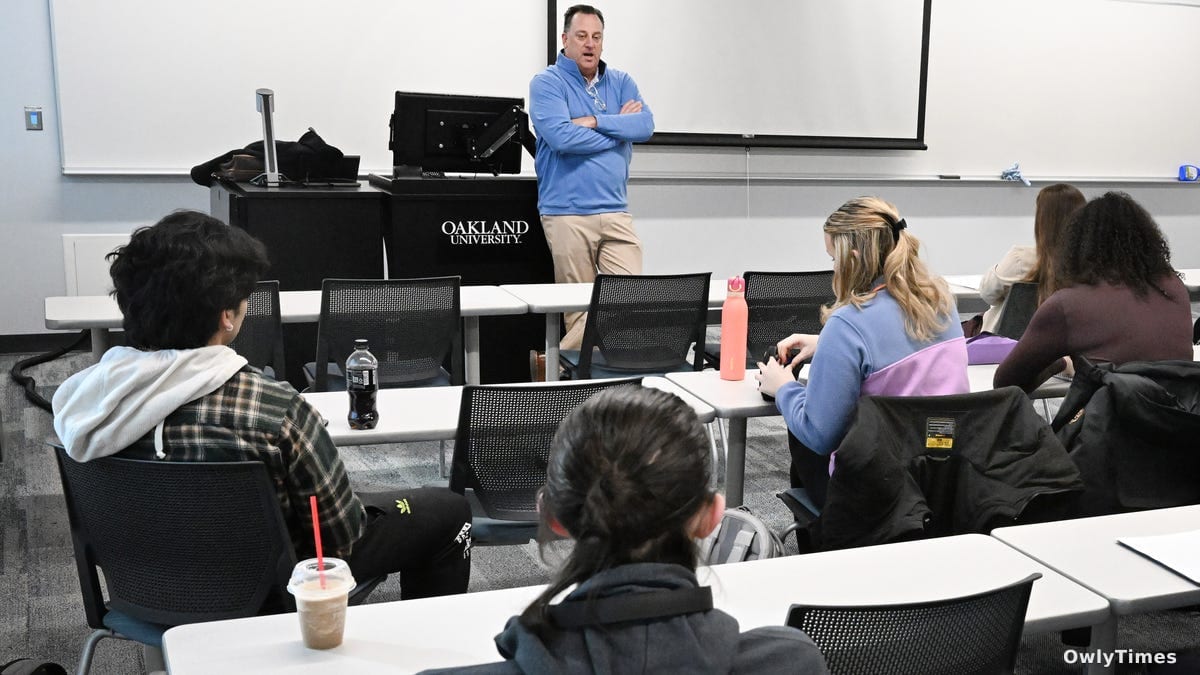
This isn’t a new phenomenon, but the scale and intensity are. Historical parallels exist, though none are perfect. The late 1960s and early 1970s, marked by the Vietnam War, civil rights struggles, and the assassinations of Martin Luther King Jr. and Robert F. Kennedy, saw similar levels of social and political unrest. However, even during that turbulent period, figures like President Ronald Reagan and Speaker Tip O’Neill, despite deep ideological differences, maintained a level of personal respect and civility – a dynamic Dulio’s Oakland University course examines. The current environment lacks even that baseline of mutual regard. The willingness to demonize opponents, exemplified by examples like California gubernatorial candidate Katie Porter’s use of profanity directed at Donald Trump or Trump’s attacks on Supreme Court justices, has become normalized, and the data suggests partisans are remarkably blind to their own side’s contributions to the problem.
The asymmetry in perception is particularly telling. A staggering 93% of Democrats see Republican rhetoric as excessive, yet only 28% acknowledge the same within their own party. Republicans mirror this pattern, with 94% criticizing Democrats while only 36% fault their fellow conservatives. This isn’t simply partisan bias; it’s a fundamental failure of self-awareness. Dulio rightly points out the convenient excuse that “harsh language is sometimes needed,” but the Gallup data suggests a widespread unwillingness to connect the dots between escalating rhetoric and potential real-world consequences, like the threats against Supreme Court justices. The question isn’t whether a single utterance causes violence, but whether it contributes to a climate where violence becomes more likely.
The call to “lower the temperature” is often dismissed as naive, but the data suggests it’s a prerequisite for any meaningful progress. Real change requires both leaders and citizens to acknowledge their own complicity in the problem. The current moment, with its confluence of religious seasons focused on self-reflection, presents a unique opportunity to force that reckoning. But the political chess move to watch isn’t a grand policy proposal or a dramatic speech. It’s whether any prominent political figure – on either side – will publicly acknowledge their own party’s role in fueling the incivility, and actively model a more respectful tone. Until that happens, the cycle of escalation will continue, and the promise of genuine civil discourse will remain just beyond reach.