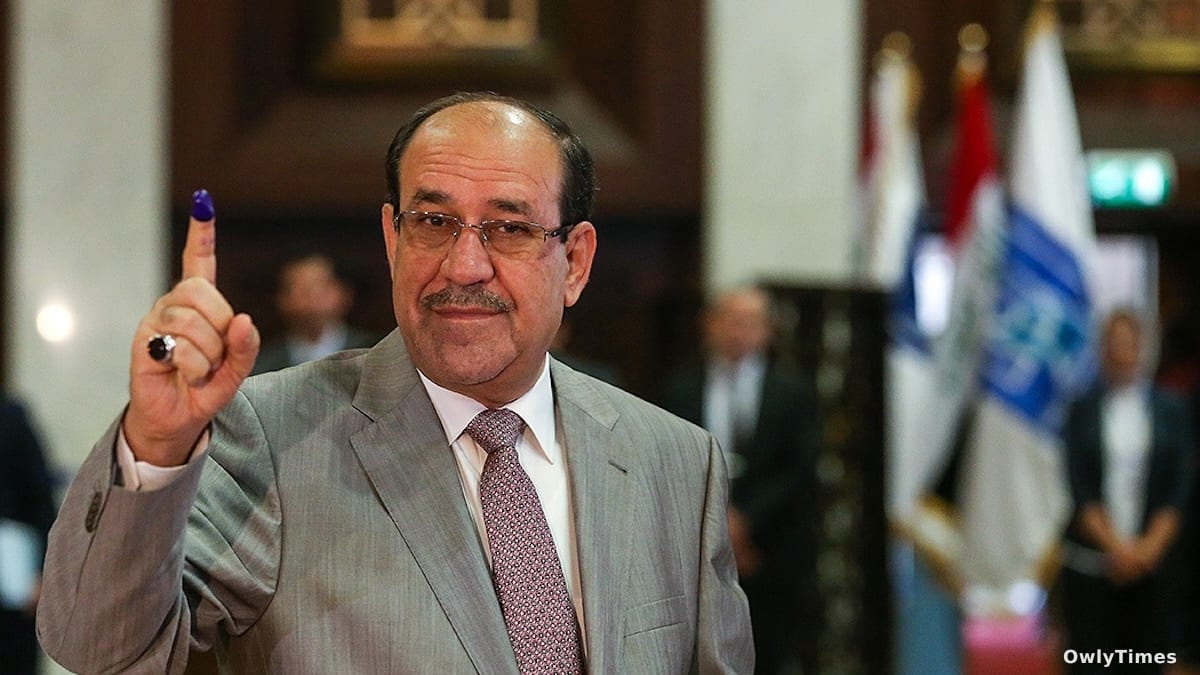

The blunt intervention by former President Donald Trump into Iraq’s internal political maneuvering surrounding the nomination of Nouri al-Maliki wasn’t a spontaneous act of geopolitical frustration, but a calculated, if misjudged, attempt to reassert American leverage over Baghdad – and, by extension, Iran. The immediate fallout, however, hasn’t been to weaken Maliki’s position, but to galvanize a broad swathe of Iraqi political actors under the banner of national sovereignty, a predictable reaction that underscores a fundamental misunderstanding of the dynamics at play. This isn’t simply about one man; it’s about the limits of external influence in a country increasingly determined to define its own path, even if that path leads to outcomes Washington dislikes.
At the domestic level, Maliki’s nomination by the Coordination Framework – the organizing body of Shiite politics – is perplexing. He’s been largely absent from the public sphere since being ousted as prime minister in 2014, a removal predicated on his centralization of power and the subsequent institutional collapse that facilitated the rise of ISIS and the fall of Mosul. His rivals within the Coordination Framework understandably fear being overshadowed by his dominant political personality, a pattern established during his previous tenure where informal chains of command bypassed established ministries. This isn’t a return to stability; it’s a gamble on a figure known for consolidating control, even at the expense of effective governance.
Original reporting: warontherocks.com.
The opposition extends beyond the Shiite political landscape. Sunni Arabs, who associate Maliki with sectarian policies and marginalization dating back to 2010, have formally objected to his nomination, as declared by the National Political Council on January 27th. This communal consensus-based system, already strained, faces further fracture. Even more significantly, Maliki’s fraught relationship with Muqtada al-Sadr, whose silence on the Trump-Maliki dispute shouldn’t be mistaken for acquiescence, represents a latent threat. Sadr commands the capacity to mobilize millions and paralyze the country should Maliki secure the premiership, a far greater risk than any parliamentary opposition. The fact that Maliki doesn’t meet the Coordination Framework’s own criteria – internal consensus, broad communal support, and international acceptance – further highlights the internal contradictions driving this nomination.
The core issue isn’t Maliki himself, but the structural flaws in Iraq’s government formation process. Despite being a parliamentary democracy, the selection of leaders is largely determined by elite negotiations outside of parliament, within communal “houses” like the Coordination Framework. This system, intended to ensure representation, has devolved into a distorted power-sharing arrangement that prioritizes the interests of a small circle of powerbrokers. The Coordination Framework’s apparent blessing from Iran, coupled with a lack of concrete response from the Shiite religious authority in Najaf or the Kurds, suggests a calculated move to consolidate power, with the Sunni objection dismissed as insufficient to derail the process. Trump’s intervention, from this perspective, was perceived as a violation of Iraqi sovereignty, a miscalculation that inadvertently strengthened the hand of those Washington seeks to counter.
Trump’s public rebuke, delivered via Truth Social, triggered a backlash in Baghdad, framed as an attempt to coerce Iraq and undermine its autonomy. This reaction underscores a breakdown in communication, exacerbated by the absence of a confirmed U.S. ambassador and the brief, unsuccessful appointment of Mark Savaya as a special envoy. The message sent to Iraqi elites is clear: Washington doesn’t prioritize its relationship with Iraq. The fear now is that Trump, to avoid appearing weak, will escalate punitive measures – sanctions, strikes against the Popular Mobilization Forces, or disruption of the financial sector – potentially unraveling Iraq’s fragile economy and security. A disruption of oil revenue, on which Iraq relies to finance imports, could trigger social unrest and institutional collapse, jeopardizing the gains made in counterterrorism and regional stability. The U.S.-built Iraqi Counterterrorism Service, considered the most capable in the Middle East, would also be at risk.
The most pragmatic path forward isn’t to double down on opposition to Maliki, but for the U.S. to commit to sustained and deep engagement with Iraq. This means investing in diplomatic capacity, calibrating interests to reflect Iraqi realities, and recognizing Baghdad’s potential as a strategic partner in countering Iran’s influence. It’s a long-term investment, but one that offers a far greater return than costly escalation. The current approach risks reinforcing the narrative of external interference and strengthening the very actors Washington aims to marginalize. The question now isn’t whether Maliki will become prime minister, but whether the Coordination Framework will attempt to force his confirmation despite widespread opposition, and whether Washington will continue to publicly confront Baghdad, or quietly recalibrate its strategy to prioritize a stable, sovereign Iraq – even if that Iraq isn’t entirely aligned with U.S. preferences. The next political chess move to watch is whether Muqtada al-Sadr breaks his silence and signals his intent, potentially triggering a new phase of instability that could eclipse all other considerations.