
$3 Million in Debt Signals Broader Strain on Louisiana Restaurant Groups
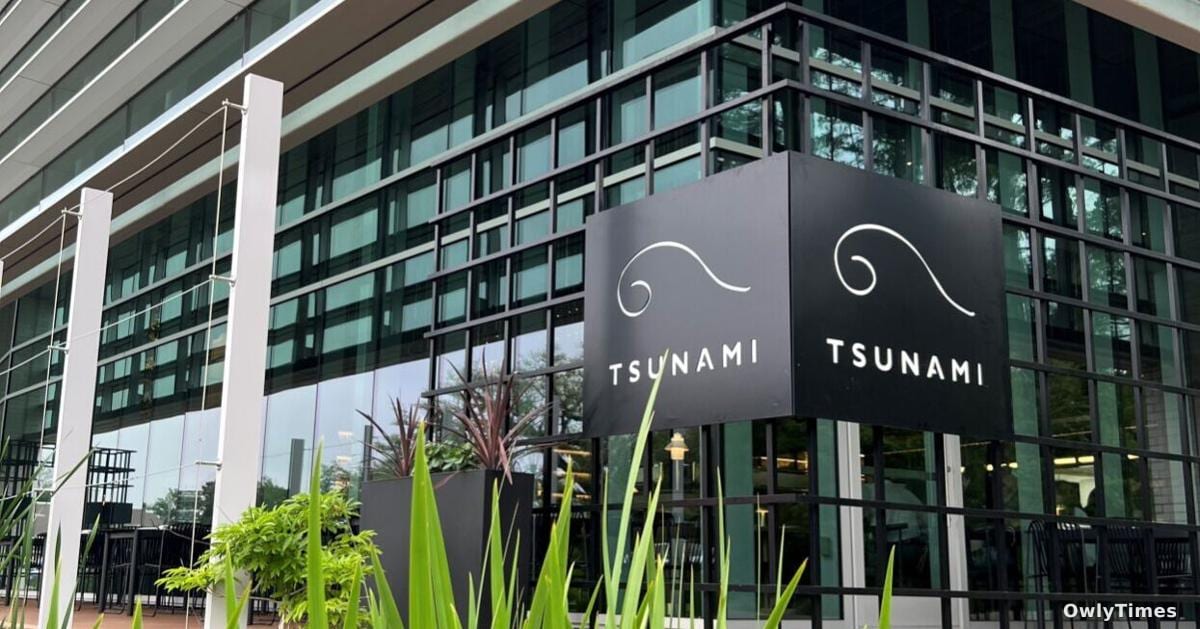
A debt load of $2.5 to $3.5 million is the stark reality facing the ownership of Tsunami Sushi, as the restaurant group filed for Chapter 11 bankruptcy protection this week. This isn’t simply a story of one sushi chain in distress; it’s a flashing warning sign for Louisiana’s mid-tier restaurant groups navigating a post-pandemic landscape of rising costs and shifting consumer habits. The filing, encompassing locations in Lafayette, Baton Rouge, and New Orleans, reveals a vulnerability extending beyond individual business missteps and points to systemic pressures within the state’s hospitality sector.
Drawn from NOLA.com.
The current ownership – Chad Hughes, Connie Hargrave, and Sarwat Gad – acquired Tsunami Sushi from founder Michele Ezell in December 2021, simultaneously purchasing the Lafayette building and parking lot for $2 million. This timing is critical. The real estate transaction occurred after the initial pandemic shock, but before the full force of inflationary pressures on food costs and labor began to materialize. The subsequent debt accumulation suggests the group may have overextended during a period of perceived recovery, betting on a return to pre-2020 dining patterns that failed to fully materialize. The Lafayette location alone carries over $300,000 in creditor claims, with significant amounts owed to regional suppliers like Fortune Fish & Gourmet ($26,000+), Loop Linen Service ($7,000+), and Southside Produce ($7,000+). These figures aren’t outliers; they represent the cascading effect of increased input costs rippling through the supply chain and squeezing restaurant margins.
The bankruptcy filing isn’t a liquidation, but a reorganization, with the stated goal of continuing operations. However, Chapter 11 proceedings are rarely seamless. While the group intends to maintain service at all four locations, the process introduces uncertainty for both employees and customers. The success of the reorganization hinges on renegotiating debt terms with creditors – a challenging task given the current economic climate. A comparable case, the 2022 bankruptcy of New Orleans restaurant group SoBou, demonstrates the difficulties of restructuring in a high-debt environment. SoBou ultimately closed permanently despite initial reorganization efforts, highlighting the risk that even a well-intentioned restructuring can fail.
The initial success of Tsunami Sushi, beginning with Michele Ezell’s 2000 Lafayette opening, underscores the potential for regional restaurant concepts. The expansion to Baton Rouge (2004) and New Orleans (2017) demonstrates a viable growth model. However, scaling a restaurant business requires consistent financial discipline and adaptability. The current situation suggests a disconnect between the initial business plan and the realities of operating in a post-pandemic Louisiana. Ezell’s sentiment – “We put our hearts into it for 22 years. I hope that the current owners are able to restructure it to a place where they can continue the operation” – speaks to the emotional investment inherent in restaurant ownership, but doesn’t negate the underlying financial challenges.
What this means for your wallet: Watch for menu price increases and potential service reductions at Tsunami Sushi locations as the reorganization unfolds. More broadly, this bankruptcy filing should prompt diners to consider the financial health of their favorite local restaurants. Are they seeing consistent price hikes? Are staffing levels adequate? The question isn’t simply whether you like a restaurant, but whether it’s financially sustainable – and what the consequences will be if it isn’t. The critical indicator to watch in the coming months is whether Tsunami Sushi can demonstrably reduce its debt burden while maintaining consistent customer traffic; a failure to do so could signal further consolidation within Louisiana’s restaurant industry.





