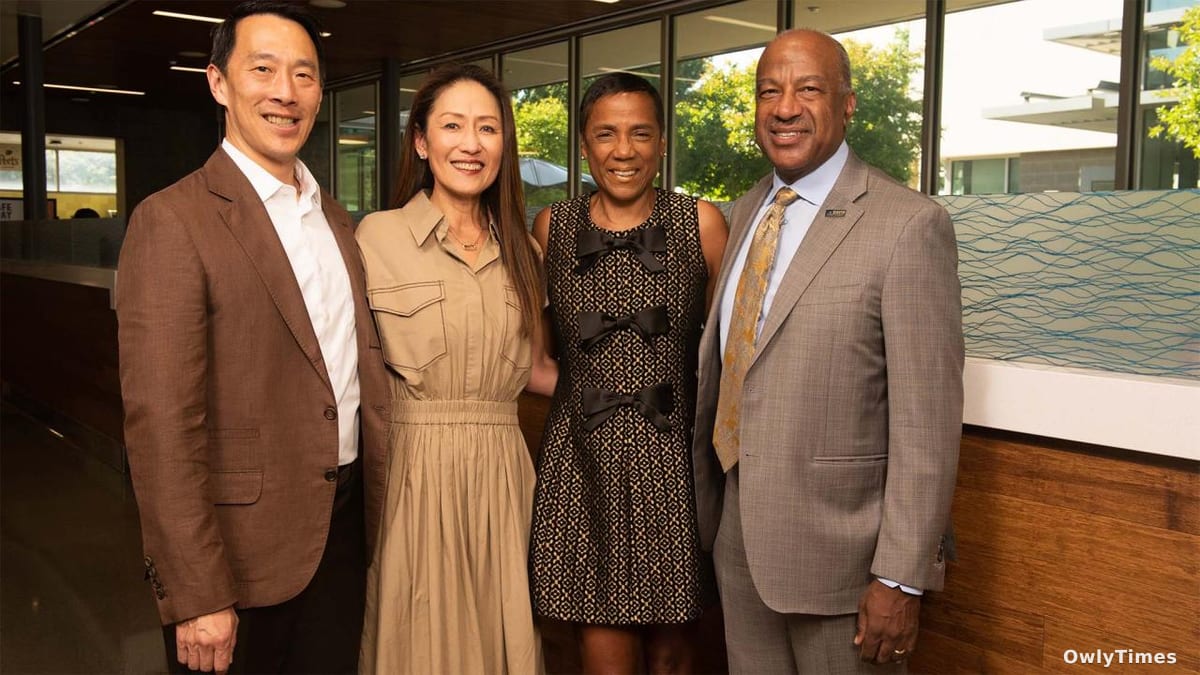

The intersection of human and animal health—a field increasingly known as "One Health"—relies on the premise that the biological mechanisms governing both are deeply intertwined. When Chancellor Gary S. May announced a $75 million gift to the UC Davis Weill School of Veterinary Medicine on April 24, the contribution was framed not merely as a donation to animal care, but as a strategic investment in the future of translational medicine. The gift, provided by Bay Area residents Kathy Chiao and Kenneth Hao, stands as the second-largest individual donation in the school’s history, signaling a shift in how private philanthropy is shaping the landscape of academic veterinary science.
Bridging the Gap Between Veterinary and Human Medicine
While headlines have focused on the sheer magnitude of the dollar amount, the scientific utility of this gift lies in its specific allocation. The funding is earmarked for the construction of a new small animal hospital, a facility intended to expand the capacity for both patient volume and specialized student training. More importantly, the donation explicitly targets animal-human translational medicine. This is a critical area of research that leverages findings from veterinary clinical trials to inform human medical breakthroughs. By increasing the physical space for such research, the institution is positioning itself to accelerate the pace at which discoveries in animal models can be safely translated into human clinical applications.
Beyond the Headline Figures
It is essential to distinguish between the celebratory nature of a major gift and the operational realities of institutional growth. While the public narrative centers on the prestige of this donation, the actual scientific output will be determined by the school’s ability to integrate this new infrastructure into existing research pipelines. The gift does not just provide capital for a building; it includes provisions for scholarships and programs aimed at increasing access to veterinary care for those who currently face financial barriers. This creates a dual-track impact: the high-tech, research-heavy side of the new hospital, and the public health necessity of expanding affordable veterinary services to the broader community.
Limitations to Consider
Despite the excitement surrounding this development, the long-term success of this initiative remains subject to the practical challenges of academic hospital management. The expansion of a teaching hospital requires not just the initial construction funds, but a sustainable model for the ongoing maintenance of high-end medical equipment and the recruitment of specialized faculty. While the support of Chiao, Hao, and prior benefactors like Joan and Sandy Weill provides a robust financial foundation, the true test of this investment will be the school’s ability to maintain its high standard of care while simultaneously scaling its research output. Large-scale philanthropy often provides the "spark," but the "fuel"—consistent federal and private research grants—will determine whether the facility reaches its potential as a global leader in veterinary science.
The Next Phase of Institutional Growth
The immediate path forward for the UC Davis Weill School of Veterinary Medicine involves the transition from capital acquisition to project implementation. The next reading of the school’s facility expansion timeline will show whether the integration of this new hospital can keep pace with the rising demand for both veterinary services and translational research. For the academic community, the success of this project will serve as a bellwether for how effectively private-public partnerships can fund high-cost medical infrastructure in the current economic climate. As the university moves toward breaking ground, the focus will shift from the financial announcement to the tangible metrics of patient throughput and the publication of research findings stemming from the new, expanded clinical space.





