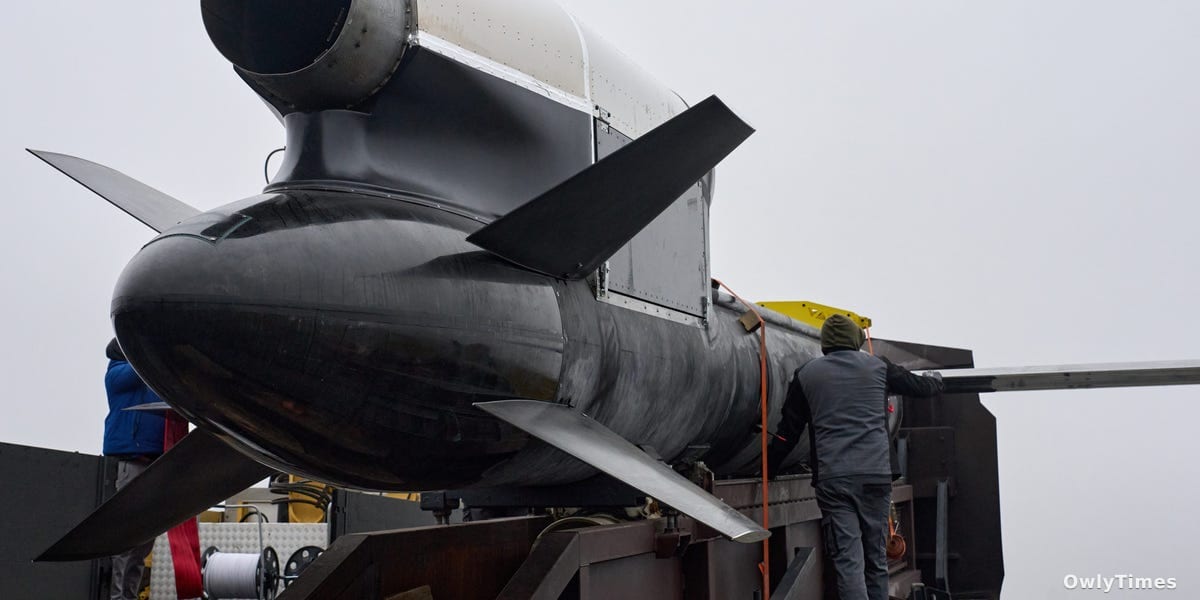

1,400 Kilometers Changes the Calculus: Ukraine’s Domestic Missile Industry Gains Range and Relevance
A reported range of 1,400 kilometers – nearly 900 miles – is the critical figure emerging from Volodymyr Zelenskyy’s announcement this week regarding Ukraine’s domestically produced “Flamingo” cruise missile. This isn’t simply a story of successful strikes against Russian industrial targets; it’s a demonstration of a rapidly evolving Ukrainian defense industrial base capable of reaching targets previously accessible only with Western-supplied weaponry. Follow the money: while Western aid remains vital, Ukraine’s ability to independently manufacture and deploy long-range missiles reduces its reliance on external supply chains and introduces a new dynamic into the conflict’s economic and strategic equation.
Original reporting: Business Insider.
The strike on the Votkinsk plant in Russia’s Udmurt Republic, a key manufacturer of Iskander and Bulava missiles, is significant in itself. While Alexander Brechalov, the governor of the Udmurt Republic, confirmed an attack and reported three hospitalizations, the Kremlin’s silence on the specific target speaks volumes. The Flamingo’s success in penetrating Russian air defenses – as claimed by Zelenskyy – is a direct challenge to Russian narratives of air superiority and a potential indicator of evolving vulnerabilities. This isn’t merely about damaging a factory; it’s about eroding confidence in Russia’s defensive capabilities and demonstrating Ukraine’s capacity to project power deep within Russian territory.
Ukraine’s push for domestic weapons production isn’t new, but the Flamingo’s demonstrated range represents a qualitative leap. Kyiv has been actively positioning the Flamingo as a cost-effective alternative to the US-made Tomahawk, boasting a potential range of 1,900 miles and lower production costs. However, the 40-minute launch preparation time remains a significant drawback. This trade-off – range and affordability versus speed of deployment – highlights a strategic calculation: Ukraine is prioritizing the ability to strike high-value targets at a distance, even if it means sacrificing some responsiveness. Year-over-year, this represents a dramatic shift from reliance on short-range artillery and HIMARS systems to a capability that directly threatens Russia’s strategic depth.
The narrative of seamless success, however, is complicated by recent setbacks. Zelenskyy himself acknowledged earlier this month that a Russian strike had damaged a key Flamingo production line, forcing a relocation of manufacturing. This underscores the fragility of Ukraine’s nascent defense industry and its continued vulnerability to Russian attacks. The manufacturer, FirePoint, had hoped to reach a production rate of seven missiles per day by the end of 2025, a target now potentially delayed. The tension here is clear: Ukraine is simultaneously expanding its domestic production capacity and facing ongoing attempts to disrupt it. The reported resumption of production after the strike is a testament to Ukrainian resilience, but also a reminder of the constant pressure it faces.
The discrepancy between Russia’s claim of intercepting 77 Ukrainian drones on Saturday and its silence regarding any missile threats is also noteworthy. This selective reporting suggests a deliberate attempt to downplay the impact of the Flamingo strike and avoid acknowledging a vulnerability. Open-source intelligence groups have already published satellite imagery showing damage to the Votkinsk plant, corroborating Ukrainian claims. This pattern of information control is consistent with previous Russian attempts to minimize battlefield losses and maintain public morale.
What this means for your wallet: the success of the Flamingo has implications beyond the battlefield. A robust Ukrainian defense industry reduces the long-term financial burden on Western allies, potentially freeing up resources for other priorities. However, it also introduces a new competitor into the global arms market, potentially driving down prices and increasing geopolitical competition. The key question now is whether Ukraine can sustain and scale its domestic production, and whether Western partners will continue to provide the necessary components and technical assistance. Watch for announcements regarding increased production capacity at FirePoint and any shifts in Western aid packages that reflect Ukraine’s growing self-reliance in missile technology.





