
The muted fanfare surrounding the United States’ 250th anniversary isn’t a mere oversight in event planning; it’s a symptom of a fundamental strategic miscalculation – a conflation of government with nation. The current struggle to generate widespread enthusiasm for the Semiquincentennial reveals a deeper political reality: the erosion of shared national identity creates a vacuum where celebratory governance feels hollow, even performative. This isn’t simply about differing political preferences; it’s about a weakening of the foundational “something” that justifies the “how” of governing, a dynamic historically observed in nations lacking genuine internal cohesion.
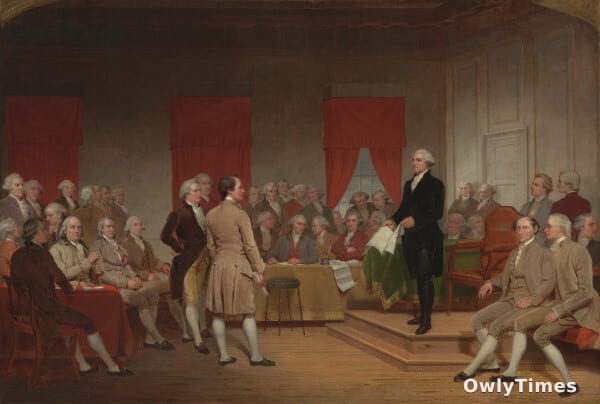
The distinction between nation and government, seemingly academic, is acutely relevant now. As the source material points out, 1776 marked the birth of a nation, not a finalized government. Eleven years followed before the Constitution, and two more before the first presidential election. This sequencing isn’t accidental. A shared sense of peoplehood – a collective identity, values, and aspirations – must precede the construction of a governing apparatus. The historical counterexample of the Vichy regime in France serves as a stark warning: a government established without a legitimate nation to represent inevitably lacks legitimacy and stability. The current disjointed celebration, fractured between a White House task force and a congressional commission, mirrors this instability, suggesting a lack of unified national purpose.
Who benefits and who loses from this disconnect? Those who benefit are those invested in emphasizing procedural politics over substantive national unity – factions seeking to leverage division for partisan gain. Political operatives thrive in environments where identity is fragmented, allowing them to mobilize specific demographics through targeted appeals. Those who lose are the citizens themselves, deprived of a shared sense of belonging and purpose, and the long-term health of the republic, which relies on a citizenry invested in its success. The question posed by John Dichtl, president of the American Association for State and Local History, regarding the appropriateness of a UFC fight at the White House – “What does a (UFC) fight have to do with America’s greatness?” – cuts to the heart of this issue. It highlights a celebration focused on spectacle rather than shared values.
The contrast with the 1976 Bicentennial is telling. In a nation still grappling with the aftermath of the Vietnam War and the Watergate scandal – a period of significant social and political turmoil – a widespread sense of national pride prevailed. The fact that Americans readily waved flags and sang patriotic songs just two years after a president’s resignation underscores the strength of the underlying national identity. Today, the decline in even basic civic rituals, like the recitation of the Pledge of Allegiance, as noted in the source, suggests a more profound erosion of that shared identity. Myra Adams’ lament in The Hill about feeling “less pride” in this Semiquincentennial year isn’t an isolated sentiment; it reflects a broader sense of disillusionment.
Source material: thecatholicthing.org.
The parallel drawn to celebrations in Tian’anmen Square and Kim Il Sung Square is deliberately provocative, but strategically insightful. These events aren’t genuine expressions of national unity; they are carefully orchestrated displays of state power designed to reinforce a one-party system. The risk for the United States isn’t necessarily a descent into authoritarianism, but a slide into a state of perpetual political fragmentation, where the government is seen as an instrument of partisan warfare rather than a representative of the people. The interview with Patrick Deneen and Bishop Robert Barron regarding the classical view of government’s role in cultivating virtue further illuminates this point. If government is solely focused on managing competing interests, rather than fostering a shared moral framework, it loses its legitimacy and its ability to unite the nation.
The core tension lies in the increasingly narrow definition of “politics” itself. Confining political discourse to the machinations within the D.C. beltway obscures the broader, more fundamental question of how to cultivate a virtuous citizenry. As Yves Simon argued, the best government governs least, intervening only where citizens are deficient. But if citizens are increasingly disengaged from civic life and lacking in shared values, the need for government intervention grows, creating a self-perpetuating cycle of dependency and distrust. The relative lack of student interest in local government internships, compared to those seeking opportunities in Washington, is a telling indicator of this trend.
The political chess move to watch next isn’t a policy proposal or a legislative maneuver. It’s the emergence – or failure to emerge – of a compelling national narrative that transcends partisan divides. Will any political leader attempt to articulate a vision of America that appeals to shared values and aspirations, or will the focus remain on exacerbating existing divisions? The answer to that question will determine whether this Semiquincentennial is remembered as a missed opportunity to reaffirm national unity, or as a harbinger of further fragmentation.





