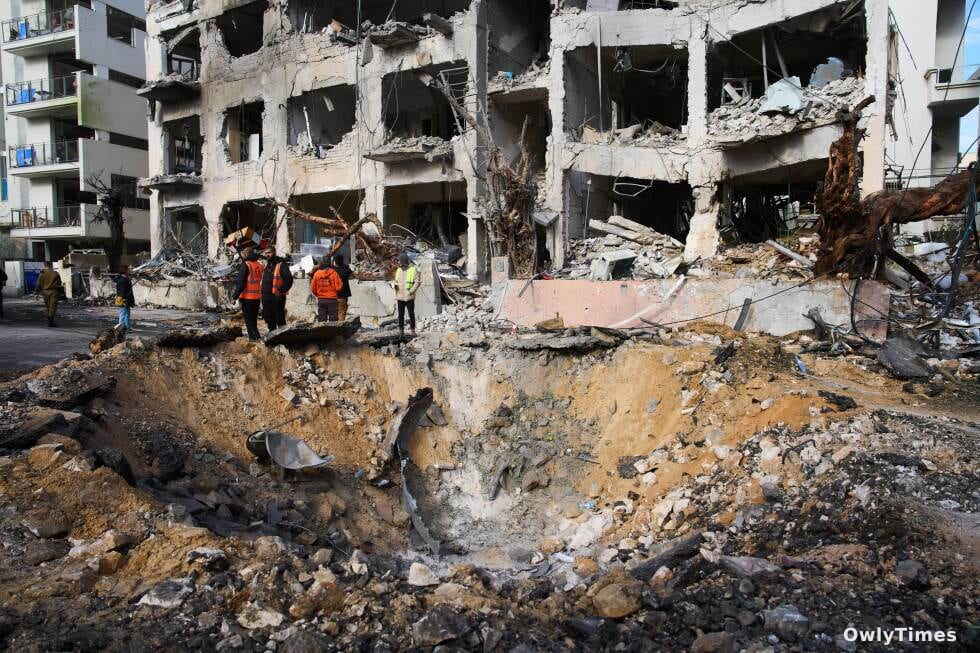

The calculated escalation unfolding across the Middle East isn’t simply about retribution for the killing of Ayatollah Ali Khamenei; it’s a strategic realignment decades in the making, testing the boundaries of a newly assertive American foreign policy and the limits of Iranian regional influence. The joint U.S.-Israeli strikes against Iran, culminating in the reported destruction of warships and ballistic missile sites, represent a gamble by the Trump administration – a demonstration of force intended to deter further aggression, but one that simultaneously risks igniting a wider regional conflict. The speed and scale of the response, particularly the deployment of B-2 stealth bombers, signal a willingness to bypass traditional constraints and directly confront Iranian military capabilities, a departure from the “America First” rhetoric that initially suggested a disengagement from protracted foreign entanglements.
The immediate calculus is clear: neutralize Iranian capacity for retaliation following Khamenei’s assassination. However, the broader strategic picture reveals a power play aimed at reshaping the regional order. For decades, Iran has leveraged proxy groups – Hezbollah in Lebanon, militias in Iraq, and Houthi rebels in Yemen – to project power and challenge U.S. and Israeli interests. The strikes aren’t solely about dismantling Iranian hardware; they’re about disrupting the network that allows Iran to exert influence without direct military confrontation. The reported targeting of Iranian air defenses and missile command centers is designed to degrade Iran’s ability to support these proxies, effectively severing a critical link in its regional strategy. Who benefits and who loses is starkly defined: Israel gains a temporary reprieve from direct Iranian threats, the U.S. attempts to reassert its dominance, while Iran faces a crippling blow to its military infrastructure and regional ambitions. Gulf states, while publicly expressing concern, privately assess a diminished Iranian threat, though they simultaneously brace for potential spillover effects.
This level of direct military engagement echoes historical precedents, most notably the 1980s “Tanker War” in the Persian Gulf, where the U.S. and Iran clashed over control of vital shipping lanes. Like today, that conflict involved attacks on maritime vessels and escalating retaliatory strikes. However, the current situation differs in its intensity and the explicit coordination between the U.S. and Israel. The Reagan administration, while supporting Iraq during the Iran-Iraq War, largely avoided direct military confrontation with Iran. Trump, by contrast, has embraced a far more aggressive posture, mirroring a willingness to escalate that hasn’t been seen since the early stages of the Iraq War. The killing of Qassem Soleimani in January 2020 offered a preview of this approach, but the elimination of Khamenei and the subsequent large-scale strikes represent a significant escalation in risk.
Drawn from AP.
The widening of the conflict beyond Iran, Israel, and the U.S. is perhaps the most alarming development. Strikes claimed by Hezbollah on Israel, and retaliatory Israeli strikes on Beirut, demonstrate the potential for the conflict to engulf Lebanon, a country already grappling with economic collapse and political instability. The attacks in the United Arab Emirates, Kuwait, and Bahrain, while largely intercepted, underscore the vulnerability of Gulf states and the potential for a broader regional war. The fact that these strikes targeted civilian areas, even if unintentionally, raises the stakes considerably and fuels the narrative of Iranian aggression. The reported deaths of three U.S. service members in Kuwait represent a critical turning point, providing Trump with a domestic justification for further escalation and fulfilling his vow of vengeance.
The Iranian response, promising “devastating blows,” is not merely rhetoric. The country’s leadership, even in the wake of Khamenei’s death and the ongoing strikes, retains significant military capabilities and a network of loyal proxies. The selection of a new supreme leader, expected within “one or two days” according to Foreign Minister Abbas Araghchi, will be a crucial moment. A hardline successor could double down on confrontation, while a more pragmatic leader might seek a negotiated settlement. However, the internal pressure to avenge Khamenei’s death will be immense, regardless of who assumes leadership. The current situation presents a dangerous paradox: the U.S. and Israel have demonstrated their military superiority, but they have also created a volatile environment where miscalculation or escalation could lead to a catastrophic regional war.
The political chess move to watch next isn’t about further military strikes, but about the diplomatic maneuvering surrounding Iran’s succession. Will European powers, who have offered to assist American forces, succeed in opening a channel for dialogue with the new Iranian leadership? Or will the focus remain solely on military pressure, potentially pushing Iran closer to a desperate act of retaliation? The answer to that question will determine whether this escalating conflict spirals into a full-blown regional war, or whether a path towards de-escalation can be found.





