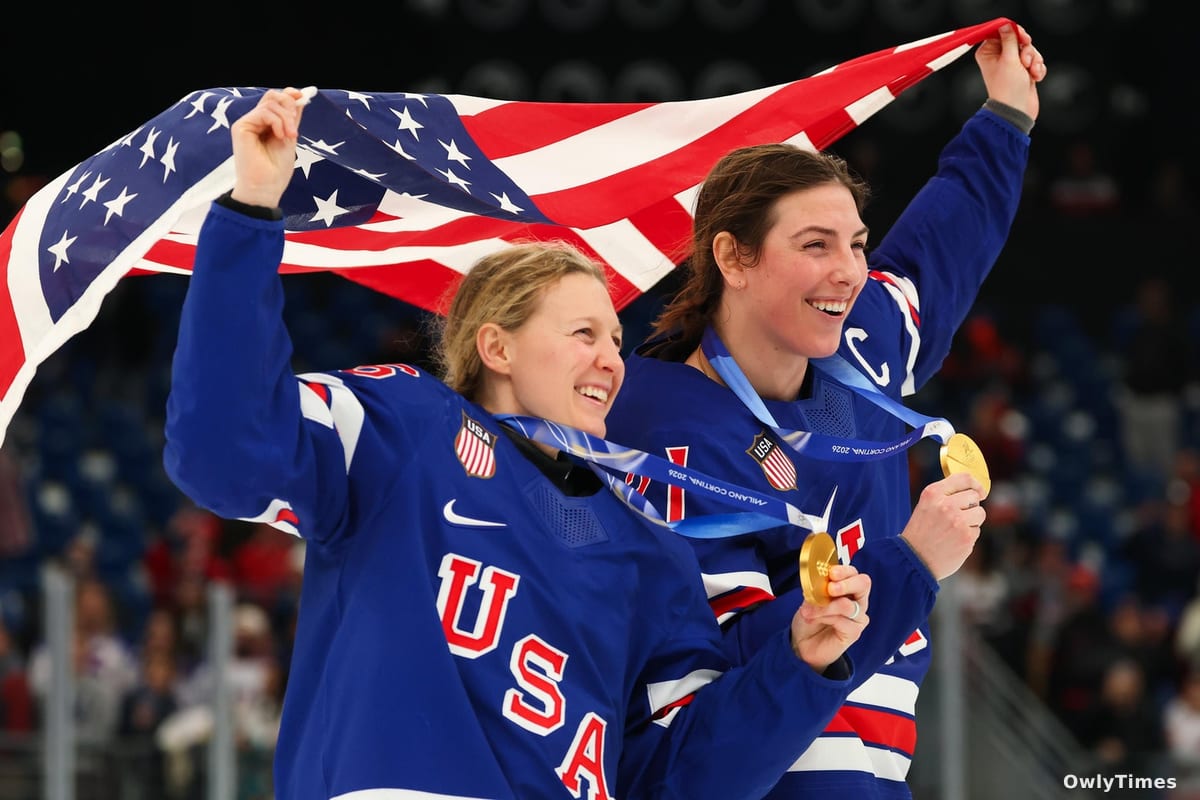

The air in Milan’s PalaLido arena hung thick with decades of history, of near misses and heartbreaking defeats. Two minutes into overtime of the Olympic gold medal game, the weight of those past encounters threatened to crush Team USA once more. Marie-Philip Poulin, the name synonymous with American women’s hockey anguish, had the puck, streaking towards the net. For a nation accustomed to Canadian dominance in this sport, it felt inevitable – another gut punch delivered by the player who had haunted their Olympic dreams for years. But this time, the shot didn’t go in. And a few minutes later, the impossible happened: the United States finally slayed the beast, winning 3-2 in sudden death.
This wasn’t just a hockey game; it was a cultural reckoning. For generations, the narrative of women’s Olympic hockey has been defined by the rivalry between the United States and Canada, a story of Canadian supremacy punctuated by American heartbreak. The Americans entered the 2026 Olympics having outscored opponents 31-1, a display of dominance rarely seen in international competition. They’d even dismantled Canada 5-0 in the group stage. Yet, the specter of past failures – the overtime losses, the championship-winning goals by Poulin – loomed large. This victory, secured by a dazzling goal from Megan Keller, wasn’t simply about winning gold; it was about exorcising demons and rewriting a narrative that had long favored the North.
See the original slate.com story for the full account.
Beyond the Scoreboard: A Generational Shift
The dominance of Canada in the early years of women’s Olympic hockey – five golds in the first seven tournaments – established a power dynamic that proved difficult to break. But the recent trajectory has shifted dramatically. Team USA’s win in Milan marked their eighth consecutive victory over Canada, a streak that began a year prior and included a gold medal at the 2025 IIHF World Championship. This isn’t a fleeting hot streak; it’s a sustained period of American ascendancy, fueled by a new generation of talent and a relentless commitment to development. The betting markets reflected this shift, giving the US an 80% chance of winning before the puck even dropped. However, as the article points out, the history of this rivalry meant that a comfortable victory was far from guaranteed. The echoes of 2002, when a similar American winning streak ended in Olympic defeat, served as a stark reminder of the unpredictable nature of this rivalry.
The psychological weight of past losses was palpable. Hilary Knight, the team captain and likely playing in her final Olympics, carried the burden of four silver medals. Her poetic tip-in goal with just over two minutes remaining in regulation tied the game and offered a glimmer of hope, but the real victory lay in breaking the cycle of disappointment. Knight’s legacy extends beyond her record-breaking goal tally; she represents a generation of American players who fought for recognition and respect in a sport often overlooked. Her final Olympic performance wasn’t just about adding another medal to her collection; it was about paving the way for future generations to experience the joy of Olympic gold.
The Poulin Factor and the American Response
The narrative surrounding this game couldn’t ignore the shadow cast by Marie-Philip Poulin. Her history of scoring crucial goals against the United States – in Vancouver 2010, Sochi 2014, the 2021 World Championship, and even Beijing 2022 – had cemented her status as the Americans’ nemesis. The mere sight of her on the ice in overtime likely sent a chill down the spines of American players. This isn’t simply about individual skill; it’s about the psychological impact of a player who has consistently delivered in the most critical moments.
But Team USA didn’t crumble under the pressure. They didn’t allow Poulin to dictate the narrative. Instead, they responded with resilience and determination, culminating in Keller’s stunning game-winning goal. The fact that the goal came in the chaotic three-on-three overtime format – a system often criticized for its randomness – felt fitting. It took something unexpected, something unconventional, for the Americans to finally overcome their mental hurdle. It wasn’t a textbook play, but a moment of individual brilliance that symbolized the team’s newfound confidence and willingness to embrace the unpredictable.
What This Means for the Future of Women’s Hockey
This victory isn’t just a triumph for Team USA; it’s a watershed moment for women’s hockey. The Americans have not only solidified their position as the best team in the world, but they’ve also ushered in a new era of optimism and opportunity. The emergence of young stars like Caroline Harvey, Laila Edwards, Hannah Bilka, and Abbey Murphy – all 24 or younger – suggests that this dominance could be sustained for years to come. These players represent the future of American women’s hockey, and their success will undoubtedly inspire a new generation of athletes to take up the sport.
However, the duopoly between the United States and Canada isn’t likely to end anytime soon. As long as these two programs continue to invest in development and compete at the highest level, the rivalry will remain fierce. But for the first time, Team USA enters this rivalry as the Goliath, the team to beat. The question now isn’t whether they can maintain their dominance, but how they will navigate the challenges of being the hunted. Will the pressure of expectation stifle their creativity, or will it fuel their ambition? And, crucially, will this victory inspire other nations to invest in women’s hockey, ultimately breaking the US-Canada stranglehold on the sport? The next four years will tell the tale.

