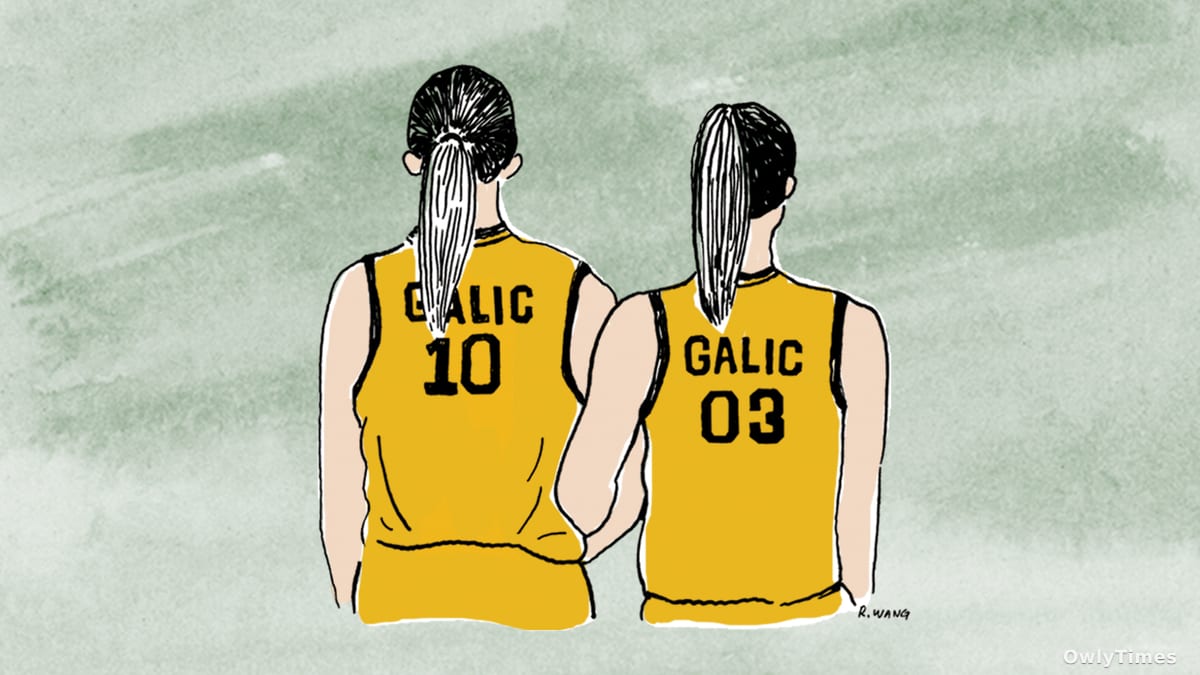

The chipped porcelain of the bathroom stall felt cold against Marta Galic’s forehead. It was a ritual, born of desperation, before every University of San Francisco basketball practice. Cold water splashed on her face, a frantic “Superman” pose in the mirror, and a desperate emptying of her bladder – all attempts to brace herself for what felt less like a practice and more like entering a war zone. This wasn’t about preparing to compete; it was about preparing to survive. The story of the Galic twins, Marta and Marija, isn’t just about basketball. It’s a stark illustration of how easily the pursuit of athletic dreams can devolve into a landscape of unchecked emotional abuse, and how the systems designed to protect student-athletes often fail them spectacularly.
The incident that triggered this desperate routine occurred during a grueling layup drill freshman year. Galic repeatedly asked her coach, Molly Goodenbour, and an assistant for permission to use the restroom, her requests escalating with urgency. Each time, she was told to finish the drill. Eventually, she lost control, the humiliation of a visibly soaked jersey compounding the psychological pressure. When she again asked to clean up, Goodenbour reportedly refused. This wasn’t an isolated event, but a symptom of a pattern of verbal attacks, manipulation, and control that the twins allege characterized their time under Goodenbour’s leadership. Their story, recently playing out in courtrooms and sparking debate within the NCAA, exposes a critical gap in athlete protection – one where emotional maltreatment often falls through the cracks.
This article draws on reporting from NPR.
The twins’ journey began with a shared dream. Hailing from Zagreb, Croatia, Marta, the analytical one, and Marija, the creative, had always bonded over basketball. They’d played for the U20 Croatian national team, attracting the attention of American colleges, including USF. Goodenbour visited Croatia multiple times, charming their family with promises of a supportive environment. Over dinner in their garden, she assured their mother that her daughters would be in good hands. That moment, according to their father, Kristijan Galic, was decisive. A full-ride scholarship for both, spanning five years to play four seasons, sealed the deal. It seemed great, Marta recalls, with “no signs that things were gonna go a completely different way.” The allure of the American college experience, coupled with the promise of playing alongside her sister, had felt like the perfect opportunity.
But the reality quickly fractured that idyllic vision. Almost immediately, Goodenbour’s demeanor shifted. What began as strict coaching morphed into a barrage of insults. Marta testified that she was called “lazy,” “worthless,” and a “piece of shit.” Former teammate Leilah Herrera, who is African American and Puerto Rican, corroborated this atmosphere of verbal abuse in a deposition, adding that an assistant coach, Janell Jones, made racially insensitive comments. While Goodenbour argued in legal filings that her comments were solely about basketball performance, the twins’ recordings paint a different picture. A performance review at the end of their freshman year captured Goodenbour threatening to revoke Marta’s scholarship if she “quit” on a drill – a practice the NCAA prohibits. The pressure cooker environment took a devastating toll. Marija began experiencing panic attacks, violent nightmares, and crippling depression, a stark contrast to her previous mental wellbeing.
The twins’ lawsuit, filed in 2021, alleged intentional infliction of emotional distress and negligence on the part of Goodenbour and USF. The case highlighted the inherent power imbalance between coach and athlete, a dynamic that Randy Gaw, the twins’ lawyer, argued was central to the harm inflicted. “You can’t just sue for random conduct,” he explained. “But Ms. Goodenbour was a surrogate parent in many ways.” The jury initially sided with Marta and Marija on the point of outrageous conduct, awarding Marija significant damages. However, a judge later rescinded the punitive damages, a decision later overturned on appeal. Marta ultimately reached a settlement with USF and Goodenbour last month. Despite the legal battles, the case revealed a disturbing pattern: Goodenbour had faced similar allegations of abusive behavior at previous programs, including California State University, Chico and the University of California, Irvine, yet continued to be hired and retained.
The Galic sisters’ story isn’t an anomaly. It’s a symptom of a larger systemic failure. The NCAA, despite overseeing 550,000 student-athletes, lacks a specific policy addressing emotional abuse. Accountability remains elusive, with universities often prioritizing protecting their own employees over safeguarding their athletes. The patchwork system of reporting and investigation leaves athletes vulnerable, and coaches accused of misconduct can easily move from one program to another. The rise of Name, Image, and Likeness (NIL) deals and the increased transfer portal activity are further shifting the power dynamic, creating a more complex landscape for coaches to navigate. Lisa Stockton, a recently retired coach with a 30-year tenure at Tulane University, noted the increasing difficulty of the job, emphasizing the need to distinguish between challenging athletes and being unfairly harsh.
Marta has since found a supportive environment at Tulane, rediscovering her love for the game and serving as a team captain. Marija, however, has struggled to return to basketball, the trauma leaving lasting scars. Their story is a powerful reminder that athletic success comes at a cost, and that cost should never be an athlete’s mental and emotional wellbeing. The question now isn’t just whether universities will implement stronger emotional abuse policies, but whether they will prioritize creating a culture of genuine athlete support – one where seeking help isn’t seen as a weakness, and where coaches are held accountable for their actions, not just their win-loss records. Will the NCAA finally step up and provide the necessary framework for protecting its athletes, or will the cycle of abuse continue, hidden behind the veneer of athletic ambition?