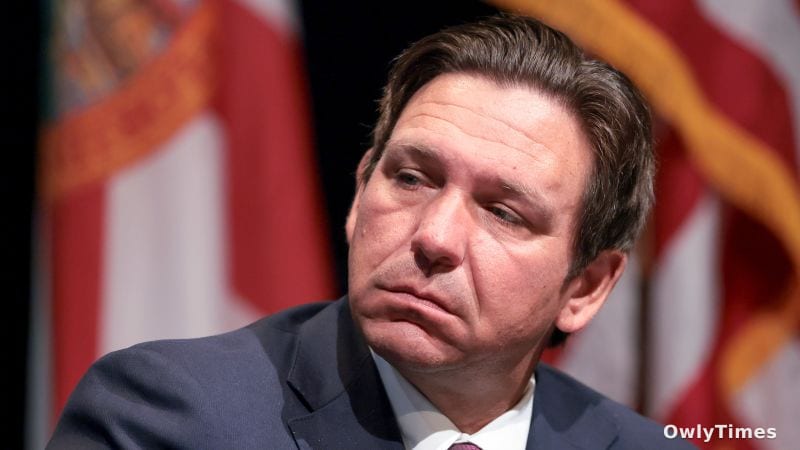

The strategic calculus behind the mounting pressure on Ron DeSantis is rooted in a fundamental shift in the national electoral landscape. With Virginia Democrats successfully maneuvering to flip four seats, the margin for error in the United States House has narrowed to a razor-thin reality for the Republican Party. Washington power brokers are no longer viewing Florida’s redistricting process as a localized administrative task, but as a critical lever to secure a legislative firewall. By pushing the Florida Governor to take the lead, senior Republicans are attempting to preempt further losses and consolidate power before the political tide shifts any further.
The Cost of the Information Vacuum
The lack of transparency surrounding the upcoming special session, slated to start Tuesday, has created a palpable sense of unease among key stakeholders. When a state’s congressional map is subject to total internal control, the absence of a released draft typically suggests that the final product is being guarded behind a wall of executive discretion. Key Republicans involved in the process have reported being kept in the dark, a dynamic that suggests the Governor’s office is operating with a high degree of autonomy. This isolationist strategy serves to insulate the map from early opposition, but it also strips the party of the ability to pressure-test the political viability of the proposed districts.
Who benefits from this lack of communication? The executive branch in Tallahassee retains total tactical flexibility, avoiding the leaks and public posturing that often accompany legislative negotiations. Who loses? The congressional delegation and the national party apparatus, both of which are left to plan for the next cycle without knowing which districts will exist in their current form. In the high-stakes world of redistricting, information is the most valuable currency, and currently, that currency is being hoarded.
Navigating the Legal Minefield
The tension in Florida is exacerbated by the strict state rules regarding partisan gerrymandering. Unlike in jurisdictions where political parties can collaborate openly with mapping consultants, the legal environment in Florida necessitates a degree of separation that complicates coordination. This structural constraint explains why there is no formal dialogue between the national party and the state leadership. The current silence is not necessarily a sign of disagreement, but a calculated response to a legal environment that penalizes overt partisan collusion.
This situation mirrors the friction often seen in high-stakes political cycles like the 2008 financial crisis, where institutional actors were forced to operate within rigid regulatory frameworks while simultaneously scrambling to stabilize a volatile system. Just as regulators then had to navigate a crisis while maintaining the appearance of independence, Florida’s political architects are attempting to draw a map that maximizes their influence while adhering to a restrictive set of state-level criteria.
The Calculus of Federal Power
The urgency from Washington is a direct byproduct of the electoral math. Every seat in the House is now a potential swing district, and the failure to secure favorable lines in a state as large as Florida could prove fatal to the party's majority aspirations. The fact that a spokesperson for DeSantis did not respond to a CNN inquiry regarding the map’s status only underscores the degree to which the Governor is prioritizing state-level control over federal-level demands.
As the Tuesday deadline approaches, the most significant signal will be the initial release of the legislative map. The next reading of the state-level redistricting proposal will show whether the Governor intends to prioritize the national party's desire for a secure majority or if he will continue to leverage his executive authority to dictate the state’s political trajectory on his own terms.





