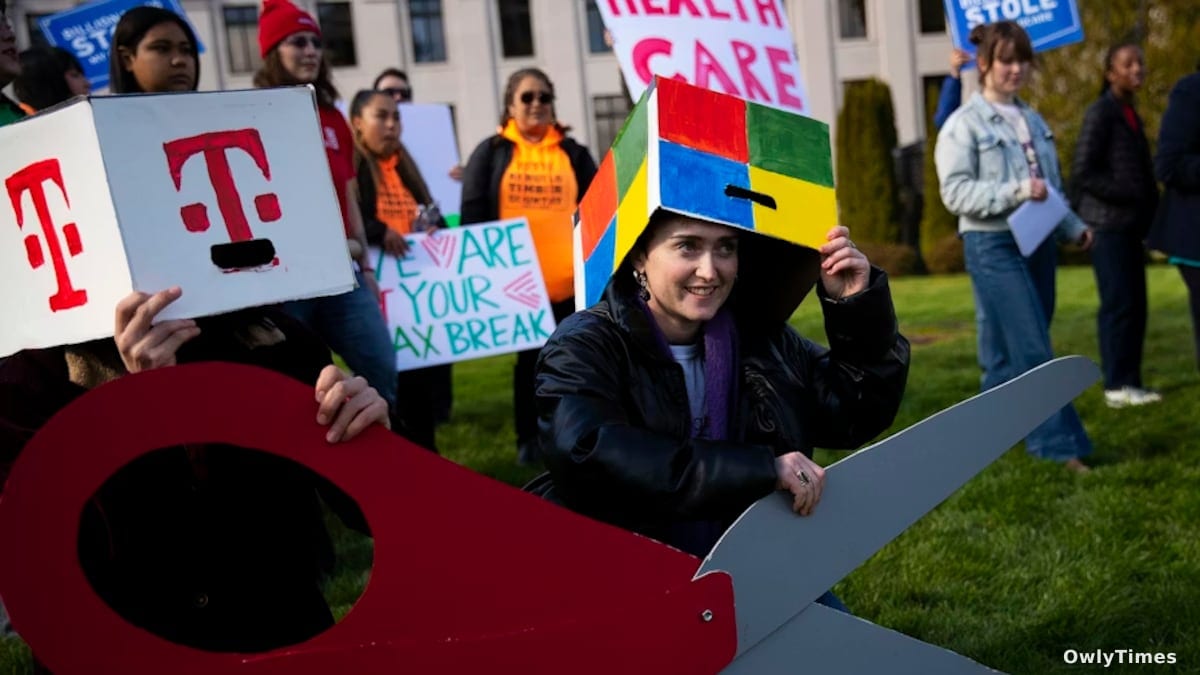

$550 million. That’s the figure at the heart of a dramatic shift in the Washington State House’s proposed “millionaires tax,” a bill intended to reshape the state’s notoriously regressive tax structure. A last-minute amendment, spearheaded by 13 progressive lawmakers, successfully removed a tax break for large corporations – a provision initially valued at over half a billion dollars – effectively prioritizing revenue for social programs over concessions to big business. This wasn’t simply a policy disagreement; it was a power play revealing deep fissures within the Democratic party regarding the fundamental purpose of this tax: revenue generation versus economic incentives.
Follow the money, and the story becomes clear. The original bill, designed to tax incomes exceeding $1 million, was simultaneously being pitched as a solution to chronic underfunding in education and healthcare, while also offering a sunset provision on a business and occupation (B&O) surcharge for corporations grossing over $250 million annually. Shaun Scott (D-Seattle) exposed the contradiction, calculating that the corporate tax break would negate a significant portion of the projected revenue, costing the state $550 million – an amount exceeding proposed cuts to crucial services like childcare within the governor’s supplemental budget. This calculation wasn’t merely academic; it directly challenged the narrative of a revenue-positive tax reform.
See the original opb.org story for the full account.
The removal of the corporate tax break represents a significant win for the progressive wing of the Democratic party, but it also highlights the precariousness of the entire endeavor. Jamie Pedersen (D-Seattle), the bill’s lead sponsor, downplayed the impact of the amendment, stating it would be a “wash” for big businesses. However, this assertion rings hollow when considering the broader context. Washington State has repeatedly rejected income tax proposals – ten times in the last 90 years – demonstrating a deep-seated resistance to progressive taxation among the electorate. The current bill relies on an estimated 20,000 households, roughly 1% of the state’s population, to generate billions in revenue starting in 2029.
This reliance on a small tax base introduces substantial volatility. Jared Walczak, a senior fellow at the Tax Foundation, rightly points out that revenue could fluctuate dramatically if high earners relocate or experience financial downturns. This instability is particularly concerning given Washington’s existing budget deficit, despite recent tax increases. The state is attempting to fund long-term commitments – healthcare, education, and other social services – with a revenue stream that is, by its very nature, unpredictable. Massachusetts’ experience with a similar tax on high earners in 2022 offers a cautionary tale, demonstrating the challenges of forecasting revenue from a concentrated wealth base.
The debate isn’t solely about numbers; it’s about competing visions for Washington’s economic future. While proponents like Wesley Tharpe of the Center on Budget and Policy Priorities frame the tax as a “sensible way” to fund public needs, critics like Joe Nguyen, president of the Seattle Metropolitan Chamber of Commerce, remain skeptical. Nguyen argues that the current proposal won’t necessarily translate into improved outcomes for those who need it most, and even suggests a universal income tax as a more equitable solution – a proposal that, while theoretically appealing, faces the same historical headwinds as any income tax in Washington. The fact that Nguyen, a former Democratic lawmaker, is now voicing these concerns underscores the internal divisions within the party.
What this means for your wallet: Washington residents should watch closely whether the projected revenue from this “millionaires tax” materializes as promised. If the state continues to face budget shortfalls despite the tax, expect renewed calls for cuts to social programs – or, more likely, further attempts to shift the tax burden onto working families. The key question isn’t just if the tax passes, but whether it delivers on its promise of a more equitable and sustainable fiscal future for the state. Will the state be able to stabilize revenue and avoid repeating the cycle of budget crises and program cuts, or will this tax ultimately prove to be another temporary fix in a system fundamentally resistant to change?





