
$99 Million in Leases Signal Baton Rouge’s Resilience as Louisiana Developer Doubles Down
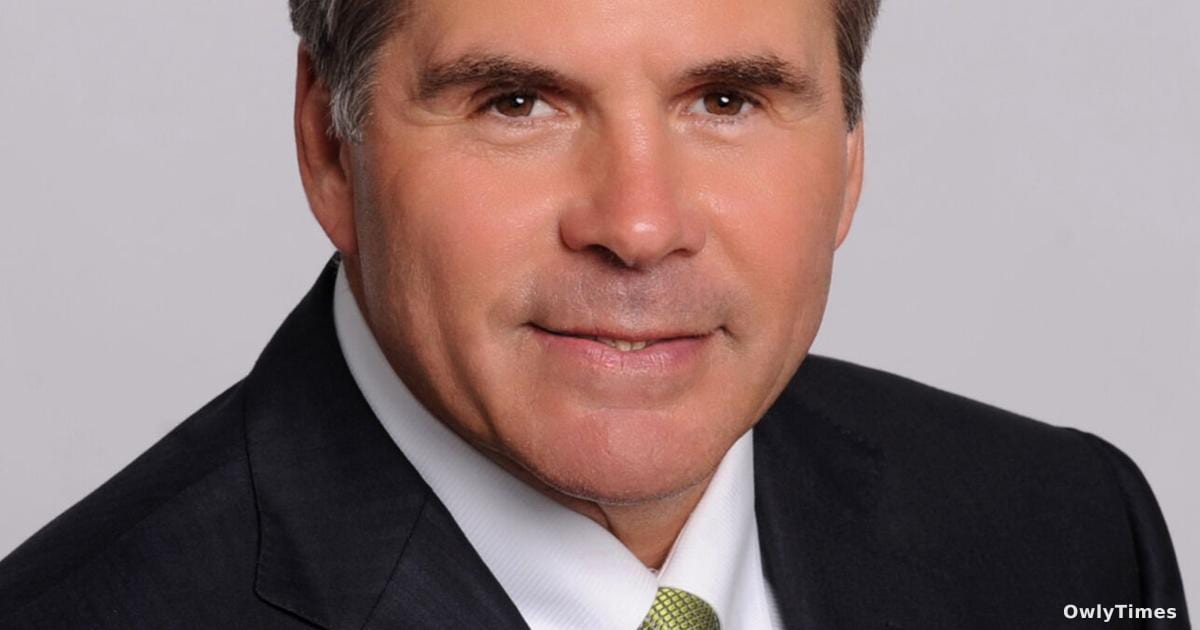
While national headlines focus on distressed commercial real estate and slowing hotel occupancy, a quiet strength is emerging in Baton Rouge, Louisiana. Milford “Mike” Wampold III, of Wampold Companies, is betting heavily on the capital city, and recent leasing figures – totaling $99 million across his Rivermark Centre properties alone – suggest his confidence isn’t misplaced. This isn’t simply a local success story; it’s a data point challenging the broader narrative of urban core decline and highlighting the potential for targeted investment in markets overlooked by national trends.
Wampold’s career began in the early 1980s, capitalizing on low-interest federal loans for rural apartment development. A pivotal moment came in 1985 with $30 million in military housing contracts at Fort Polk, a deal he leveraged into a diversified portfolio. This early success demonstrates a consistent pattern: identifying opportunity in government-backed projects and adapting to shifting economic conditions. Today, Wampold’s holdings span Louisiana and the Southeast, but his current focus, and the source of his optimism, is firmly rooted in Baton Rouge. He’s strategically “pared down” his portfolio, concentrating on properties like Bayonne at Southshore, Chateau Dijon, and the recently revitalized Rivermark Centre, signaling a deliberate shift towards quality over quantity.
The Rivermark transformation – converting a brutalist-style office tower into a mixed-use space with 168 luxury apartments and office space – is particularly telling. Achieving 99% occupancy in the apartments and 93% in the office component, representing roughly $99 million in lease value, is a significant outlier. Compare this to the national office vacancy rate of 19.6% in Q1 2024 (according to CBRE) and the average hotel occupancy of 65.8% nationally (as reported by STR), and the Rivermark success becomes even more pronounced. Wampold didn’t simply build; he anticipated demand for a specific type of product – high-end residential and Class A office space – in a market underserved by both.
This piece references the NOLA.com report.
However, the story isn’t without its complexities. The lingering vacancy at Rivermark II, following McGlinchey Stafford’s departure, underscores the vulnerability of even prime commercial real estate to firm-specific shocks. Furthermore, Wampold’s seven-year pursuit of economic incentives and a joint venture partner for the historic Whitney Bank building in New Orleans raises questions about the challenges of navigating local politics and securing funding for large-scale renovations. Despite believing in the demand for a new hotel in the city, he acknowledges the recent discounting of existing properties, a clear indication of a softening market. This tension between bullish pronouncements and demonstrable market headwinds is a key element of Wampold’s strategy: a willingness to hold assets for extended periods, waiting for optimal conditions.
Wampold’s most ambitious project, Harveston – a 1,800-acre mixed-use community – represents a long-term bet on Baton Rouge’s growth. He’s currently focused on infrastructure development, courting anchor tenants like grocery stores, healthcare providers, and banks. The deliberate exclusion of multifamily housing in the initial phase, despite a dedicated site on Bluebonnet Boulevard, suggests a cautious approach, potentially influenced by the impact of COVID-19 and inflation on construction costs. This strategic delay highlights a key principle of Wampold’s success: avoiding overbuilding and responding to market signals. He’s not simply building what can be built, but what the market demonstrably needs.
His confidence in Baton Rouge stems from a simple, yet powerful observation: the city hasn’t experienced the overbuilding plaguing other markets. His Watermark and Renaissance hotels consistently outperform New Orleans properties, achieving 79% occupancy compared to the city’s average of 60% in 2023. This isn’t a matter of superior marketing; it’s a reflection of fundamental supply and demand dynamics. Wampold’s preference for owning Class A office space in Baton Rouge over comparable properties in larger cities like New Orleans, Houston, and Dallas is a direct consequence of this imbalance.
Despite concerns surrounding the recent St. George breakaway and the city’s fiscal challenges, Wampold remains optimistic, actively participating in Plan Baton Rouge III, a revitalization initiative focused on increasing downtown residential density. He recognizes the need to retain the workforce that already populates the city’s core, arguing that increased residential options will attract services and create a more vibrant urban environment.
What this means for your wallet: Watch for increased investment in Baton Rouge’s downtown core over the next five years. If Plan Baton Rouge III gains traction, expect to see rising property values and rental rates, particularly for residential units. The key indicator will be the successful attraction of anchor tenants to Harveston – their presence will validate Wampold’s vision and likely spur further development, creating a ripple effect throughout the local economy. The question isn’t if Baton Rouge will change, but how quickly and who will benefit most from its potential resurgence.




