
The Supreme Court’s recent decision to strike down Louisiana’s congressional map is not merely a legal setback for voting rights advocates; it is the formal acceleration of a nationalized redistricting arms race. By narrowing the scope of the Voting Rights Act and ruling that Section 2 compliance cannot justify the use of race in drawing district lines, the Court has effectively removed the primary federal guardrail against partisan map-making. This move forces a shift in political strategy where the objective is no longer to represent a diverse electorate, but to consolidate power through the aggressive manipulation of geography.
The Strategic Calculus of a Partisan Arms Race
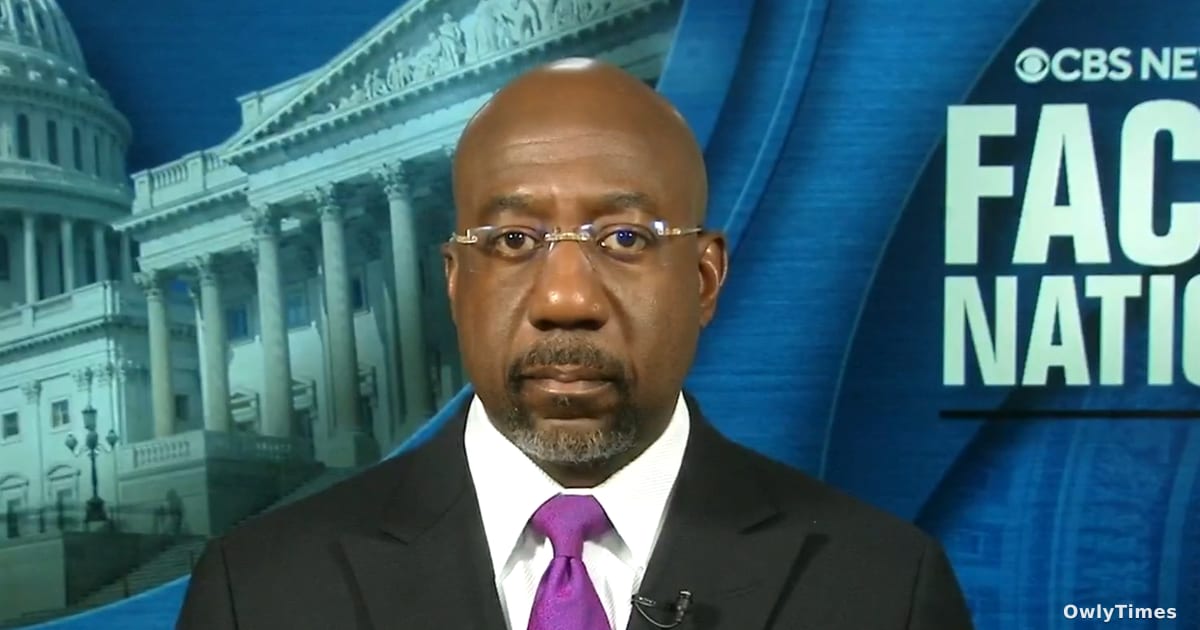
The political maneuvering behind this decision traces back to last year, when Donald Trump’s political team pressured Texas GOP leaders to redraw the state’s congressional map, reportedly demanding "six more seats." This aggressive push served as the catalyst for a tit-for-tat cycle of escalation. Raphael Warnock, who has represented Georgia in the Senate since 2021, identifies this as the moment the status quo of redistricting collapsed. By framing the Democratic response—including counter-efforts in California and Virginia—as a necessary refusal to "unilaterally disarm," Warnock highlights the central contradiction of the current landscape: politicians who claim to dislike gerrymandering are now incentivized to master it to survive.
Who Benefits and Who Loses
The immediate beneficiaries are Republican state legislatures and governors, who are moving quickly to exploit the legal vacuum. Since the ruling, executive leadership in states such as Louisiana and Tennessee has signaled interest in calling special legislative sessions to redraw maps. This shifts the power balance decisively toward the party currently in control of statehouses, allowing them to secure durable majorities that are insulated from shifting voter demographics.
The losers are minority voters and voting rights organizations, whose ability to challenge discriminatory maps under Section 2 of the Voting Rights Act has been significantly curtailed. This outcome risks creating what Warnock describes as an "increasing monolith," where the deliberate segregation of voting power mutes the influence of Black and brown communities. The decision essentially ensures that in these redrawn districts, the politicians are no longer competing for voters; they are selecting the constituents they prefer.
Historical Parallels and the Erosion of Oversight
This shift echoes the precedent set by the Court’s 2013 decision, which struck down the preclearance formula under Section 5 of the Voting Rights Act. Warnock argues that the removal of those federal protections created a environment where states moved from "old games" to "21st Century Jim Crow tactics." By dismantling the legal hurdles that once forced states to justify their electoral maps, the Court has returned the nation to an era where the mechanics of voting are once again at the mercy of state-level political actors.
The Next Move on the Redistricting Map
The stability of future congressional maps now rests on the legislative reaction to this ruling. With Republican-led states already moving to capitalize on the decision, the next signal of the political fallout will be the specific maps produced during the upcoming special legislative sessions in states like Louisiana and Tennessee. These new lines will provide the empirical evidence of how aggressively states intend to push the limits of the Court’s new, narrower interpretation of the Voting Rights Act.





