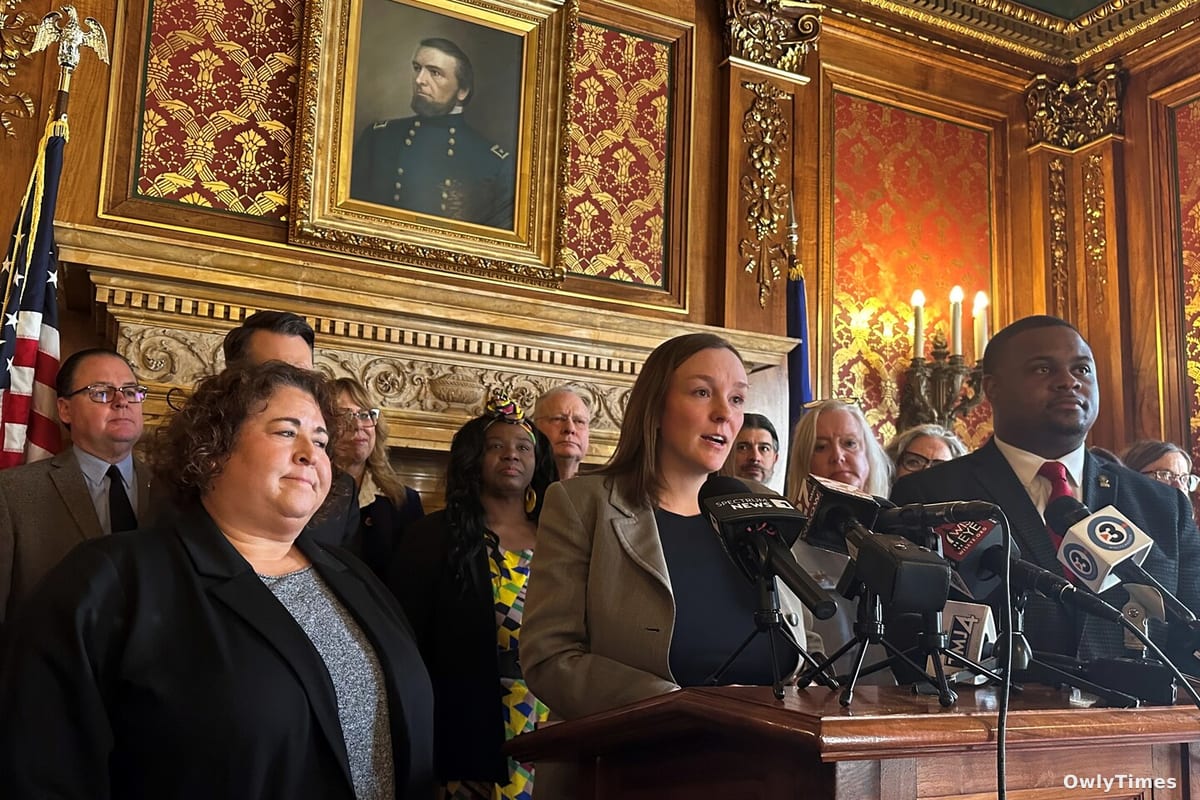

The Wisconsin Assembly’s overwhelming vote to extend Medicaid coverage for postpartum mothers isn’t simply a compassionate policy shift; it’s a calculated realignment of political capital, designed to insulate vulnerable Republicans from electoral fallout in swing districts while simultaneously boxing in Governor Evelyn Hayes, a Democrat, on fiscal grounds. The 92-7 vote, with only a handful of Republicans dissenting, signals a strategic retreat from the broader culture war battles that have defined Wisconsin politics for the past decade, and a tacit acknowledgement of the growing political potency of suburban women voters. The bill, as of February 19, 2026, leaves Arkansas as the sole state not offering extended postpartum Medicaid, a statistic that carries significant weight in national narratives about access to healthcare.
A Republican Calculus on Healthcare Access
The near-unanimity is the most telling aspect of this legislation. Wisconsin Republicans have, for years, positioned themselves as staunch opponents of Medicaid expansion, framing it as fiscally irresponsible and an expansion of “big government.” This shift represents a deliberate decoupling of that position from support for mothers and children – a demographic traditionally aligned with the GOP. The timing is crucial. Wisconsin’s political map is increasingly competitive, with suburban districts trending Democratic, fueled in part by concerns over reproductive healthcare access and social safety nets. A vote against extended postpartum care would have provided ammunition for Democratic challengers in these key districts, potentially costing Republicans seats in the November 2026 midterms. The estimated cost of the expansion, roughly $35 million annually according to the Legislative Fiscal Bureau, is presented as manageable, particularly given the state’s current budget surplus of $1.2 billion – a surplus largely attributable to federal infrastructure funding.
Reporting from The Washington Post informs this analysis.
The Governor’s Tightrope Walk
While Governor Hayes publicly lauded the Assembly’s action, the bill’s structure presents her with a difficult choice. The legislation includes a provision requiring the state to identify potential cost offsets within existing Medicaid programs. This effectively challenges Hayes to either accept the expansion with potential cuts to other vital services, or veto the bill and risk being portrayed as opposing support for new mothers. This is a classic legislative maneuver: offering a seemingly beneficial policy with a hidden fiscal constraint, forcing the opposing party to either compromise their principles or appear obstructionist. Assembly Speaker Robert Kasten, a key architect of the bill, stated on February 18th, “We believe we can provide this crucial support to Wisconsin families without burdening taxpayers.” This statement, however, conveniently omits the potential for service reductions elsewhere in the Medicaid system.
Historical Echoes of Targeted Social Programs
This strategy of targeted social program expansion, designed to appeal to specific voter blocs while maintaining broader ideological consistency, isn’t new. The New Deal era saw President Franklin D. Roosevelt utilize similar tactics, implementing programs like Social Security – initially framed as a self-funded insurance system rather than a welfare handout – to build a broad coalition of support. Similarly, President Ronald Reagan’s emphasis on “compassionate conservatism” involved targeted initiatives aimed at families and communities, designed to soften the edges of his broader conservative agenda. The Wisconsin Assembly’s move echoes this historical pattern, attempting to rebrand the Republican party as responsive to the needs of women and families without abandoning its core fiscal principles. The fact that Wisconsin is now only one state away from universal postpartum Medicaid coverage highlights the shifting political landscape and the increasing pressure on remaining holdouts like Arkansas.
Who Benefits and Who Loses?
The immediate beneficiaries are approximately 6,000 Wisconsin women annually who currently lose Medicaid coverage 60 days postpartum. This expansion provides coverage for up to a year, addressing critical health needs related to postpartum depression, chronic hypertension, and other complications. However, the long-term beneficiaries are arguably the Wisconsin Republicans, who have successfully navigated a politically sensitive issue without alienating their base or jeopardizing their electoral prospects. The potential losers are those reliant on other Medicaid services, should Governor Hayes be forced to implement cost offsets. Furthermore, the Democrats risk being portrayed as obstructionists if they challenge the bill’s fiscal provisions, potentially undermining their narrative of being the party of healthcare access.
The Next Move: Budget Negotiations Loom
The political chess move to watch next is Governor Hayes’s response during the upcoming budget negotiations. Will she accept the bill’s conditions, potentially sacrificing funding for other Medicaid programs? Or will she veto it, risking a political backlash and allowing Republicans to paint her as indifferent to the needs of new mothers? The outcome will not only determine the fate of postpartum Medicaid expansion in Wisconsin but will also reveal the balance of power between the Governor and the Assembly, and foreshadow the dynamics of the 2026 midterm elections. The specific line items targeted for potential cuts within the Medicaid budget will be the crucial indicator of how seriously Republicans intend to enforce the cost-offset provision – and how much political capital Governor Hayes is willing to expend to protect existing programs.





