
Yemen’s Silent Crisis: Maternal Health as a Barometer of State Failure
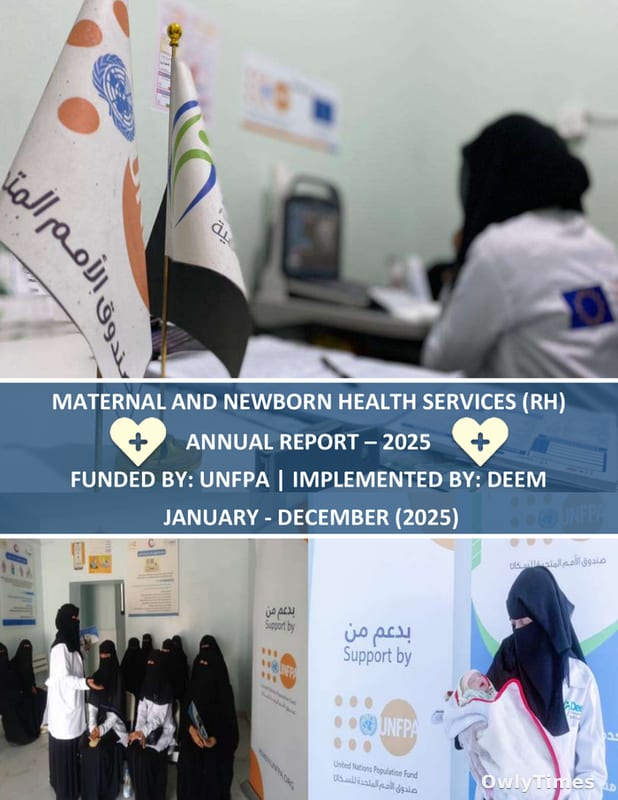
The ongoing humanitarian crisis in Yemen isn’t simply a story of war and famine; it’s a catastrophic failure of basic healthcare, and within that, a particularly devastating collapse of maternal and newborn health services. While international attention often focuses on immediate starvation and conflict casualties, the escalating maternal mortality rate – one of the highest in the Arab States region – signals a deeper, more insidious breakdown of societal structures. The recent report detailing the expansion of the Maternal and Newborn Health Services (MNHS-RH) project, implemented by DEEM for Development Organization with UNFPA funding, isn’t a sign of success, but a stark acknowledgement of the scale of the problem and the necessity of relying on external aid to provide even the most fundamental care. This isn’t development work; it’s emergency life support.
Background & Context: A Decade of Devastation
The roots of Yemen’s maternal health crisis predate the current conflict, which began in 2015. Even before the war, Yemen faced significant challenges in healthcare access, particularly for women in rural areas. However, the conflict dramatically exacerbated these issues. The collapse of the economy, the destruction of infrastructure, and the displacement of millions have created a perfect storm for a healthcare system on the brink. The COVID-19 pandemic further strained already limited resources, diverting attention and funding away from essential maternal health services.
Source material: reliefweb.int.
What’s often overlooked is the deliberate targeting of healthcare facilities during the conflict. Numerous reports document attacks on hospitals and clinics, hindering access to care and creating a climate of fear for both patients and healthcare workers. This isn’t simply collateral damage; it represents a systematic undermining of the country’s ability to care for its population. The fact that UNFPA remains the sole provider of life-saving maternal and newborn health medicines in the country is a damning indictment of the situation – a nation entirely reliant on external assistance for basic reproductive health supplies.
A Slow Expansion Amidst Growing Need
The MNHS-RH project’s phased expansion – from 14 health facilities (HF) in Taiz governorate in 2021 to 15 HF across Taiz, Ibb, and Al Dhale’e governorates in 2024 – demonstrates a consistent, albeit slow, effort to address the crisis. The increasing number of facilities offering Comprehensive Emergency Obstetric and Newborn Care (CEmONC) – from 4 in 2021 to 6 in 2024 – is a positive development, indicating a strengthening of capacity to handle complex cases. However, the numbers themselves are sobering. Fifteen facilities serving a population of over 30 million is a profoundly inadequate ratio, especially considering the concentration of need in conflict-affected areas and among internally displaced persons.
The shift in geographic focus, expanding beyond Taiz to include Al Hudaydah, Ibb, and Al Dhale’e, reflects a recognition of the evolving displacement patterns and the spread of the humanitarian crisis. Prioritizing districts hosting displaced populations is crucial, as these communities are often the most vulnerable and have limited access to healthcare. Yet, this expansion also highlights a reactive approach – responding to crises as they emerge rather than proactively building a resilient healthcare system.
What This Means: A Generational Impact
The consequences of this maternal health crisis extend far beyond individual tragedies. High maternal mortality rates are a key indicator of broader societal instability and underdevelopment. The loss of mothers has devastating impacts on families and communities, leading to increased rates of orphaned children and perpetuating cycles of poverty. Furthermore, the lack of access to family planning services contributes to high fertility rates, exacerbating existing resource constraints and hindering economic development.
For UNFPA and other aid organizations, the situation presents a logistical and ethical dilemma. While providing essential services is paramount, reliance on external aid creates dependency and undermines the development of a sustainable healthcare system. For the Yemeni people, the crisis represents a loss of dignity and a bleak outlook for the future. The international community’s continued failure to address the root causes of the conflict and provide adequate humanitarian assistance will have long-lasting consequences for generations to come.
Looking Ahead: A Fragile Future
The future of maternal health in Yemen remains deeply uncertain. The ongoing conflict, coupled with the economic collapse and political instability, will continue to pose significant challenges. Key indicators to watch include the level of funding allocated to maternal and newborn health programs, the security situation in conflict-affected areas, and the capacity of the Yemeni government to rebuild its healthcare system.
A potential scenario involves a continued reliance on external aid, with limited progress towards a sustainable solution. Another, more optimistic scenario, would require a comprehensive peace agreement, significant investment in healthcare infrastructure, and a commitment to strengthening the capacity of local healthcare providers. However, given the complex political landscape and the entrenched interests of various actors, the latter scenario appears increasingly unlikely. What is clear is that without a concerted and sustained effort to address the root causes of the crisis, Yemen’s silent maternal health crisis will continue to claim lives and undermine the country’s future.