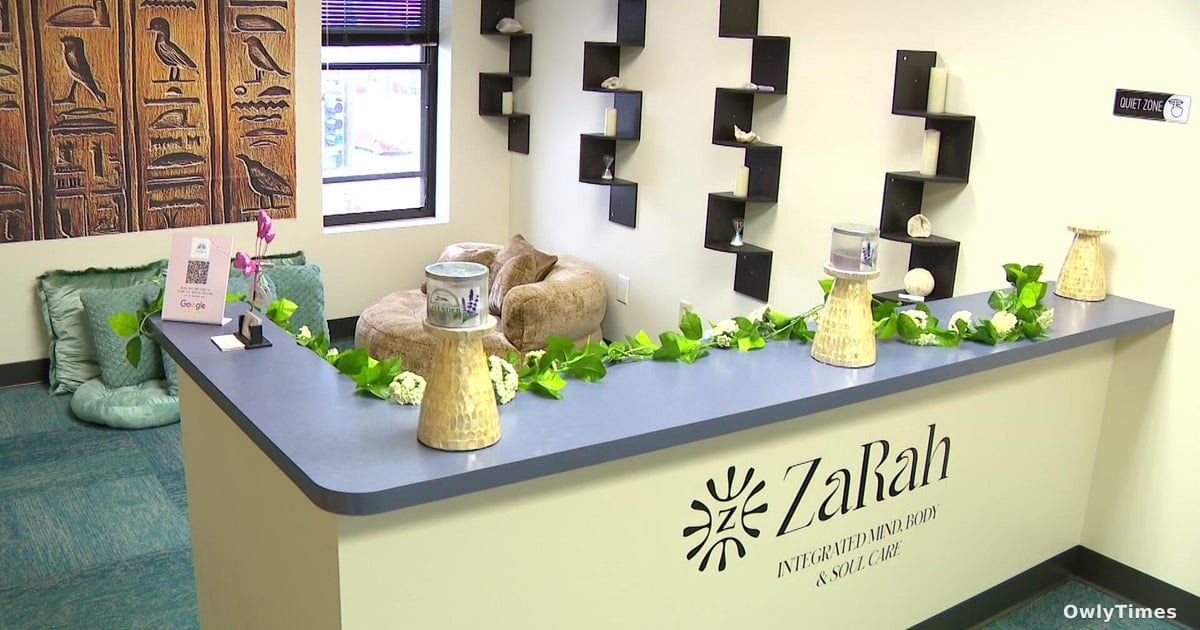

The narrative around wellness often centers on individual choices – diet, exercise, mindfulness. But what happens when access to those choices is systematically limited, and the economic benefits of a booming wellness industry flow around rather than to a community? In North Minneapolis, a new space called ZaRah is attempting to redefine that equation, not simply as a provider of holistic services, but as an engine for wealth building within a historically disinvested neighborhood. This isn’t about bringing wellness to the community, but about cultivating wellness by and for the community, and the implications extend far beyond relaxation and self-care.
Reclaiming “Root Healing” Traditions
The core philosophy driving ZaRah, as articulated by founder Kenya McKnight-Ahad of the Black Women’s Wealth Alliance, is “work-integrated root healing.” This isn’t a marketing slogan; it’s a deliberate framing of wellness practices as a continuation of ancestral traditions. McKnight-Ahad emphasizes that “root is about the ancient ways African American communities practiced holistic medicine,” a point underscored by practitioners like massage therapist Aisha Wadud, who blends traditional African American practices with Chinese and Ayurvedic medicine alongside Western techniques. This integration isn’t simply eclectic; it’s a conscious effort to reclaim and validate healing modalities often dismissed or marginalized within mainstream healthcare. The choice to center these traditions is particularly significant given documented disparities in healthcare access and quality experienced by Black communities in Minneapolis and nationally.
Reporting from CBS News informs this analysis.
The $25 Million Leak and Economic Empowerment
What sets ZaRah apart isn’t just its approach to healing, but its explicit focus on economic impact. McKnight-Ahad points to a striking statistic: an estimated $25 million annually flows out of North Minneapolis towards holistic wellness services. ZaRah aims to recapture a portion of that spending, keeping wealth within the community and creating opportunities for local entrepreneurs. This isn’t merely about providing services; it’s about ownership. McKnight-Ahad’s work, stemming from the Black Women’s Wealth Alliance founded in 2014, is centered on “building agency,” shifting Black women from economic participation to ownership. The building itself, initially unaffordable for McKnight-Ahad as a tenant, now represents a tangible example of that agency. This focus on economic empowerment is a critical component often missing from conversations about wellness, which frequently overlook the systemic barriers that prevent equitable access.
Beyond Massage: Scalp Health and Salt Rooms as Diagnostic Tools
The services offered at ZaRah are diverse, ranging from massage and traditional salon services to specialized treatments like scalp analysis and Himalayan salt room therapy. Crystal Davis, CEO of Revive Restorative Salon, highlights the diagnostic potential of hair and scalp health, noting that many women are unaware of the underlying causes of hair loss or thinning. This emphasis on identifying root causes – both literally and figuratively – reflects a holistic approach that goes beyond symptom management. The Himalayan salt room, designed to “extract toxins” and “calm” the body, represents a more novel offering, but even here, the focus is on restoring balance and promoting overall well-being. The inclusion of a wet room, jacuzzi, and sauna further expands the range of restorative options available.
Limitations to Consider and Future Growth
While the vision behind ZaRah is compelling, it’s important to acknowledge the challenges inherent in scaling such a model. The $25 million figure, while significant, represents an estimate of potential market capture. Actual demand and sustained community support will be crucial for long-term viability. Furthermore, the success of ZaRah relies on the continued participation and expertise of its eight holistic practitioners, and attracting and retaining talent in a competitive market will be an ongoing concern. The planned addition of a cafe signals an ambition to expand the center’s offerings, but also introduces new operational complexities.
The next critical step for ZaRah, and for similar initiatives, will be demonstrating a measurable impact on both individual health outcomes and community economic indicators. Will increased access to holistic wellness translate into improved health metrics for North Minneapolis residents? And can ZaRah serve as a replicable model for building wealth and agency in other historically disinvested communities? The opening of the new cafe in the coming months will provide a valuable case study, offering a glimpse into the potential for ZaRah to evolve into a truly comprehensive “career and economic center,” as envisioned by McKnight-Ahad. Watching whether ZaRah can successfully navigate these challenges – and whether its model attracts investment and inspires replication – will be a key indicator of whether a truly equitable wellness economy is within reach.





