
Beyond Bricks and Mortar: Reimagining Plant Research Through Controlled Environments
The narrative around agricultural innovation often focuses on genetic breakthroughs or novel farming techniques, but a quieter revolution is unfolding in the spaces where that research happens. A recently completed renovation of the Borlaug Center for Southern Crop Improvement greenhouses at Texas A&M AgriLife isn’t simply about updating a facility; it’s a strategic realignment of resources to address a fundamental bottleneck in plant science: the ability to precisely control the growing environment. While headlines tout “state-of-the-art” features, the deeper story is about acknowledging the limitations of past infrastructure and proactively building for a future where environmental consistency is as crucial as genetic insight.
Based on the original agrilifetoday.tamu.edu report.
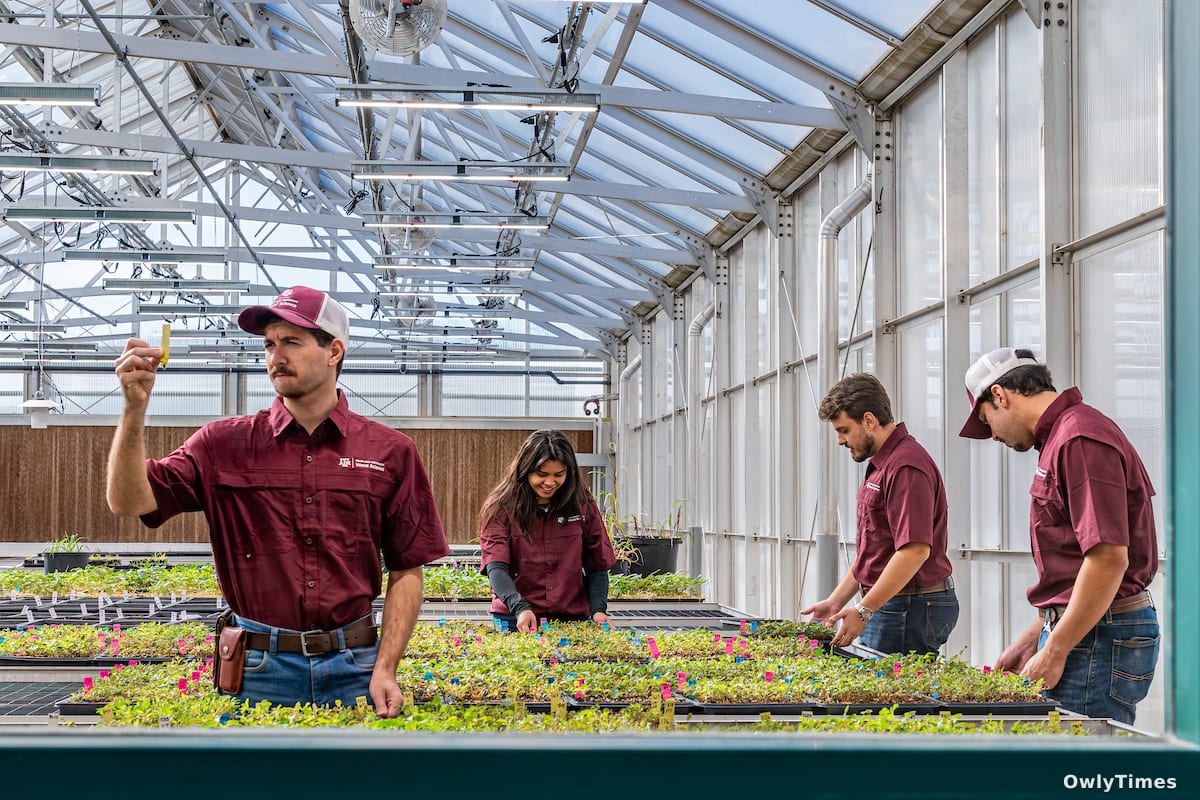
The original greenhouses, constructed in the late 1990s, served their purpose, but faced increasing challenges in maintaining the rigorous control needed for modern plant research. Troy Vann, who manages both the Borlaug Center greenhouses and the AgriLife Automated Precision Phenotyping Greenhouse, explains the renovated 24,372-square foot facility now offers researchers within The Texas A&M University System rented space equipped with modern control systems, lighting, and ventilation. This isn’t merely about comfort for the plants; it’s about eliminating variables. Traditional greenhouses, even well-maintained ones, are subject to fluctuations in temperature, humidity, and light exposure – factors that can subtly, yet significantly, skew experimental results. The new LED lighting, for example, not only offers energy efficiency and reduced heat output, but provides a uniform light spectrum, crucial for studies examining plant responses to specific wavelengths. The central control system continuously tracks environmental conditions and generates data reports, turning the greenhouse itself into a sophisticated data collection instrument.
The Cost of Precision and Access to Innovation
The renovation, funded jointly by the Texas A&M College of Agriculture and Life Sciences and Texas A&M AgriLife Research, represents a substantial investment. While the exact cost wasn’t disclosed, the scale of the upgrades – encompassing insect containment, airflow control, and a fully integrated control system – suggests a commitment exceeding simple cosmetic improvements. Jeffrey W. Savell, Ph.D., vice chancellor and dean of Agriculture and Life Sciences, framed the project as reinforcing “our dedication to supporting world‑class researchers and delivering solutions that matter to Texans and beyond.” However, the “rented space by the square foot” model raises questions about equitable access. While intended to support researchers across The Texas A&M University System, the cost could inadvertently create a barrier for smaller labs or those with limited funding, potentially concentrating cutting-edge research within well-established groups. This isn’t necessarily a flaw in the design, but a tension inherent in translating public investment into accessible resources.
Beyond Texas Borders: Implications for Crop Resilience
The stated goals of the renovation – accelerating discovery, strengthening interdisciplinary collaboration, and tackling challenges in plant science, crop resilience, and food security – align with broader national priorities. G. Cliff Lamb, Ph.D., director of AgriLife Research, emphasized the facility’s potential to advance “leading-edge innovations for sustainable agriculture and natural resources.” This is particularly relevant given the increasing frequency of extreme weather events and the urgent need to develop crop varieties that can withstand drought, heat, and disease. The ability to simulate these conditions within a controlled environment allows researchers to accelerate the breeding process and identify resilient traits far more efficiently than relying on field trials alone. Consider, for example, the ongoing efforts to improve sorghum varieties for drought tolerance – a critical need for Texas farmers. The Borlaug Center’s new capabilities will allow researchers to rapidly screen hundreds of sorghum lines under controlled drought stress, identifying the most promising candidates for further development.
Limitations to Consider: The Ecosystem of Research
It’s important to acknowledge that even the most advanced greenhouse facility is not a substitute for real-world field conditions. While controlled environments allow for precise manipulation of variables, they inevitably simplify the complex interactions that occur in a natural ecosystem. Factors like soil microbiome composition, pollinator activity, and unpredictable pest outbreaks cannot be fully replicated indoors. Furthermore, the success of this investment hinges on more than just the physical infrastructure. Adequate staffing, ongoing maintenance, and a commitment to data sharing are all essential to maximizing the facility’s impact. The AgriLife Facilities Management and Construction team successfully managed the renovation, but sustained support will be crucial.
The Future of Phenotyping: From Observation to Prediction
The next critical step isn’t simply using the new facility, but integrating its data streams with emerging technologies like artificial intelligence and machine learning. The continuous environmental monitoring and plant performance data generated by the Borlaug Center greenhouses represent a rich dataset ripe for analysis. Researchers are increasingly focused on “phenotyping” – the process of measuring observable characteristics of plants – and using that data to predict how different genotypes will perform under various conditions. The question now is: can we leverage this data to develop predictive models that accelerate the breeding of climate-resilient crops and optimize agricultural practices? Watch for publications emerging from the Borlaug Center in the next 2-3 years that demonstrate the power of combining controlled environment phenotyping with advanced data analytics – and, crucially, how those findings translate to improved crop performance in the field.