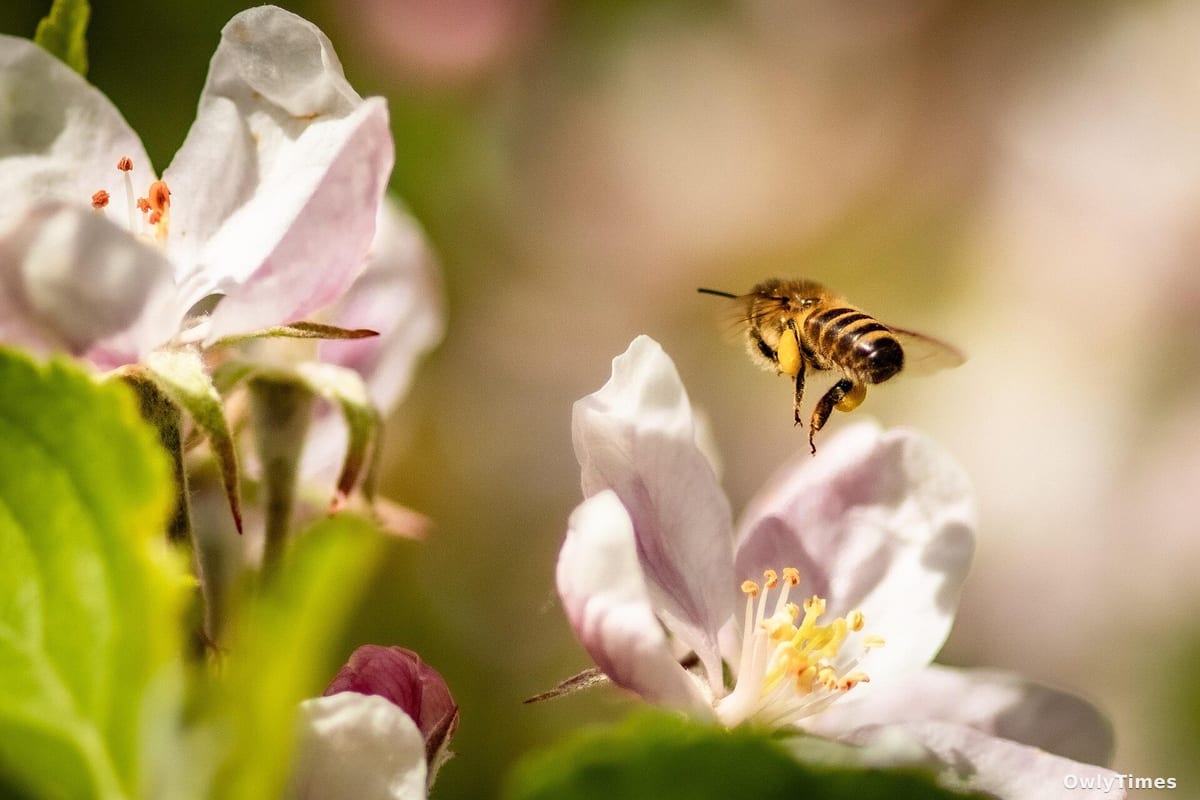

The assumption that insect behavior is strictly hard-wired is increasingly difficult to defend in light of recent evidence. A new study published in the journal Proceedings of the Royal Society B: Biological Sciences explores the cognitive architecture of honey bees, specifically how they manage attention when tasked with learning new information. By subjecting these insects to complex, changing rules while introducing sensory interference, researchers have observed a pattern of failure that mirrors the way human attention functions under pressure.
When Memory Gaps Require Focus
The scientific question at the heart of this research concerns the nature of "trace conditioning." In classical conditioning, a subject learns to associate an odor with a sugar reward. When the odor and the reward overlap in time, the task is relatively straightforward for a bee. However, when the reward is delayed by a few seconds—a process known as trace conditioning—the bee must maintain a mental representation of the odor even after it has vanished.
The study found that this trace conditioning requires more than simple reflex; it demands a form of "awareness" or attentional gating to bridge the time gap. While headlines might suggest that bees possess human-like consciousness, the study actually found that their behavioral responses under stress mimic the cognitive "bottlenecks" seen in human psychology. When the bees were forced to perform a reversal learning task—where the rewarded scent was suddenly swapped for a different one—the introduction of a flashing light acted as a distractor that caused the bees to fail in specific, predictable ways.
Distraction and the Breakdown of Logic
The researchers utilized a visual distractor to see how it would influence the bees’ ability to adapt to changing rules. The results were starkly divergent based on how the bees had been trained. Bees trained with overlapping stimuli (delay conditioning) began responding to both scents indiscriminately, essentially guessing at random. Conversely, bees trained to bridge a time gap (trace conditioning) froze, failing to respond to either scent entirely.
This split performance is the key finding of the paper. It suggests that the cognitive load required to track a delayed reward is fundamentally different from that required for an immediate one. When the brain’s "awareness" mechanism is interrupted by a flashing light, the bees lost the ability to manage these different types of memory. In the words of the authors, "Awareness of stimulus contingencies appears necessary for solving reversal learning under a trace-conditioning regime." This implies that the bees were using an attentional process to keep track of cause-and-effect that was vulnerable to external noise.
Limitations to Consider
While these results are compelling, it is important to maintain scientific caution. The experiment measured only the proboscis extension reflex—a binary "yes or no" feeding response. This is a limited window into the insect’s internal state. The researchers did not record neurological activity or brain imaging, meaning the term "awareness-like" is used as a functional description of behavior rather than a definitive claim about insect consciousness. We must be careful not to overstate the findings; showing that a bee manages information in a way that resembles human attention is not the same as proving the bee possesses an inner life or subjective experience.
Measuring the Future of Insect Cognition
The significance of this work extends beyond the lab, offering potential insights for both ecology and artificial intelligence. If environmental stressors like artificial light or noise pollution can scramble the cognitive processes of pollinators, it could have cascading effects on foraging efficiency and colony health. Furthermore, the study provides a biological model for how small neural networks can use attentional gating to solve temporal puzzles, which may inform the development of more efficient robotic systems.
The next steps for this research will involve monitoring bee brain activity during these cognitive tasks to see if specific neural circuits correlate with the behavioral failures observed here. As the scientific community continues to analyze the data from this study (DOI: 10.1098/rspb.2025.2891), the focus will remain on whether these "awareness-like" processes are a universal feature of insect learning or specific to the honey bee's unique social and environmental demands. The next reading of these behavioral patterns across other species will show whether this cognitive flexibility is a widespread trait in the insect world.