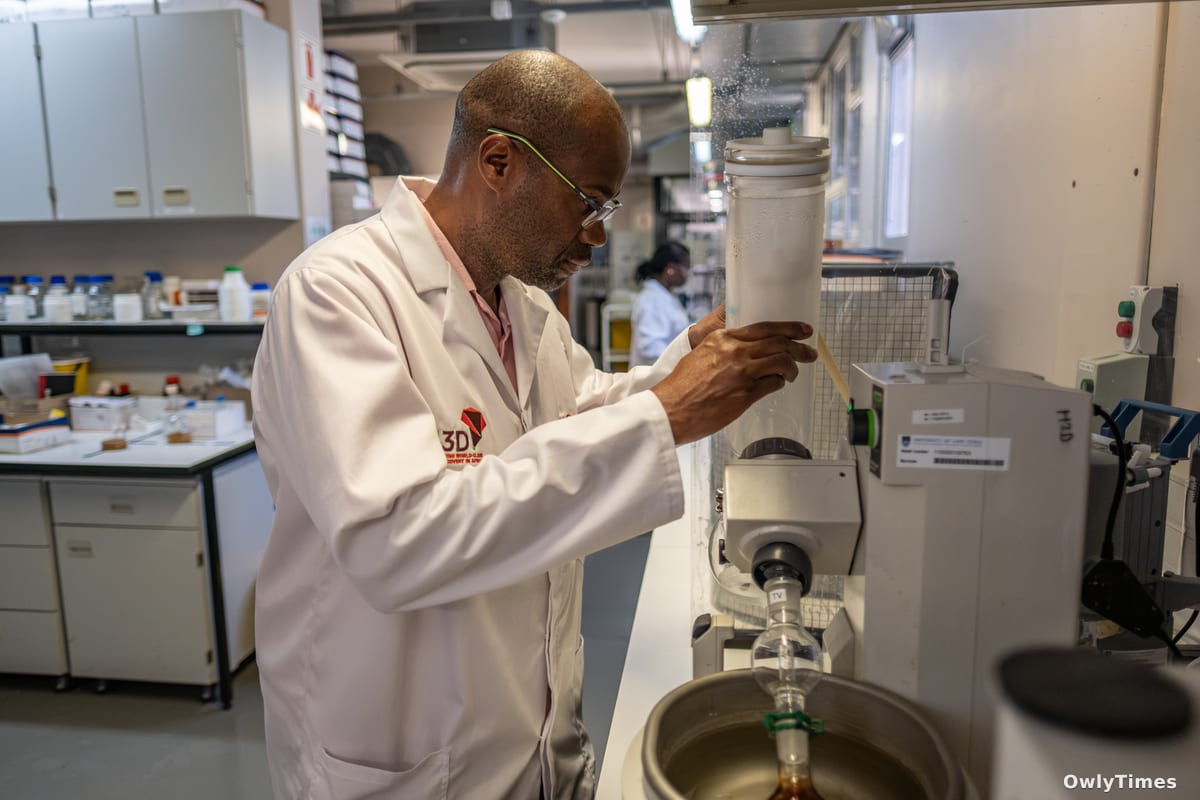

The persistent narrative in global health often positions drug discovery as a pursuit centered in North America, Europe, and Asia. But a quiet revolution is underway in Cape Town, South Africa, challenging this long-held assumption and raising a critical question: can a continent historically reliant on external solutions for its most pressing health crises build the capacity to lead its own pharmaceutical innovation? Kelly Chibale, a Zambian-born chemist, believes the answer is a resounding yes, and he’s built a facility to prove it. His work isn’t simply about finding new drugs; it’s about reshaping the very geography of scientific progress and addressing a systemic imbalance in who gets to define health priorities.
Chibale founded the Holistic Drug Discovery and Development (H3D) Centre at the University of Cape Town, a facility uniquely equipped to shepherd potential medicines from initial molecular design through pre-clinical testing. He describes the process, with characteristic warmth, as a “fairy-tale quest,” acknowledging the long odds – “you have to kiss many frogs before you meet the prince” – but emphasizing the potential for transformative breakthroughs. While headlines often trumpet individual drug discoveries, the H3D Centre’s significance lies in its holistic approach, integrating all stages of development under one roof, a rarity in Africa. This isn’t merely about replicating existing models; it’s about adapting them to the specific needs and genetic diversity of the African population.
This article draws on reporting from NPR.
The Centre’s focus is sharply defined by the continent’s most urgent health challenges: malaria, tuberculosis, and antimicrobial resistance. These diseases, while globally relevant, disproportionately impact African communities, and existing treatments often fall short due to evolving resistance patterns and varying metabolic responses. Mathew Njoroge, a Kenyan scientist at H3D, highlights the importance of personalized dosing, explaining that a drug effective in one population may be dangerous or ineffective in another. This necessitates a deep understanding of African genetic diversity, a factor often overlooked in drug development historically conducted elsewhere. The team is pioneering methods to overcome the limited availability of donated liver samples – crucial for determining drug metabolism – by utilizing computer modeling to simulate metabolic processes within different African subpopulations.
This commitment to locally-relevant research represents a deliberate shift in power dynamics. For decades, the agenda for drug development has been largely set by wealthier nations, addressing their own health priorities. Chibale witnessed this firsthand during his graduate studies and research positions in the U.K. and U.S., observing the vast resources dedicated to pharmaceutical research in the Global North. He recognized the need to create a similar ecosystem in Africa, not just to address immediate health needs, but to prevent the continued “brain drain” of talented African scientists seeking opportunities abroad. The H3D Centre currently employs over 75 people, providing a vital platform for nurturing local expertise and fostering a new generation of African drug hunters.
However, the Centre’s success story isn’t without caveats. A promising malaria drug developed through their approach entered clinical trials but was ultimately halted due to safety concerns identified in rat studies. Chibale explains the decision was made “out of caution,” stemming from a novel mechanism of action that also impacted a human enzyme. This underscores a fundamental truth about drug development: failure is inherent to the process. While disappointing, this experience highlights the rigorous safety standards employed at H3D and the importance of thorough pre-clinical testing, particularly when exploring new therapeutic targets. It also illustrates the inherent risks in pioneering novel approaches.
Looking ahead, the H3D Centre is actively seeking to expand its partnerships with research groups across Asia and Latin America, aiming to replicate its model in other regions of the Global South. Mohammad Shafiul Alam, a parasitologist in Bangladesh, emphasizes the potential for this collaborative approach, particularly given constrained funding for global health initiatives. But the crucial next step isn’t simply scaling up the model; it’s addressing the cultural and logistical barriers to organ donation in Africa. The lack of readily available liver samples hinders accurate drug metabolism studies, and overcoming the historical mistrust of the scientific process, coupled with cultural sensitivities surrounding bodily integrity, will be essential for advancing research. Will the H3D Centre, and others like it, be able to navigate these complex challenges and establish a truly independent and impactful pharmaceutical innovation ecosystem in Africa? The answer will determine not only the future of drug discovery on the continent, but also the health and well-being of millions.