
Why is Silicon Valley spending billions trying to teach AI to write mediocre poetry when the technology's actual salvation is waiting in a muddy orchard? While tech executives in San Francisco argue over whether chatbots have souls, the people who actually feed the world are quietly staging a far more practical revolution. We have been told for years that artificial intelligence will either steal our jobs or solve all human suffering, but both narratives miss the dirt-under-the-fingernails reality of what happens when machine learning meets heavy machinery.
The real story here isn't about flashy, ground-up robotic gadgets replacing the American farmer — it's about "physical AI" quietly retrofitting the trusted diesel workhorses already sitting in the barn.
Layering Silicon Valley Brains onto Midwest Muscle
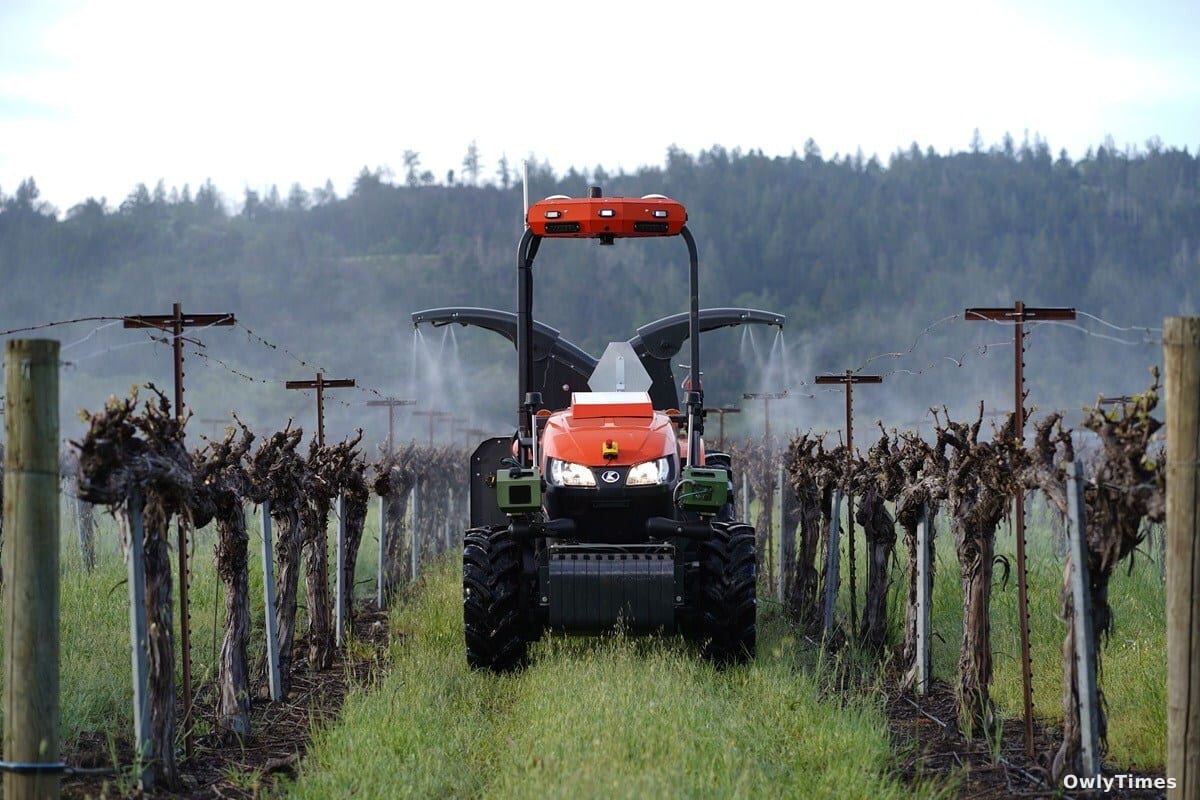
To understand where AI is actually useful, look no further than the Kubota M5 Narrow diesel specialty tractor (Image credit: Kubota). Instead of forcing growers to buy entirely new, unproven, and wildly expensive experimental machines, companies are realizing that the best way forward is to upgrade what already works. By layering Agtonomy’s physical AI stack onto the proven M5 platform, the tractor becomes an autonomous workhorse without disrupting the grower's existing maintenance routines or operational habits.
According to Tim Bucher, the CEO and co-founder of Agtonomy, this approach bypasses the typical tech-adoption friction. Growers already know how to run and fix the M5, meaning that adding physical AI simply transforms the machine into a smart, autonomous solution for specialty crops and land maintenance. It is the agricultural equivalent of turning a reliable old car into a self-driving commuter, rather than forcing the owner to buy a futuristic spaceship they cannot repair.
The Video Game Controller in the Orchard
This shift to physical AI is fundamentally changing who operates farm equipment and how. For decades, the existential threat to American agriculture—specifically in specialty crops—has been a crippling labor shortage and the agonizing question of whether a family farm can survive to support the next generation. But by designing interfaces that mimic the smartphones and tablets we use every day, tech companies are lowering the barrier to entry.
The result is a new class of tech-savvy operators, frequently in their 20s, who might not have grown up steering a traditional tractor but can manage multiple autonomous machines simultaneously with an intuitive, "video game" level of control. This isn't about replacing humans; it is about upskilling them. It opens the door for the next generation of 4-H and FFA members who want to keep their hands in the dirt while applying high-tech skills to the family business. When a single operator can oversee a fleet of autonomous machines doing the tedious work of spraying, mowing, and tillage, the economics of the family farm suddenly start to make sense again.
Why the Local Dealer is the Real Bottleneck
Yet, the grand vision of an autonomous farm has a massive, unglamorous roadblock that has nothing to do with software bugs or sensor calibration. The real bottleneck in agricultural automation today is not whether the technology works—it is whether the local dealership network is equipped to sell, service, and maintain it. If a sensor fails in the middle of a harvest, a farmer cannot wait three weeks for a software engineer from California to fly out and debug it.
Dr. M. Brett McMickell, chief technology officer for Kubota North America, points out that dealers are the crucial system integrators in this revolution. To address this gap, the company is investing in the Kubota Tech and Engine Academy, a training program designed to bring modern, high-tech curricula directly into trade schools and dealer networks. These programs combine online instruction with hands-on mechanics, electrical diagnostics, and engine training. If the industry cannot train local technicians to support these automated systems, the entire physical AI revolution will stall out on the dealership lot.
The Road Ahead for Mixed Fleets
For physical AI to truly succeed, the industry must also abandon the closed-ecosystem model that tech giants love so much. Farmers do not run single-brand operations; they run mixed fleets of various vintages and manufacturers. True success will require open collaboration and interoperability, allowing autonomous systems to work side-by-side regardless of the logo on the grille.
What happens next will be decided not in a Silicon Valley lab, but in the field. The next major indicator of success will be the measurable adoption rate of high-tech curricula within trade schools and the expansion of manufacturer-supported training programs like the Kubota Tech and Engine Academy. Watch the enrollment numbers and dealer certification rates over the next twelve months: if local technicians cannot master these physical AI diagnostics, the autonomous revolution will remain stuck in the mud, no matter how clever the software is.