
Is the classroom of the future just a fancy waiting room where children are paid in digital coins to tolerate boredom? We have been sold a vision of the "smart" school for decades, a place where personalized algorithms whisk students toward academic mastery while liberating teachers from the drudgery of administrative tasks. But the reality on the ground—especially in the Los Angeles Unified School District (LAUSD)—suggests something much more mundane and far more extractive.
The real story here isn’t that technology is failing to teach our kids; it’s that we are using it to replace the messy, vital work of human connection with a loop of high-tech busywork.
The Algorithmic Treadmill
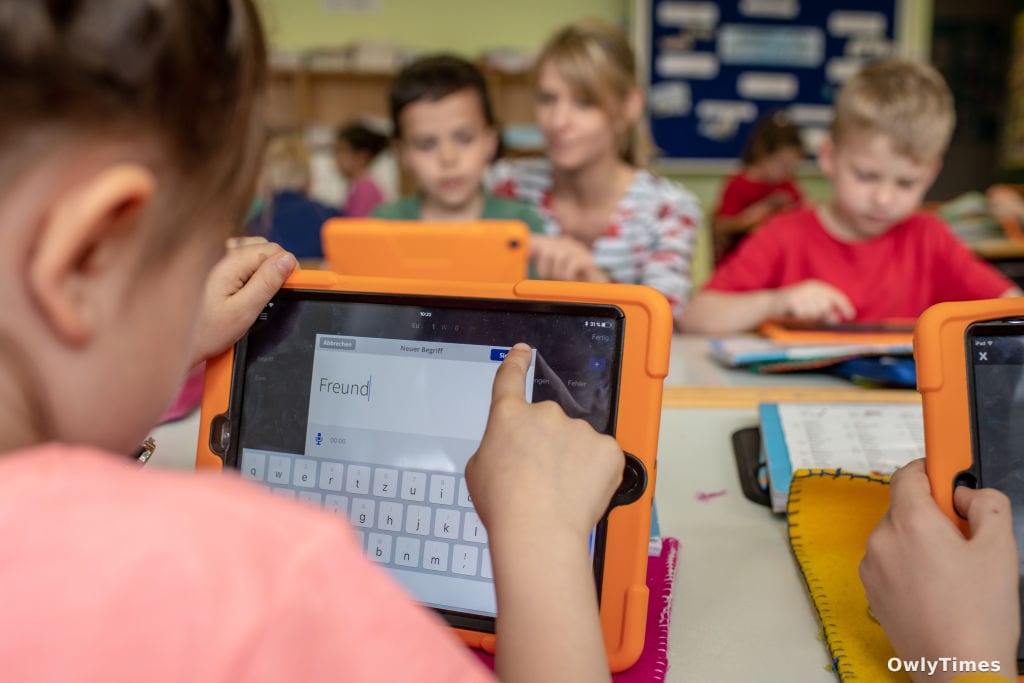
When nine-year-old Sunny entered second grade, he was handed a Google Chromebook, a move that promised to modernize his education. Instead, according to the Jacobin report, he found himself trapped in the ecosystem of i-Ready, a digital product that gamifies rote memorization. The goal was to rack up minutes in MyPath, a component designed to prep students for standardized tests.
The result for students was not "absolute personalization," as Superintendent Alberto Carvalho once claimed, but a mind-numbing repetition of questions beneath their skill level. Parents like Kate Brody, who helped organize the grassroots Schools Beyond Screens coalition, describe the experience as an "ouroboros of psychotic time-wasting minutes." It is the digital equivalent of a factory assembly line where the product is simply the student’s time, measured and monetized.
When Efficiency Becomes a Barrier
The industry’s favorite buzzword, "frictionless," is perhaps the most dangerous lie sold to school boards. We are told that AI chatbots—like the now-infamous Ed, which triggered an FBI investigation—provide a seamless learning experience. Yet, teachers on the front lines report the opposite. Armaghan Khan, a science teacher and member of the United Teachers Los Angeles (UTLA), notes that when teachers are forced to police screens, they lose the ability to actually instruct.
This mimics a broader trend in the modern workforce: knowledge workers are increasingly relegated to "middle managers" of glitchy software rather than practitioners of their craft. When we outsource grading, lesson planning, and interpersonal engagement to a machine, we aren't optimizing education; we are de-skilling the educators. As Audrey Watters, author of Teaching Machines, points out, these tasks are not "drudgery"—they are the very substance of teaching.
The Cost of the Digital Default
The financial impact of these choices is stark. While LAUSD has spent heavily on no-bid tech contracts, schools have simultaneously faced walkouts over poverty wages and bare-bones staffing. Sandra Martinez Roe, Sunny’s mother, highlights the absurdity of the current setup: parents are forced to fundraise for music and art programs because the district’s budget is locked into expensive, unproven software that students, by their own admission, find isolating.
This isn't just about screen time; it's about the erosion of the physical classroom as a space for social friction. When students are tethered to individual devices, the organic, unpredictable discussions that define real learning are silenced. The screen acts as a firewall against the very human interaction that children need to develop resilience and social intelligence.
Watching the Guardrails
The tide, however, may be turning. In April, the LAUSD school board voted unanimously to implement guardrails around student-facing technology, including an audit of existing contracts. This pushback is part of a growing national realization that the Silicon Valley model of "move fast and break things" is incompatible with the developmental needs of children.
The next reading of the district’s new guidelines, which are scheduled to be finalized on June 23, will show whether this administrative pivot can actually restore the classroom to a place of human dialogue, or if the "claws" of the edtech industry are too deep to be retracted. For students like Sunny, the shift away from the screen isn't just a policy change—it’s a chance to finally look up and see the people sitting next to them.