
The Strategic Stall: Aviation Safety and the Politics of Regulatory Control
The House’s failure to pass the Senate’s ROTOR Act isn’t about aviation safety in isolation; it’s a calculated move in a longer-running battle over the scope of federal regulation, specifically targeting the interests of a powerful, and politically connected, segment of the aviation industry. The 264-133 vote, falling short of the two-thirds majority needed under fast-track rules, wasn’t a spontaneous rejection of safety measures, but a strategically orchestrated defeat driven by Republican committee leadership and revealing a clear fracture between prioritizing demonstrable safety upgrades and appeasing specific stakeholder concerns. This wasn’t a bill simply “running into headwinds,” as NPR understated; it was actively blocked.
This piece references the theweek.com report.
The Cost of “Non-Controversial” Bills
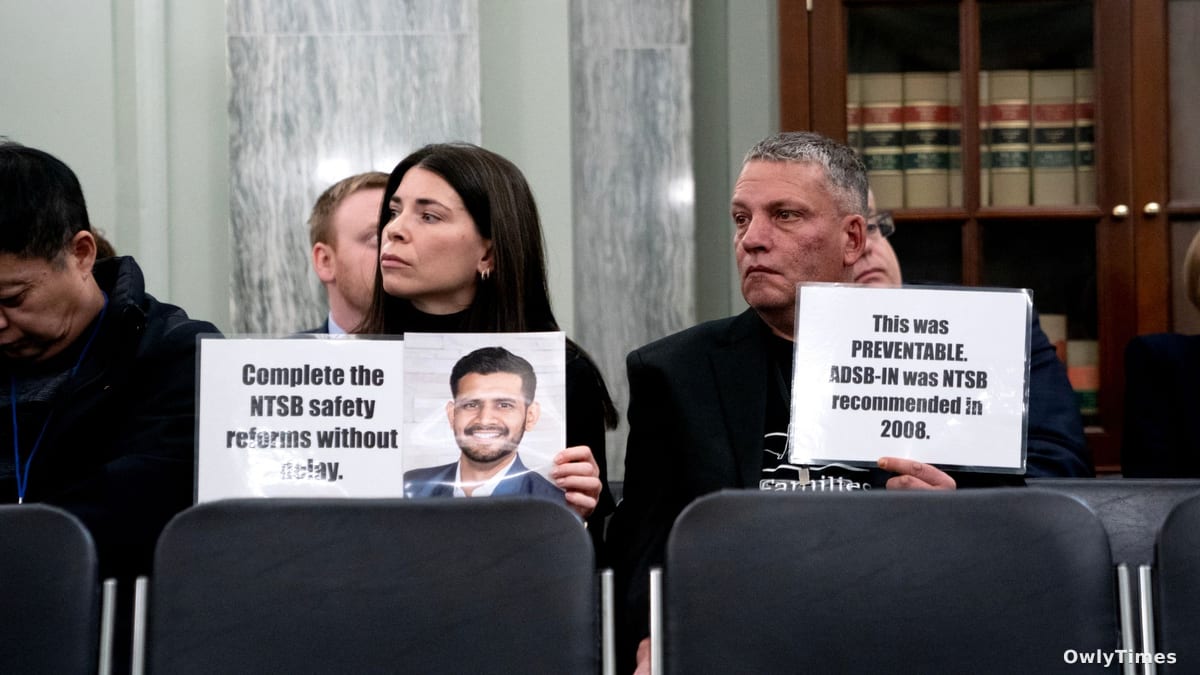
The fact that the ROTOR Act – legislation spurred by the January 2025 midair collision near Washington D.C. that claimed 67 lives – required a two-thirds majority for passage under suspension of the rules is itself telling. This procedural tactic, typically reserved for genuinely non-controversial measures, was used to mask a deeply partisan disagreement. Nearly all 133 “no” votes came from Republicans, a stark contrast to the unanimous Senate approval in December. The bill’s core provision, mandating ADS-B In technology – advanced location tracking – has been advocated by the National Transportation Safety Board (NTSB) since 2008, and the NTSB explicitly stated it could have prevented the 2025 tragedy. To frame opposition to this as anything other than a deliberate choice to prioritize other considerations is disingenuous. The families of the victims, understandably, are “devastated,” but their grief is being strategically leveraged in a larger political game.
Graves’ Gambit: A Rival Bill and the Power of Committees
The defeat of the ROTOR Act represents a “major win” for Sam Graves (R-Mo.), Chair of the House Transportation Committee, according to Politico. Graves champions the ALERT Act, a competing bill that addresses the 50 NTSB recommendations stemming from the collision, but crucially excludes the ADS-B In mandate. This isn’t a case of offering a superior solution; it’s a power play. Graves’s position reflects the interests of owners of smaller, private aircraft, who have long resisted the cost of upgrading to ADS-B In equipped systems. This echoes historical precedents where regulatory efforts aimed at public safety – think early automobile safety standards or workplace hazard regulations – faced fierce opposition from industries prioritizing profit margins over preventative measures. The dynamic is familiar: a committee chair, wielding significant legislative control, prioritizes the concerns of constituents and donors over broader public safety recommendations. Jennifer Homendy, Chair of the NTSB, and the victims’ families rightly oppose the ALERT Act, recognizing it as a diluted response that fails to address the core preventative measure identified by safety experts.
Who Benefits and Who Loses in the Skies?
The immediate losers are, unequivocally, the flying public. The continued absence of a mandated ADS-B In system increases the risk of future collisions, particularly in congested airspace. The families of the 2025 crash victims are also clear losers, seeing a crucial safety measure stalled by political maneuvering. But the beneficiaries are more specific: owners of older aircraft who avoid the expense of upgrades, and the lobbying groups representing those interests. The General Aviation Manufacturers Association, for example, has historically opposed mandatory ADS-B In requirements, citing cost concerns. This highlights a fundamental tension within aviation regulation – balancing the safety of the broader public with the economic interests of a specific, politically active segment of the industry. The Defense Department’s initial support for the ROTOR Act, then subsequent withdrawal, suggests internal pressure from stakeholders concerned about the cost of upgrading military aircraft, further illustrating the complex web of interests at play.
The Next Flight Path: Will Johnson Yield?
Despite Ted Cruz’s (R-Texas) optimistic prediction of eventual passage, the current landscape suggests a prolonged stalemate. Given that Mike Johnson (R-La.), the Speaker of the House, and his “top lieutenants” voted against the ROTOR Act, the likelihood of a revived vote is low. The key political chess move to watch isn’t whether the Senate will re-assert its will, but whether sustained public pressure – fueled by the victims’ families and safety advocates – can force Johnson to reconsider. Will he prioritize party unity and appease committee chairs like Graves, or will he risk a floor vote that could expose a rift within the Republican caucus over a demonstrably vital safety issue? The answer will reveal much about the current balance of power within the House and the true cost of prioritizing political expediency over public safety.





